There are two main areas in which Congress can enact meaningful reform. The first is to rein in regulatory guidance documents, which we refer to as “regulatory dark matter,” whereby agencies regulate through Federal Register notices, guidance documents, and other means outside standard rulemaking procedure. The second is to enact a series of reforms to increase agency transparency and accountability of all regulation and guidance. These include annual regulatory report cards for rulemaking agencies and regulatory cost estimates from the Office of Management and Budget for more than just a small subset of rules.
In 2019, President Trump signed two executive orders aimed at stopping the practice of agencies using guidance documents to effectively implement policy without going through the legally required notice and comment process.
Featured Posts

Blog
Politicians should push deregulatory initiatives – not investor limits – to boost housing affordability
Both President Trump and Democrats in Congress seem to blame the high costs of housing on certain groups of real estate investors and to restrict…

News Release
Environmental problems deserve free market solutions: Our Words
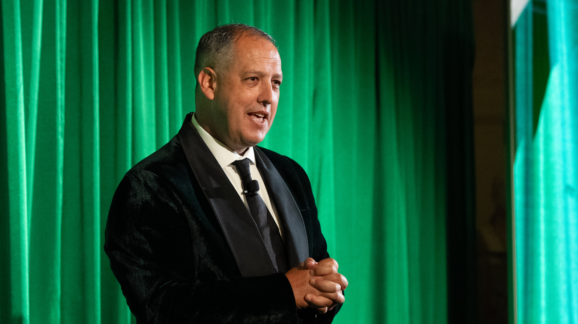
Today, the Competitive Enterprise Institute is pleased to publish CEI President Kent Lassman’s lecture entitled The Environment, the Law, Markets, and the Path…
Study
The Environment, the Law, Markets, and the Path Forward
Introduction The Pharos Foundation at Jesus College, a constituent college of the University of Oxford, invited me to speak at an on-campus forum in May.
Search Posts
Op-Eds
“Financial Deform: So-Called U.S. bank Reform Does Little But Hurt Taxpayers”
The CEO of Goldman Sachs, the Wall Street firm the SEC has accused of fraud, has endorsed the so-called financial “reform” bill…
Blog
Bogus Financial “Reform” Bill Regulates Internet, Does Nothing About Corrupt Government-Sponsored Mortgage Giants Fannie Mae and Freddie Mac
The so-called financial “reform” bill backed by President Obama gives federal bureaucrats new powers over the Internet, while doing nothing about the corrupt government-backed…
Blog
ObamaRail: Great for Railfans, Bad for Transportation
In 2000, Florida voters approved a constitutional amendment (the “Monorail Initiative“) authorizing the creation of a high-speed intercity rail network. However, as the economy…
Citation
Consumer Financial Protection Bureau – be careful what you wish for
Blog
Regulation of the Day 136: Off the Record
If you work for the Department of Energy's Federal Energy Regulatory Commission, a regulation in 18 CFR 385.2201 requires you to keep records of off-the-record…
Blog
Hypocritical California Government Boycotts Against Arizona Over Immigration Law
“Representatives at three levels of California government were quick to call for economic measures against neighboring Arizona this week in the wake of its…
Staff & Scholars

Clyde Wayne Crews
Fred L. Smith Fellow in Regulatory Studies
- Business and Government
- Consumer Freedom
- Deregulation

Ryan Young
Senior Economist and Director of Publications
- Antitrust
- Business and Government
- Regulatory Reform
Fred L. Smith, Jr.
Founder; Chairman Emeritus
- Automobiles and Roads
- Aviation
- Business and Government

Sam Kazman
Counsel Emeritus
- Antitrust
- Automobiles and Roads
- Banking and Finance

Marlo Lewis, Jr.
Senior Fellow
- Climate
- Energy
- Energy and Environment