There are two main areas in which Congress can enact meaningful reform. The first is to rein in regulatory guidance documents, which we refer to as “regulatory dark matter,” whereby agencies regulate through Federal Register notices, guidance documents, and other means outside standard rulemaking procedure. The second is to enact a series of reforms to increase agency transparency and accountability of all regulation and guidance. These include annual regulatory report cards for rulemaking agencies and regulatory cost estimates from the Office of Management and Budget for more than just a small subset of rules.
In 2019, President Trump signed two executive orders aimed at stopping the practice of agencies using guidance documents to effectively implement policy without going through the legally required notice and comment process.
Featured Posts

Blog
The week in regulations: Mariner training and Maryland trash
The federal government’s annual budget deficit hit $2 trillion. Defense Secretary Pete Hegseth pledged to livestream an execution. Thirty-year Treasury bond interest rates continued…
Blog
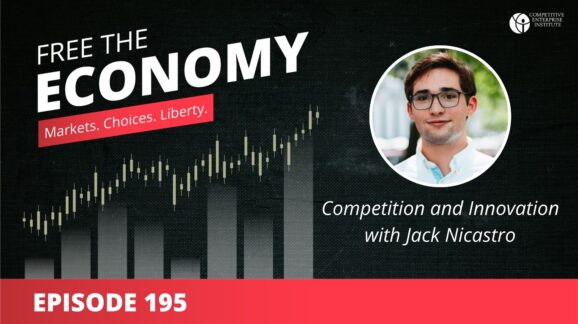
Free the Economy podcast: Competition and innovation with Jack Nicastro
In this week’s episode we cover the case of Suncor v. Boulder County at the Supreme Court, the problems with the Los…
Blog
Here’s how one-in, ten-out is successfully cutting rules — but not draining the swamp
It’s October already, and while there’s no real fiscal year for federal regulation, the September 30 closing of the 2026 budgetary fiscal year marks…
Search Posts
Op-Eds
Australian Resource Tax Will Dampen Innovation (Letter to the Editor)
Sir, Your editorial, “Taxmen vs miners: Australia’s resource super profit tax is a good idea” (May 31), argues that “natural resource profits are…
News Release
Supreme Court to Rule on Major Sarbanes-Oxley Case
Washington, D.C., June 3, 2010—The U.S. Supreme Court will soon hand down a major ruling which could put much-needed constitutional limits on an agency…
Blog
Obama Administration Pushes More Bailouts at Taxpayer Expense; America to Bail Out Corrupt Union Pension Funds
The Obama administration and its congressional allies are now pushing for billions more in bailouts for mismanaged union pension funds, and teachers unions. The union…
Blog
Regulation of the Day 138: Dwile Flonking
H.L. Mencken defined Puritanism as “The haunting fear that someone, somewhere, may be happy.” He may as well have been talking about regulators.
Blog
BP: A “Serial Environmental Criminal” With Close Ties To The Obama Administration
BP, which is responsible for the terrible oil spill in the Gulf of Mexico, has a safety record infinitely worse than other oil companies, which…
Op-Eds
Fee Free Way to Protect Consumers
The U.S. Senate, in the name of protecting American consumers, passed last month a massive financial regulation bill that creates the Bureau of Consumer…
Staff & Scholars

Clyde Wayne Crews
Fred L. Smith Fellow in Regulatory Studies
- Business and Government
- Consumer Freedom
- Deregulation

Ryan Young
Senior Economist and Director of Publications
- Antitrust
- Business and Government
- Regulatory Reform
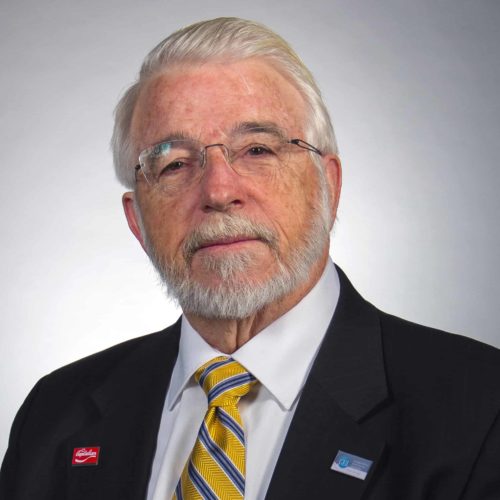
Fred L. Smith, Jr.
Founder; Chairman Emeritus
- Automobiles and Roads
- Aviation
- Business and Government

Sam Kazman
Counsel Emeritus
- Antitrust
- Automobiles and Roads
- Banking and Finance

Marlo Lewis, Jr.
Senior Fellow
- Climate
- Energy
- Energy and Environment