There are two main areas in which Congress can enact meaningful reform. The first is to rein in regulatory guidance documents, which we refer to as “regulatory dark matter,” whereby agencies regulate through Federal Register notices, guidance documents, and other means outside standard rulemaking procedure. The second is to enact a series of reforms to increase agency transparency and accountability of all regulation and guidance. These include annual regulatory report cards for rulemaking agencies and regulatory cost estimates from the Office of Management and Budget for more than just a small subset of rules.
In 2019, President Trump signed two executive orders aimed at stopping the practice of agencies using guidance documents to effectively implement policy without going through the legally required notice and comment process.
Featured Posts

Blog
The week in regulations: Cyber sanctions and tinnitus relief devices
Inflation is now more than double the Federal Reserve’s target. The Iran war heated up again. Agencies issued new regulations ranging from vending stands to…
Blog
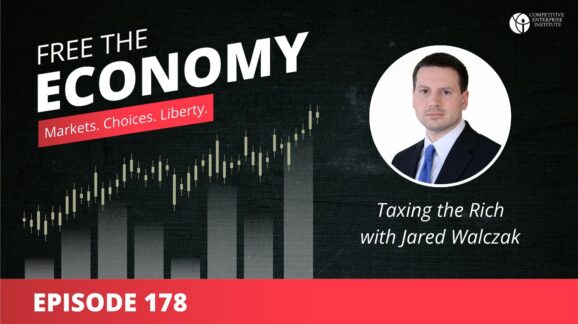
Free the Economy podcast: Taxing the rich with Jared Walczak
In this week’s episode we cover America’s low-income churn, reforms to civil asset forfeiture, changes to vehicle emissions testing, a shout…

Blog
The week in regulations: Bone void filler and halibut action
May’s job numbers were strong for the third month in a row, though job growth since Liberation Day remains under 100,000, for a labor force…
Search Posts
Blog
“I Can’t See the Objection”
The National Federation of the Blind and the American Council of the Blind are seeking a preliminary injunction in federal court to stop…
Blog
Reid Health Care Bill Adds New Tax Increases, Costs Twice As Much As Promised
The health care “reform” bill drafted by Senate Majority Leader Harry Reid adds new tax increases, and costs twice as much as its…
Blog
Harvard Medical School Dean Gives ObamaCare a “Failing Grade”
"In discussions with dozens of health-care leaders and economists, I find near unanimity of opinion that the final legislation that will emerge from Congress will…
Blog
Making Broadband Accessible: Innovation, Not Intervention
FCC regulators want to provide wider and cheaper broadband access by subsidizing it, raising taxes, and forcing network owners to share their network infrastructure with…
Blog
Senate Committee Rubberstamps Left-Wing Ideologue to Head Powerful OSHA Agency Despite His Anti-Gun and Pro-Junk-Science Views
David Michaels, a left-wing ideologue who supports junk science and seeks to restrict gun possession, has been approved by the Senate Health Committee…
Blog
Regulation of the Day 74: Grass Length in Jupiter, Florida
Residents whose lawns are taller than eight inches risk $250 per day fines. The city council voted last night on raising the fines to $1,000…
Staff & Scholars

Clyde Wayne Crews
Fred L. Smith Fellow in Regulatory Studies
- Business and Government
- Consumer Freedom
- Deregulation

Ryan Young
Senior Economist and Director of Publications
- Antitrust
- Business and Government
- Regulatory Reform
Fred L. Smith, Jr.
Founder; Chairman Emeritus
- Automobiles and Roads
- Aviation
- Business and Government

Sam Kazman
Counsel Emeritus
- Antitrust
- Automobiles and Roads
- Banking and Finance

Marlo Lewis, Jr.
Senior Fellow
- Climate
- Energy
- Energy and Environment