There are two main areas in which Congress can enact meaningful reform. The first is to rein in regulatory guidance documents, which we refer to as “regulatory dark matter,” whereby agencies regulate through Federal Register notices, guidance documents, and other means outside standard rulemaking procedure. The second is to enact a series of reforms to increase agency transparency and accountability of all regulation and guidance. These include annual regulatory report cards for rulemaking agencies and regulatory cost estimates from the Office of Management and Budget for more than just a small subset of rules.
In 2019, President Trump signed two executive orders aimed at stopping the practice of agencies using guidance documents to effectively implement policy without going through the legally required notice and comment process.
Featured Posts

Blog
How The No Surprises Act worsened the problem of surprise bills
Next week, Sen. Bill Cassidy (R-LA) will convene a roundtable to discuss adjustments to the 2020 No Surprises Act, which has come under…
Blog
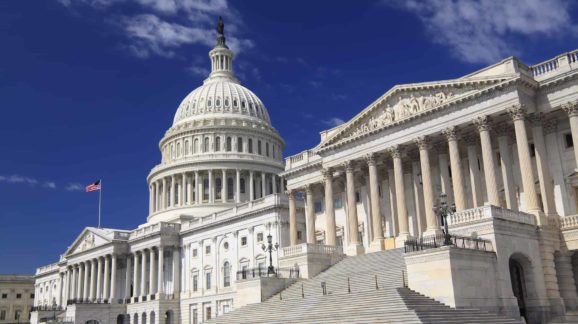
The rules Congress never gets to see
The 1996 Congressional Review Act (CRA) has been used to overturn only a few dozen federal regulatory directives since its enactment, most during the…

Blog
The week in regulations: Waters of the United States and ASCII formatting
The country reflected on the 25th anniversary of the September 11, 2001 terrorist attacks. President Trump promised a $5,000 check to every American adult…
Search Posts
Blog
Insurance Industry Stung By Health Care Deal
The CEO of the National Association of Health Underwriters has an op-ed in today’s Wall Street Journal whining that a weak individual purchase mandate is…
Blog
Unemployment Skyrockets: “U.S. now beating European unemployment rates”
Unemployment is now higher in the U.S. than in Europe, reports the Washington Post. “The official U.S. unemployment rate, reported last Friday, now stands…
Blog
Regulation of the Day 70: Combustible Dust
OSHA has published a proposed rule to regulate one of the greatest threats to mankind: combustible dust.
Blog
Poor Ford – They Thought They Were Operating in the Market
The Washington Times, “Greedy Autoworkers,” editorializes the overwhelming rejection of the UAW’s proposed labor agreement. Unlike GM and Chrysler, Ford elected to reject the…
Blog
Ludwig von Mises Gets Respect
“The Man Who Predicted the Depression,” in Saturday’s WSJ explains von Mises’s interpretation of the business cycle. To Mises, volatility was inevitable with a…
Blog
Buffet Displays Hope in America’s Energy Future
Warren Buffet, one of the most respected investors in America, recently purchased Burlington Northern, one of the nation’s largest railroads with some 32,000 miles of…
Staff & Scholars

Clyde Wayne Crews
Fred L. Smith Fellow in Regulatory Studies
- Business and Government
- Consumer Freedom
- Deregulation

Ryan Young
Senior Economist and Director of Publications
- Antitrust
- Business and Government
- Regulatory Reform
Fred L. Smith, Jr.
Founder; Chairman Emeritus
- Automobiles and Roads
- Aviation
- Business and Government

Sam Kazman
Counsel Emeritus
- Antitrust
- Automobiles and Roads
- Banking and Finance

Marlo Lewis, Jr.
Senior Fellow
- Climate
- Energy
- Energy and Environment