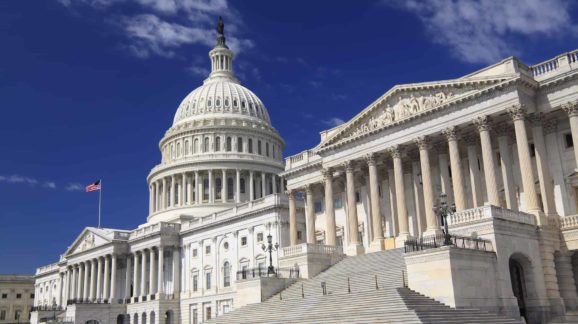
There are two main areas in which Congress can enact meaningful reform. The first is to rein in regulatory guidance documents, which we refer to as “regulatory dark matter,” whereby agencies regulate through Federal Register notices, guidance documents, and other means outside standard rulemaking procedure. The second is to enact a series of reforms to increase agency transparency and accountability of all regulation and guidance. These include annual regulatory report cards for rulemaking agencies and regulatory cost estimates from the Office of Management and Budget for more than just a small subset of rules.
In 2019, President Trump signed two executive orders aimed at stopping the practice of agencies using guidance documents to effectively implement policy without going through the legally required notice and comment process.
Featured Posts
Blog
The rules Congress never gets to see
The 1996 Congressional Review Act (CRA) has been used to overturn only a few dozen federal regulatory directives since its enactment, most during the…

Blog
The week in regulations: Waters of the United States and ASCII formatting
The country reflected on the 25th anniversary of the September 11, 2001 terrorist attacks. President Trump promised a $5,000 check to every American adult…

Blog
The week in regulations: Honey taxes and airline delays
August’s job numbers were better than expected. President Trump threatened to cut off trade to all nations that export more to America than they…
Search Posts
Blog
Sure, just what we need: yet another regulatory government agency
Here’s my letter published in the Oct. 25th edition of the Boston Globe responding to an editorial…
Newsletter
Web Giants Battle over Networks, Obama on Climate and New Financial Regulations
Google and AT&T battle over web rules. President Obama won’t talk climate change at UN negotiations in Copenhagen. The House Financial Services Committee votes to…
Blog
More Bad Mortgages on the Way, Thanks to Congressional Committee
Expect to see more bad mortgages as a result of a House committee’s vote Thursday to create the so-called “Consumer Financial Protection Agency.” That…
Blog
Sweden’s CO2 Labeling: Deceptive Advertising?
A quick point to add to Fran Smith's post on Sweden's experiment in labeling food and menus with carbon footprints: don't read too much into…
Blog
CEI Weekly: Scholars Support Case Against Sarbanes Oxley
CEI weekly is a compilation of articles and blogs from CEI's staff. This week features new "amicus briefs" submitted by legal scholars for the Sarbanes…
Blog
Regulation of the Day 65: Weighing Animals
If you sell poultry or livestock, it’s a good idea to weigh them first. Makes it easier for buyer and seller to agree on a…
Staff & Scholars

Clyde Wayne Crews
Fred L. Smith Fellow in Regulatory Studies
- Business and Government
- Consumer Freedom
- Deregulation

Ryan Young
Senior Economist and Director of Publications
- Antitrust
- Business and Government
- Regulatory Reform

Fred L. Smith, Jr.
Founder; Chairman Emeritus
- Automobiles and Roads
- Aviation
- Business and Government

Sam Kazman
Counsel Emeritus
- Antitrust
- Automobiles and Roads
- Banking and Finance

Marlo Lewis, Jr.
Senior Fellow
- Climate
- Energy
- Energy and Environment