There are two main areas in which Congress can enact meaningful reform. The first is to rein in regulatory guidance documents, which we refer to as “regulatory dark matter,” whereby agencies regulate through Federal Register notices, guidance documents, and other means outside standard rulemaking procedure. The second is to enact a series of reforms to increase agency transparency and accountability of all regulation and guidance. These include annual regulatory report cards for rulemaking agencies and regulatory cost estimates from the Office of Management and Budget for more than just a small subset of rules.
In 2019, President Trump signed two executive orders aimed at stopping the practice of agencies using guidance documents to effectively implement policy without going through the legally required notice and comment process.
Featured Posts

Blog
The regulatory dark matter beyond Washington’s graveyard of rules: 83,141 ghosts and counting
The clocks have turned back, the days are growing darker, and Washington’s regulatory shadows lengthen. Washington’s policy ghouls are waking up to the fact…

Blog
The week in regulations: Space modernization and closed captioning
Sir Patrick Stewart passed away at age 86. GDP growth came in higher than average for the third quarter, but so did September’s PCE…
Blog
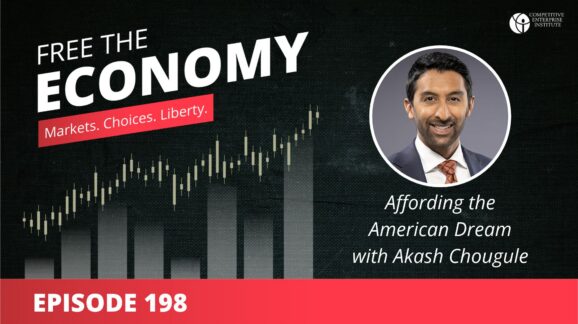
Free the Economy podcast: Affording the American Dream with Akash Chougule
In this week’s episode we cover what’s making housing so expensive, the common good of the Constitution, and more jawboning…
Search Posts
Blog
Silencing Criticism through Libel Law
The physicist turned science journalist Simon Singh has been sued in a UK court and, this past summer, found liable for libel for an April…
Blog
Fighting Eminent Domain Abuse
Popular outrage over eminent domain abuse may have waned a bit since the Supreme Court’s poorly-reasoned Kelo ruling in 2005, but economic development takings remain…
Blog
Senate Finance Passes Health Reform Bill
Earlier today, Senator Olympia Snowe (R-Me.) announced that she would vote in favor of the health care reform bill authored by Senate Finance Committee Chairman…
Blog
The Wages of Government Unions
The Economist‘s current Lexington column highlights the growing public resentment at the widening disparity between compensation and job security in the private and public…
Blog
Regulation of the Day 59: Pharmacy Interns in Colorado
It is illegal to intern for a pharmacist in Colorado without a license.
Newsletter
Climate Negotiations, Senate Health Care and the Nobel Prize
Climate negotiators attempt to reach an agreement ahead of UN-sponsored talks in December. The Senate Finance Committee prepares to vote on health…
Staff & Scholars

Clyde Wayne Crews
Fred L. Smith Fellow in Regulatory Studies
- Business and Government
- Consumer Freedom
- Deregulation

Ryan Young
Senior Economist and Director of Publications
- Antitrust
- Business and Government
- Regulatory Reform

Fred L. Smith, Jr.
Founder; Chairman Emeritus
- Automobiles and Roads
- Aviation
- Business and Government

Sam Kazman
Counsel Emeritus
- Antitrust
- Automobiles and Roads
- Banking and Finance

Marlo Lewis, Jr.
Senior Fellow
- Climate
- Energy
- Energy and Environment