There are two main areas in which Congress can enact meaningful reform. The first is to rein in regulatory guidance documents, which we refer to as “regulatory dark matter,” whereby agencies regulate through Federal Register notices, guidance documents, and other means outside standard rulemaking procedure. The second is to enact a series of reforms to increase agency transparency and accountability of all regulation and guidance. These include annual regulatory report cards for rulemaking agencies and regulatory cost estimates from the Office of Management and Budget for more than just a small subset of rules.
In 2019, President Trump signed two executive orders aimed at stopping the practice of agencies using guidance documents to effectively implement policy without going through the legally required notice and comment process.
Featured Posts

Blog
The week in regulations: Mailing live animals and crash test dummy comments
A Trump administration envoy to Russia called Vladimir Putin a humanitarian. The Justice Department announced it will sue if the Republican Senate candidate in…
Blog
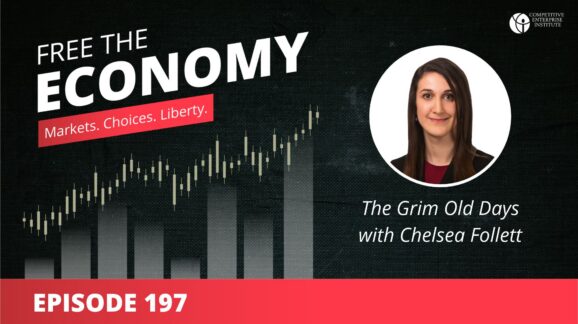
Free the Economy podcast: The Grim Old Days with Chelsea Follett
In this week’s episode we cover global energy security, a new lawsuit against Section 338 tariffs, and fresh talent in…

News Release
CEI challenges Wisconsin’s treatment of election prediction-market contracts
The Competitive Enterprise Institute has filed a federal lawsuit on behalf of Wisconsin voter and Green Bay radio host Joseph Giganti, Sr., challenging the…
Search Posts
Newsletter
Questionable Stimulus, EPA on CO2 and Underfunded Union Pensions
Experts question the economic wisdom of government stimulus spending. Critics of the Environmental Protection Agency’s plan to regulate carbon dioxide emissions point out the cost…
News Release
Unemployment Report, Real Solutions
Today's unemployment report showed the U.S. jobless rate reaching 9.8 percent, the highest since 1983. And although unemployment is referred to as a "lagging indicator"…
Newsletter
Credit Card Fees, Nike Resigns and EU Chemical Policy
Convenience store chain 7-Eleven lobbies for restrictions on credit card processing fees. Nike resigns from the board of the U.S. Chamber of Commerce in protest…
Blog
Big Labor’s Big Prize in Health Care “Reform”
In his Wall Street Journal column today, Holman Jenkins highlights one of the prizes at stake for organized labor in the current health care…
Blog
Rowdy Unionists Shout Down Opponents
Yesterday in Harrisburg, rowdy unionists disrupted a rally held by two Pennsylvania state legislators to promote legislation to end project labor agreements (PLAs), which…
Op-Eds
Retailers Shortchange Customers in Credit-Card Fee Fight
Today, 7-Eleven Inc. and other big retail chains will hit Capitol Hill to offer Congress members and their staffs a supersize serving of hypocrisy.
Staff & Scholars

Clyde Wayne Crews
Fred L. Smith Fellow in Regulatory Studies
- Business and Government
- Consumer Freedom
- Deregulation

Ryan Young
Senior Economist and Director of Publications
- Antitrust
- Business and Government
- Regulatory Reform

Fred L. Smith, Jr.
Founder; Chairman Emeritus
- Automobiles and Roads
- Aviation
- Business and Government

Sam Kazman
Counsel Emeritus
- Antitrust
- Automobiles and Roads
- Banking and Finance

Marlo Lewis, Jr.
Senior Fellow
- Climate
- Energy
- Energy and Environment