There are two main areas in which Congress can enact meaningful reform. The first is to rein in regulatory guidance documents, which we refer to as “regulatory dark matter,” whereby agencies regulate through Federal Register notices, guidance documents, and other means outside standard rulemaking procedure. The second is to enact a series of reforms to increase agency transparency and accountability of all regulation and guidance. These include annual regulatory report cards for rulemaking agencies and regulatory cost estimates from the Office of Management and Budget for more than just a small subset of rules.
In 2019, President Trump signed two executive orders aimed at stopping the practice of agencies using guidance documents to effectively implement policy without going through the legally required notice and comment process.
Featured Posts

Blog
The week in regulations: Resettling refugees and sea otter casualties
TSA lines reached their longest-ever wait times, bolstering the case for privatizing airport security. President Trump’s signature will appear on US currency starting later this…
Blog
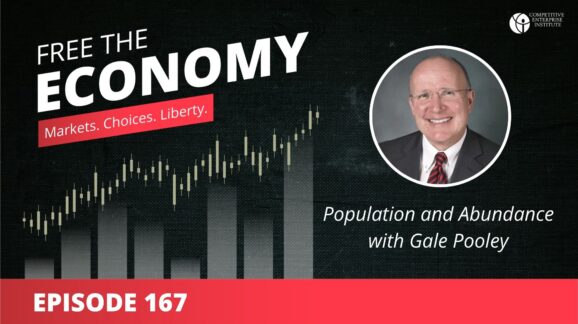
Free the Economy podcast: Population and abundance with Gale Pooley
In this week’s episode we cover income inequality, myths about homelessness, First Amendment protections for AI, and reforming unfunded mandates.

Blog
The week in regulations: Library pictures and aerobatic airplanes
The Iran war entered its fourth week. ICE agents might be reassigned to airport security. The Federal Reserve held interest rates steady. President Trump expressed…
Search Posts
News Release
CEI Unveils Agenda for Congress
Washington, D.C., January 26, 2009—With the incoming Obama administration and the opening of the new Congress, the House and Senate are…
Blog
Consumer Product Safety Law Backfires, Killing Thousands of Jobs
A consumer-product safety law recently passed by Congress will drive up the price of children’s clothes and toys and put thousands of small toymakers…
Blog
Regulating Our Way to Recovery
Normal 0 false false false MicrosoftInternetExplorer4 Tucked in the massive stimulus bill passed by the House Appropriation Committee is a $4.5 billion appropriation for…
Blog
TV Transition follies: Plaguing consumers then and now.
Looks like the “digital television transition” to abandon analog and make high-definition broadcasts the standard is not going to happen as planned, but is…
Blog
The New Green Economy?
I’ve spent a while crunching the numbers relating to energy and environment spending in the stimulus bill. The bill will spend about $80 billion on…
Blog
Avoiding Political Erectile Dysfunction
According to the Congressional Budget Office, “Bailout to Nowhere” money for the proposed new infrastructure stimulus won’t be spent within the next two years–far too…
Staff & Scholars

Clyde Wayne Crews
Fred L. Smith Fellow in Regulatory Studies
- Business and Government
- Consumer Freedom
- Deregulation

Ryan Young
Senior Economist and Director of Publications
- Antitrust
- Business and Government
- Regulatory Reform

Fred L. Smith, Jr.
Founder; Chairman Emeritus
- Automobiles and Roads
- Aviation
- Business and Government

Sam Kazman
Counsel Emeritus
- Antitrust
- Automobiles and Roads
- Banking and Finance

Marlo Lewis, Jr.
Senior Fellow
- Climate
- Energy
- Energy and Environment