There are two main areas in which Congress can enact meaningful reform. The first is to rein in regulatory guidance documents, which we refer to as “regulatory dark matter,” whereby agencies regulate through Federal Register notices, guidance documents, and other means outside standard rulemaking procedure. The second is to enact a series of reforms to increase agency transparency and accountability of all regulation and guidance. These include annual regulatory report cards for rulemaking agencies and regulatory cost estimates from the Office of Management and Budget for more than just a small subset of rules.
In 2019, President Trump signed two executive orders aimed at stopping the practice of agencies using guidance documents to effectively implement policy without going through the legally required notice and comment process.
Featured Posts

Blog
The regulatory costs we still aren’t counting
Several years ago, I assembled a “Costberg” working paper surveying the largely impenetrable and undisclosed costs of regulation. The project grew out of…

Blog
The week in regulations: Voting by mail and $100,000 visas
The number of new final regulations in 2026 topped the 2,000 mark. President Trump escalated his trade war against Canada and issued an executive…
Blog
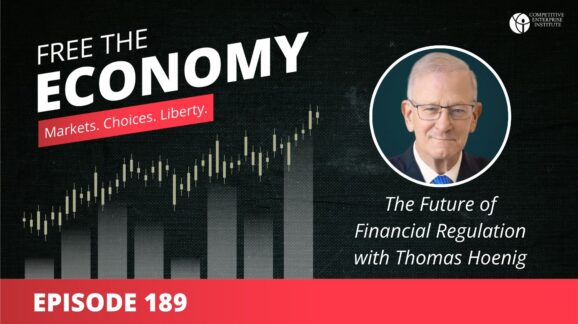
Free the Economy podcast: The future of financial regulation with Thomas Hoenig
In this week’s episode we cover the status of occupational licensing in the 50 states, the coming crack-up over entitlement spending,…
Search Posts
Blog
Lawrence Lessig and Fighting Corruption
Lawrence Lessig has recently shifted his focus away from intellectual property and technology policy and toward tackling the larger issue of political corruption. It’s quite…
Blog
Antitrust Liberalization May Avert Need for Bailouts; Outdated Laws Deter Efficient Mergers
In early 2007, the economy was humming along and General Motors was considered to be in the process of a turnaround. To help stabilize itself,…
Op-Eds
Power to the People
Normal 0 false false false MicrosoftInternetExplorer4 Normal 0 false false false MicrosoftInternetExplorer4 st1\:*{behavior:url(#ieooui) } st1\:*{behavior:url(#ieooui) } /* Style…
Blog
Jay Leno Riffs on the Bailout
A new viral email, claiming to be jokes written by Mr. Leno, adds a bit of humor to the financial crisis. As business and government…
Blog
Federally Sanctioned Propaganda Machine
Apple's 1984 "Big Brother" ad An article over at Ad Age brings up an angle on the whole…
Blog
Auto Bailout Smoke and Mirrors
Mickey Kaus, a moderate Democrat, explains how the proposed auto bailout contains little leverage for the proposed “auto czar” to really cut the excessive…
Staff & Scholars

Clyde Wayne Crews
Fred L. Smith Fellow in Regulatory Studies
- Business and Government
- Consumer Freedom
- Deregulation

Ryan Young
Senior Economist and Director of Publications
- Antitrust
- Business and Government
- Regulatory Reform
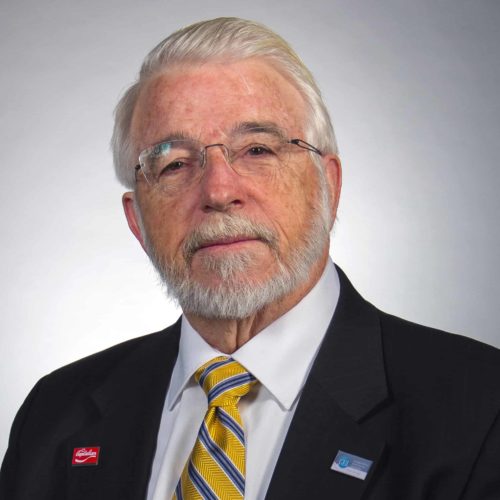
Fred L. Smith, Jr.
Founder; Chairman Emeritus
- Automobiles and Roads
- Aviation
- Business and Government

Sam Kazman
Counsel Emeritus
- Antitrust
- Automobiles and Roads
- Banking and Finance

Marlo Lewis, Jr.
Senior Fellow
- Climate
- Energy
- Energy and Environment