There are two main areas in which Congress can enact meaningful reform. The first is to rein in regulatory guidance documents, which we refer to as “regulatory dark matter,” whereby agencies regulate through Federal Register notices, guidance documents, and other means outside standard rulemaking procedure. The second is to enact a series of reforms to increase agency transparency and accountability of all regulation and guidance. These include annual regulatory report cards for rulemaking agencies and regulatory cost estimates from the Office of Management and Budget for more than just a small subset of rules.
In 2019, President Trump signed two executive orders aimed at stopping the practice of agencies using guidance documents to effectively implement policy without going through the legally required notice and comment process.
Featured Posts

Blog
It’s not the (government’s) thought that counts
Good intentions are not enough to create an effective regulation. An executive agency, Congress, or the White House can have the best intentions in…

Blog
The week in regulations: Roadless areas and squid quotas
The national debt topped $40 trillion. Vice President JD Vance argued for ending the dollar’s status as the world’s reserve currency. The Treasury Department…
Blog
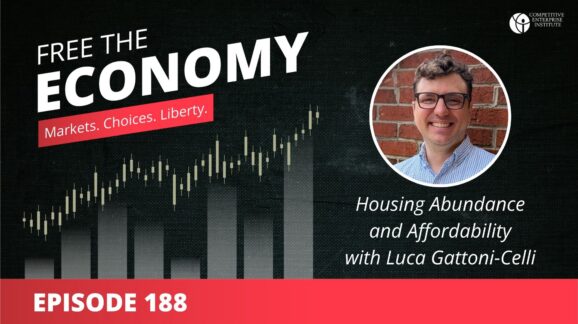
Free the Economy podcast: Housing abundance and affordability with Luca Gattoni-Celli
In this week’s episode we cover J.D. Vance and the strength of the US dollar, how to track extreme weather events,…
Search Posts
Newsletter
The Competitive Enterprise Institute Daily Update
<?xml:namespace prefix = o ns = “urn:schemas-microsoft-com:office:office” /> Issues in the News 1. TECHNOLOGY…
Newsletter
The Competitive Enterprise Institute Daily Update
Issues in the News 1. HURRICANE KATRINA A recent survey of Hurricane Katrina survivors finds a renewed sense of…
Op-Eds
Turning MySpace into TheirSpace
Like a coffee shop or a mall, the Internet has evolved into a digital “third place,” a location we visit not only for…
News Release
New ‘Center for Entrepreneurship’ to Examine Financial Regulation
Contact: Christine Hall, 202.331.2258 Washington, D.C., August 24, 2006— The Competitive Enterprise Institute is proud to announce the launch of a new…
Op-Eds
Judicial Activism in Overdrive: Massachusetts, et al, v. EPA
August 31 is the deadline for filing the petitioners’ brief with the Supreme Court in Massachusetts et al. v. U.S. Environmental Protection Agency. Plaintiffs, who…
Products
“Two-Point-Eight-Trillion-Anything Is Scary”
The Competitive Enterprise Institute’s 2006 Annual Dinner and Reception paid homage to Hollywood. The evening, themed “A Night at the Movies,” featured P.J. O’Rourke,…
Staff & Scholars

Clyde Wayne Crews
Fred L. Smith Fellow in Regulatory Studies
- Business and Government
- Consumer Freedom
- Deregulation

Ryan Young
Senior Economist and Director of Publications
- Antitrust
- Business and Government
- Regulatory Reform

Fred L. Smith, Jr.
Founder; Chairman Emeritus
- Automobiles and Roads
- Aviation
- Business and Government

Sam Kazman
Counsel Emeritus
- Antitrust
- Automobiles and Roads
- Banking and Finance

Marlo Lewis, Jr.
Senior Fellow
- Climate
- Energy
- Energy and Environment