As a result, CEI experts have encouraged and supported trade-enhancing policies and treaties over the years, including “fast-track” Trade Promotion Authority, specific trade deals, and multilateral efforts such as the Doha round of the World Trade Organization. We have opposed increased tariffs, attempts to increase regulation through trade deal language, and the trend toward bilateral rather than multilateral deals. CEI continues to make the case for free trade in the face of increased bipartisan hostility to the idea.
CEI’s experts also work with like-minded colleagues abroad to oppose harmful initiatives, such as working with British colleagues to stop that country’s competition agency from blocking mergers between American firms based on speculative reasoning.
Featured Posts

Blog
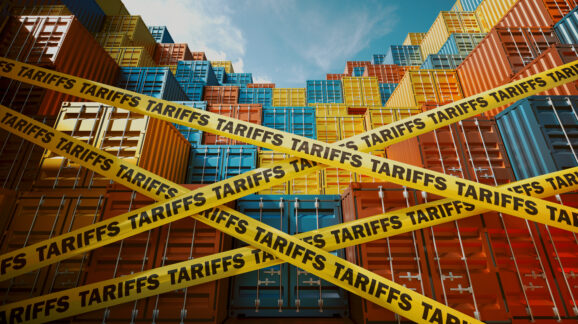
Section 338-tariff uncertainty highlights the knowledge problem
Last month, the Trump administration invoked Section 338 of the Tariff Act of 1930 to impose new 50 percent tariffs against Canada. A…
Blog
Protectionism in North America? Not again
Well before its ratification in 1993, the North American Free Trade Agreement (NAFTA) was scorned by its critics as a dangerous, unfair deal. CEI,…

Blog
The self-defeating trade policy affecting memory chips
Affordability is a major concern for many Americans. Whether you’re checking out at the grocery store, filling up at the gas station, or paying…
Search Posts
Blog
Signs of Life for Ex-Im?
Last night the House of Representatives voted on a rare discharge petition, under which a controversial bill can skip the usual committee process and go…
Blog
Latest Ex-Im Revival Tactic: The Discharge Petition
One of the classic lines from the 1990 novel and 1993 movie Jurassic Park is that “life finds a way.” As with dinosaurs, so with government programs.
Blog
Trans-Pacific Partnership Agreement Covers a Lot of Ground
Trade ministers of 12 Asia-Pacific countries announced October 5, 2015, that they had completed negotiations on the Trans-Pacific Partnership Agreement (TPP). The TPP links…
Blog
World Bank Increases Number of Poor
The World Bank is considering changing its definition of what constitutes extreme poverty, raising the level below which someone is treated as extremely poor from $1.25…
Blog
New CEI Paper: The Case for Closing OPIC
OPIC is the Overseas Private Investment Corporation. It is a federal agency that offers financing for international projects by U.S. companies. Intended mainly as an…
Blog
GE’s Ex-Im Scare Story Further Debunked
Earlier this week, I wrote that GE is moving 500 jobs overseas as a direct result of the Export-Import Bank’s expiration. A correction is in…