There are two main areas in which Congress can enact meaningful reform. The first is to rein in regulatory guidance documents, which we refer to as “regulatory dark matter,” whereby agencies regulate through Federal Register notices, guidance documents, and other means outside standard rulemaking procedure. The second is to enact a series of reforms to increase agency transparency and accountability of all regulation and guidance. These include annual regulatory report cards for rulemaking agencies and regulatory cost estimates from the Office of Management and Budget for more than just a small subset of rules.
In 2019, President Trump signed two executive orders aimed at stopping the practice of agencies using guidance documents to effectively implement policy without going through the legally required notice and comment process.
Featured Posts
Blog
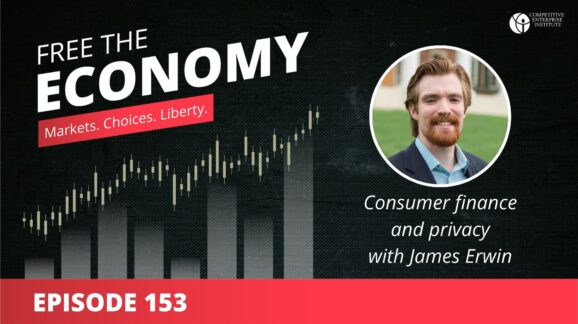
Free the Economy podcast: Consumer finance and privacy with James Erwin
In this week’s episode we talk about the decline of electric vehicles, liberation for home appliances, the failure of tariffs to…

Blog
Time to end the Christmas tree tax
Fun holiday fact: the federal government has a Christmas Tree Promotion Board. It works a bit like a trade association does in the private…

Blog
The week in regulations: Fuel casks and water beads
The Federal Reserve cut interest rates. President Trump proposed $12 billion in giveaways to farmers harmed by his tariffs. Agencies issued new regulations ranging from…
Search Posts
Blog
Paul Atkins is an excellent choice to lead the SEC
On Wednesday, the Senate confirmed Paul S. Atkins to serve as chair of the Securities and Exchange Commission (SEC). As I have stated before,…
Blog
What happened to never-needed regulations
CEI led a never-needed campaign during the COVID-19 pandemic. The idea was simple: if a regulation was causing harm in good times, it was probably…
Blog
This week in ridiculous regulations: Helicopter hoists and migrant children
President Trump announced new auto tariffs that will take effect next week, raising the price of average-priced new cars from $3,000 to $10,000. Agencies issued…
Blog
Trump’s deregulation push: Several steps forward—and some sideways
As I cover in a new column at Forbes, Trump 2.0 has brought a flurry of executive orders aimed at deregulation—one-in, ten-out rules,…
Blog
This week in ridiculous regulations: Helicopter hoists and migrant children
President Trump announced new auto tariffs that will take effect next week, raising the price of average-priced new cars from $3,000 to $10,000. Agencies issued…
Blog
Free the Economy podcast: Working for a better tomorrow with Vinnie Vernuccio
In this week’s episode we cover America’s founding principles, the Cato Institute’s recommendations for reforming financial regulation, why Republicans shouldn’t be busting…
Staff & Scholars

Clyde Wayne Crews
Fred L. Smith Fellow in Regulatory Studies
- Business and Government
- Consumer Freedom
- Deregulation

Ryan Young
Senior Economist
- Antitrust
- Business and Government
- Regulatory Reform

Fred L. Smith, Jr.
Founder; Chairman Emeritus
- Automobiles and Roads
- Aviation
- Business and Government

Sam Kazman
Counsel Emeritus
- Antitrust
- Automobiles and Roads
- Banking and Finance

Marlo Lewis, Jr.
Senior Fellow
- Climate
- Energy
- Energy and Environment