There are two main areas in which Congress can enact meaningful reform. The first is to rein in regulatory guidance documents, which we refer to as “regulatory dark matter,” whereby agencies regulate through Federal Register notices, guidance documents, and other means outside standard rulemaking procedure. The second is to enact a series of reforms to increase agency transparency and accountability of all regulation and guidance. These include annual regulatory report cards for rulemaking agencies and regulatory cost estimates from the Office of Management and Budget for more than just a small subset of rules.
In 2019, President Trump signed two executive orders aimed at stopping the practice of agencies using guidance documents to effectively implement policy without going through the legally required notice and comment process.
Featured Posts

Blog
The week in regulations: Mailing live animals and crash test dummy comments
A Trump administration envoy to Russia called Vladimir Putin a humanitarian. The Justice Department announced it will sue if the Republican Senate candidate in…
Blog
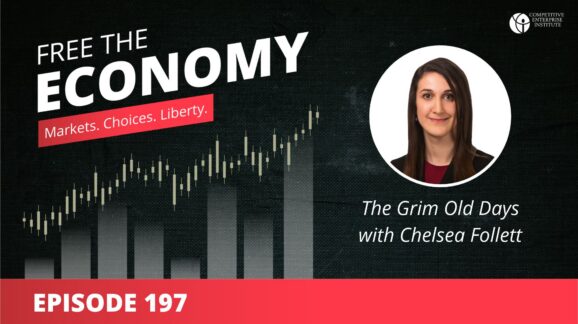
Free the Economy podcast: The Grim Old Days with Chelsea Follett
In this week’s episode we cover global energy security, a new lawsuit against Section 338 tariffs, and fresh talent in…

News Release
CEI challenges Wisconsin’s treatment of election prediction-market contracts
The Competitive Enterprise Institute has filed a federal lawsuit on behalf of Wisconsin voter and Green Bay radio host Joseph Giganti, Sr., challenging the…
Search Posts
Products
Chapter 7: Unified Agenda of regulatory actions
Along with the Report to Congress, the Federal Register, and the Code of Federal Regulations, another vehicle for regulatory disclosure is the spring and fall…
Products
Chapter 5: Over 19,000 agency public notices annually
Presidents issue a few dozen memoranda and other proclamations each year. Departments and agencies, however, issue thousands of public notices in the Federal Register every…
Products
Chapter 4: Regulatory dark matter
Although executive actions are typically understood to deal with the internal operations of the federal government, they increasingly can have binding effects and influence private…
Products
Chapter 10: Federal rules affecting state and local governments
State and local officials’ concerns about federal mandates overriding their priorities resulted in passage of the Unfunded Mandates Reform Act (UMRA) of 1995. The law…
Products
Chapter 2: Why we need a regulatory budget
Federal spending programs are funded either by taxes or by borrowing, with interest, from future tax collections. The public can readily inspect the costs of…
Products
Chapter 8: Economically significant rules
From 1993 until April 2023, rules with annual economic effects of at least $100 million were classified as economically significant. Biden’s EO 14094 raised the…
Staff & Scholars

Clyde Wayne Crews
Fred L. Smith Fellow in Regulatory Studies
- Business and Government
- Consumer Freedom
- Deregulation

Ryan Young
Senior Economist and Director of Publications
- Antitrust
- Business and Government
- Regulatory Reform

Fred L. Smith, Jr.
Founder; Chairman Emeritus
- Automobiles and Roads
- Aviation
- Business and Government

Sam Kazman
Counsel Emeritus
- Antitrust
- Automobiles and Roads
- Banking and Finance

Marlo Lewis, Jr.
Senior Fellow
- Climate
- Energy
- Energy and Environment