There are two main areas in which Congress can enact meaningful reform. The first is to rein in regulatory guidance documents, which we refer to as “regulatory dark matter,” whereby agencies regulate through Federal Register notices, guidance documents, and other means outside standard rulemaking procedure. The second is to enact a series of reforms to increase agency transparency and accountability of all regulation and guidance. These include annual regulatory report cards for rulemaking agencies and regulatory cost estimates from the Office of Management and Budget for more than just a small subset of rules.
In 2019, President Trump signed two executive orders aimed at stopping the practice of agencies using guidance documents to effectively implement policy without going through the legally required notice and comment process.
Featured Posts
Blog
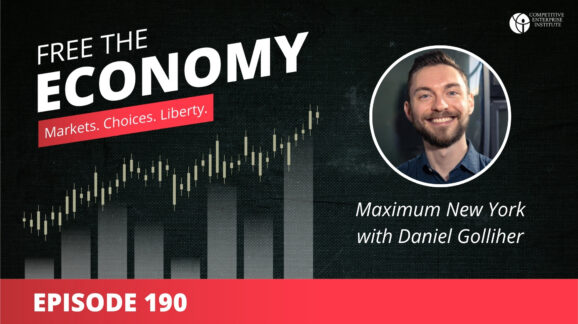
Free the Economy podcast: Maximum New York with Daniel Golliher
In this week’s episode we cover climate collusion between California and Quebec, how luxurious college campuses are breeding socialists, and government…

Blog
The regulatory costs we still aren’t counting
Several years ago, I assembled a “Costberg” working paper surveying the largely impenetrable and undisclosed costs of regulation. The project grew out of…

Blog
The week in regulations: Voting by mail and $100,000 visas
The number of new final regulations in 2026 topped the 2,000 mark. President Trump escalated his trade war against Canada and issued an executive…
Search Posts
Blog
This week in ridiculous regulations: Cable pricing and outer space arms trafficking
Donald Trump won a second term. The change in power might mean a second regulatory midnight rush between now and the inauguration. An initial…
Blog
A 2024 CEI HALLOWEEN SPECIAL: A new inventory unmasking federal agency guidance documents
In my new Halloween-themed article at Forbes, I explore the eerie expanse of federal agency guidance documents. We have to try to have…
Blog
The origins and lessons of the ‘Satanic Panic’ of the 1980s
Moral panics are just one of those things that free societies seem to go through on a regular basis. The “satanic panic” was the…
Blog
The compliance crisis: Unveiling the regulatory loopholes agencies love
While federal regulatory reform is critical, it’s equally important that existing oversight laws be followed. Unfortunately, many of these laws are routinely disregarded, with…
Blog
Next time, let’s try emergency powers that shrink government
As the nation deals with the aftermath of successive natural disasters, the need for a renewed debate on federal emergency powers is increasingly clear.
Blog
#NeverNeeded regulations hindering hurricane recovery
It may be time to revive the #NeverNeeded campaign to assist the Hurricane Helene and Hurricane Milton recovery efforts. The idea behind…
Staff & Scholars

Clyde Wayne Crews
Fred L. Smith Fellow in Regulatory Studies
- Business and Government
- Consumer Freedom
- Deregulation

Ryan Young
Senior Economist and Director of Publications
- Antitrust
- Business and Government
- Regulatory Reform

Fred L. Smith, Jr.
Founder; Chairman Emeritus
- Automobiles and Roads
- Aviation
- Business and Government

Sam Kazman
Counsel Emeritus
- Antitrust
- Automobiles and Roads
- Banking and Finance

Marlo Lewis, Jr.
Senior Fellow
- Climate
- Energy
- Energy and Environment