There are two main areas in which Congress can enact meaningful reform. The first is to rein in regulatory guidance documents, which we refer to as “regulatory dark matter,” whereby agencies regulate through Federal Register notices, guidance documents, and other means outside standard rulemaking procedure. The second is to enact a series of reforms to increase agency transparency and accountability of all regulation and guidance. These include annual regulatory report cards for rulemaking agencies and regulatory cost estimates from the Office of Management and Budget for more than just a small subset of rules.
In 2019, President Trump signed two executive orders aimed at stopping the practice of agencies using guidance documents to effectively implement policy without going through the legally required notice and comment process.
Featured Posts
Blog
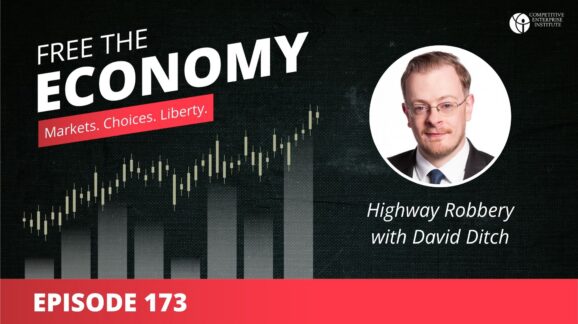
Free the Economy podcast: Highway robbery with David Ditch
In this week’s episode we cover how to make the moral case for capitalism, affordable housing via regulatory reform, and tracking…

Blog
Deregulation by the numbers: One-third into 2026 — a rulebook rewrite?
At the close of the first third of the year, a spring 2026 Unified Agenda formally outlining agency priorities has yet to appear. In fact,…

Blog
The week in regulations: Marine terminal fires and marijuana rescheduling
The Federal Reserve held interest rates steady, and outgoing Chairman Jerome Powell will remain on the Fed’s Board of Governors when Kevin Warsh takes over.
Search Posts
Blog
“Big, bad banks” — a “faux-populist” response
Uh-oh. It was speculation yesterday, but reality today – President Obama and the Democrats have the banking industry in their sights with their trigger…
Blog
Obama’s Glass-Steagall 2.0 could crash financial system
President Obama’s proposal today to bring back…
Blog
Regulation of the Day 102: The Size of Banks
The White House is expected to propose today a maximum allowable size for banks.
Op-Eds
Obama Plan to Split Banks Could Crash Economy
President Obama’s proposal today to bring back 1930s-like separation of commercial and investment banks, dubbed Glass-Steagall II or Glass-Steagall 2.0, would do…
Op-Eds
Crisis Management
One of the more confusing aspects of the great economic meltdown of 2008-09—even more confusing than collateralized debt obligations—has been the tortured…
Blog
Populism, jobs and the economy — where do we go from here?
Scott Brown’s decisive victory in the Massachusetts Senate race has upturned the Democrats’ Progressive agenda. Brown, “the people’s seat” senator, had a resonant message…
Staff & Scholars

Clyde Wayne Crews
Fred L. Smith Fellow in Regulatory Studies
- Business and Government
- Consumer Freedom
- Deregulation

Ryan Young
Senior Economist and Director of Publications
- Antitrust
- Business and Government
- Regulatory Reform
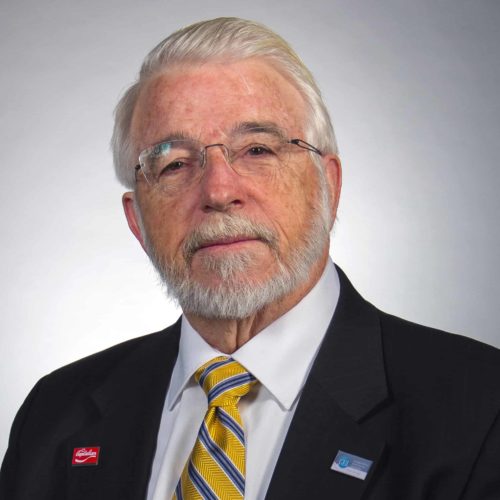
Fred L. Smith, Jr.
Founder; Chairman Emeritus
- Automobiles and Roads
- Aviation
- Business and Government

Sam Kazman
Counsel Emeritus
- Antitrust
- Automobiles and Roads
- Banking and Finance

Marlo Lewis, Jr.
Senior Fellow
- Climate
- Energy
- Energy and Environment