There are two main areas in which Congress can enact meaningful reform. The first is to rein in regulatory guidance documents, which we refer to as “regulatory dark matter,” whereby agencies regulate through Federal Register notices, guidance documents, and other means outside standard rulemaking procedure. The second is to enact a series of reforms to increase agency transparency and accountability of all regulation and guidance. These include annual regulatory report cards for rulemaking agencies and regulatory cost estimates from the Office of Management and Budget for more than just a small subset of rules.
In 2019, President Trump signed two executive orders aimed at stopping the practice of agencies using guidance documents to effectively implement policy without going through the legally required notice and comment process.
Featured Posts

National Review
From Munitions Shortage to Ebola, Dodd–Frank Minerals Measure Makes Things Worse
A scan of news headlines warns readers of two seemingly unrelated dangers around the globe. One is a potential shortage of missiles, interceptors, and…

Blog
The week in regulations: School libraries and sport pilots
The Federal Reserve raised interest rates. Congress passed a Russia sanctions bill that gives President Trump more tariff authority. Agencies issued new regulations ranging…
Blog
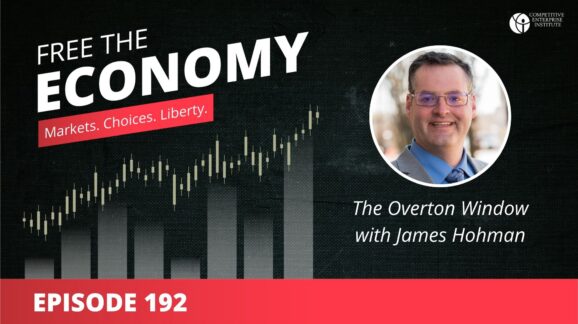
Free the Economy podcast: The Overton Window with James Hohman
In this week’s episode we cover Treasury yields, oil prices, US-China-Taiwan security policy, and Trump’s $5,000 dividend checks. Our…
Search Posts
Newsletter
The Competitive Enterprise Institute Daily Update
Issues in the News 1. ENERGY House and Senate conference committee members reach agreement on major energy legislation.
Op-Eds
Bureaucrats Can’t Run A Railroad
Given its recent troubles, Amtrak's flagship Northeast corridor high-speed Acela train might as well be renamed “Decela.” Amtrak officials suspended the service and acknowledged that…
Op-Eds
Bureaucrats Can’t Run A Railroad
Given its recent troubles, Amtrak's flagship Northeast corridor high-speed Acela train might as well be renamed “Decela.” Amtrak officials suspended the service and acknowledged that…
Op-Eds
All Cost, No Benefit
Tomorrow, the Senate Energy and Natural Resources Committee will hold a hearing on Sen. Jeff Bingaman's (D-N.M.) Climate and Economy Insurance Act. Originally…
Study
Boeing vs. Airbus
Full Document Available in PDF The United States and the European Union (EU) may be on…
Newsletter
The Competitive Enterprise Institute Daily Update
1. REGULATION Washington Post columnist Cindy Skrzycki cites CEI’s most recent regulatory study, Ten Thousand Commandments. CEI Expert Available to Comment:…
Staff & Scholars

Clyde Wayne Crews
Fred L. Smith Fellow in Regulatory Studies
- Business and Government
- Consumer Freedom
- Deregulation

Ryan Young
Senior Economist and Director of Publications
- Antitrust
- Business and Government
- Regulatory Reform
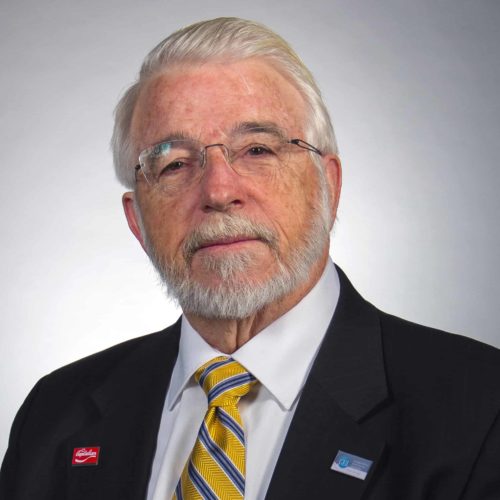
Fred L. Smith, Jr.
Founder; Chairman Emeritus
- Automobiles and Roads
- Aviation
- Business and Government

Sam Kazman
Counsel Emeritus
- Antitrust
- Automobiles and Roads
- Banking and Finance

Marlo Lewis, Jr.
Senior Fellow
- Climate
- Energy
- Energy and Environment