Shutdown underscores the need for privatized airport security
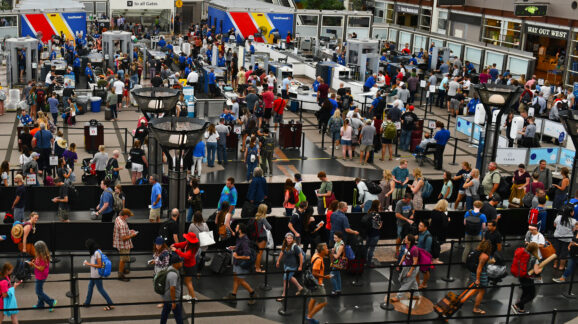
Photo Credit: Getty
A partial shutdown stretching beyond 40 days is a reminder that when government controls essential services, those services can easily become tools of political leverage, argues CEI policy analyst Steve Swedberg, in a statement:
The American people deserve better than a system that allows aviation security to become a bargaining chip in prolonged legislative standoffs. Travelers, airport workers, and taxpayers bear the consequences. Even as the president recently took executive action to temporarily fund TSA operations, Congress still has not reached a funding agreement, which leaves the system vulnerable to continuing disruption.
This problem is institutional and wholly predictable.
The Transportation Security Administration (TSA) operates as a self-regulating government monopoly, insulated from forces that drive performance and accountability. Without competition, there is no pressure to improve. Without market discipline, there are no meaningful consequences for failure. And without independence from political funding, officials may have to go without pay, which has led many to resign.
A government-run screening system concentrates risk in a way that leaves it exposed during moments of fiscal or legislative breakdown. When funding lapses, operations suffer and the public ultimately pays the price. Private firms, by contrast, cannot afford to fail in this way. They must deliver results or lose business. They plan for disruption, adapt in real time, and maintain continuity because their survival depends on it.
This is how airport security works successfully worldwide and in 20 airports within the US. The idea that only a federal bureaucracy can provide effective security is outdated and demonstrably false.
Americans deserve a travel system that does not falter when Congress fails to reach agreement. If policymakers are serious about reform, they must confront the root cause of dysfunction: a centralized, government-run monopoly.
The solution is straightforward: Congress and the administration should work together to end the federal monopoly on airport screening and move toward privatized TSA functions. That way, aviation security remains stable and reliable regardless of political circumstances.
Related analysis:
Steve Swedberg, “Shutdown woes show why it is time to privatize the TSA,” March 17, 2026
Iain Murray, “Reform the Transportation Security Administration,”January 18, 2011