Report Highlights the Environmental Costs of Wind and Solar
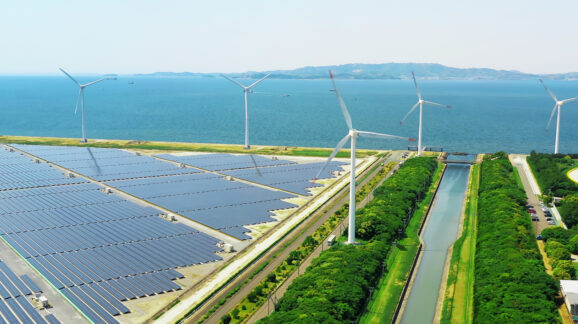
A Center of the American Experiment, authored by Sarah Montalbano, explores the environmental costs of wind, solar, and battery storage technologies. These “green” technologies are often hailed for their ability to reduce carbon emissions, but their environmental costs are often not even considered.
The paper highlights something that is one of my favorite points to bring up in any energy discussion. All energy sources involve tradeoffs. Often the tradeoffs of wind and solar are ignored, while the tradeoffs involved with other electricity sources such as nuclear and natural gas are highlighted constantly.
Wind and solar involve plenty of tradeoffs. Despite being considered clean, they require significant amounts of rare minerals, many of which are primarily produced in countries that lack standards for worker safety and environmental impact. These minerals are also often controlled by authoritarian countries, and their usage fosters a reliance on the supply chains of adversarial nations, especially China.
In addition to the materials concern, wind and solar facilities have much smaller operating lifespans than nuclear and natural gas power plants. As points out, “The operating lifespan of wind turbines and solar panels is between 20 and 25 years at maximum, while natural gas plants may operate for 40 years, and nuclear plants operate between 40 and 80 years. Repowering often occurs well before expected lifespans, which further exacerbates the environmental impacts of wind and solar.”
The time that a facility is usable is essential to understanding its lifetime impact, so it’s vital to understand how much shorter the average operating life of wind and solar facilities is. Because of this, the material inputs are spread over less useful life of a facility, and the same resources need to be used to build a replacement facility sooner. Their components are also notably or dispose of, an issue that is compounded by their short lifespans.
Read more at the Independent Institute