Federal court strikes down another bad appliance regulation – this time for stoves
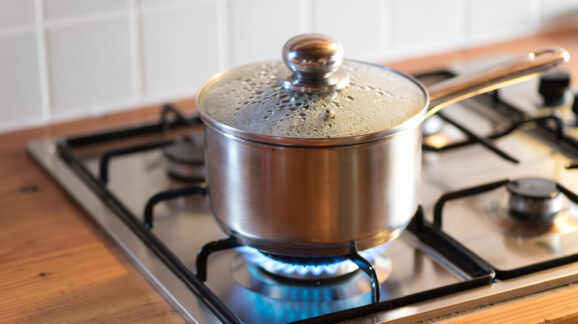
Photo Credit: Getty
Last June, the Supreme Court vacated a lower court decision upholding a bad Department of Energy (DOE) efficiency regulation targeting residential furnaces and sent the case back for reconsideration. As CEI detailed in an amicus brief filed with the high court, the 2023 rule would have effectively outlawed an entire class of furnaces preferred by millions of homeowners, and, in doing so, violated the underlying Energy Policy and Conservation Act (EPCA), which bars DOE from setting a standard that compromises appliance choice and features. The US Court of Appeals for the Fifth Circuit has now set aside and remanded a 2024 DOE efficiency standard for stoves.
It all began in early 2023, when stove regulations became a front-burner issue (pun intended). A Biden administration-appointed commissioner on the Consumer Product Safety Commission stated that gas stoves may need to be restricted and possibly banned. And at nearly the same time, DOE proposed a rule setting first-ever annual energy consumption ceilings for cooktops that would have disproportionately burdened gas models while favoring the electric models preferred by climate change activists. However, a powerful consumer backlash against such federal meddling forced the administration to back off. The Consumer Product Safety Commission dropped the matter. DOE has abandoned the 2023 proposal after an avalanche of adverse comments, though it never formally withdrew it.
But DOE did not walk away entirely. Rather than a conventional rulemaking, the agency chose to use a direct final rule (DFR), pursuant to provisions in EPCA. In general, a direct final rule allows an agency to proceed directly to a final rule without ever issuing a proposed rule. There are various requirements an agency must meet to use a direct final rule, including it being uncontroversial. Under EPCA, DOE can go forward with a direct final rule for appliance standards only upon receiving a joint statement submitted by stakeholders who are “fairly representative of relevant points of view,” a group the statute defines to include manufacturers, states, and efficiency advocates.
Then, the public is given the opportunity to comment on the direct final rule. DOE must withdraw the direct final rule if there are one or more adverse comments that the agency determines “may provide a reasonable basis for withdrawing the direct final rule.”
The states of Mississippi, Montana, Louisiana, Nebraska, Tennessee, Texas, and Utah filed adverse comments on the direct final rule, including what the DFR considered to be serious performance and reliability issues with compliant stoves that violated consumer protections in the law. CEI also filed adverse comments regarding other problems with the proposal. However, the agency asserted that the states’ adverse comments did not provide a reasonable basis for withdrawing the rule and finalized it as proposed by the stakeholders. Indeed, the history of direct final rules on appliance standards shows that DOE is often dismissive of such adverse comments.
But this time the states sued, and on August 11, the court largely agreed with them, including saying that their concerns provided a “reasonable basis” for withdrawal.
The court also noted the inappropriateness of using this alternative rulemaking process that is typically reserved for uncontroversial rulemakings. “The previous administration’s gas-stove measures were among its most controversial energy proposals. The idea that all that controversy could be elided using the DFR—a mechanism designed for consensus rulemaking—is untenable,” it said.
If a direct final rule fails, the next step is for the agency to return to conventional notice-and-comment rulemaking. The court faulted DOE’s process, not the stringency of the standards themselves, so nothing in the decision prevents a future administration from pursuing the same efficiency levels through ordinary notice-and-comment. But given the unpopularity of stove meddling, both with the public and within the current administration, it seems that stoves will be safe from federal regulation for the foreseeable future.