The never-ending ferry tale: Why Washington shouldn’t subsidize ferries
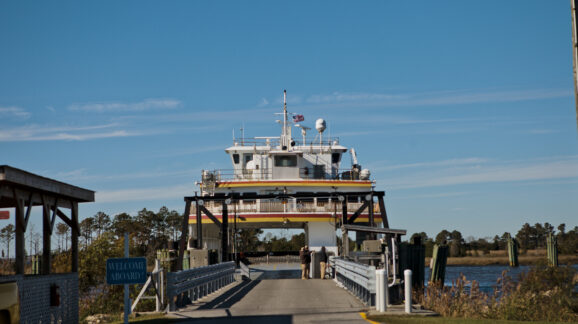
Photo Credit: Getty
The Trump administration recently announced $664.8 million in federal grants for ferry infrastructure, including $28.2 million for North Carolina’s Cherry Branch Ferry Terminal. That caught my attention because before joining CEI, I was a transportation fiscal analyst for the North Carolina General Assembly. I had firsthand exposure to the North Carolina Department of Transportation (NCDOT) and its Ferry Division, including touring its vessels and shipyards.
The timing of the grant is particularly curious. North Carolina is now undertaking a performance audit of the Ferry Division, with the State Auditor required to report its findings by January 15, 2027. So as Raleigh asks how to make its ferry system more sustainable, Washington is sending North Carolina $28 million. That raises a more fundamental question: why is Washington paying for ferries?
North Carolina has spent years wrestling with the costs of its ferry system. Several routes historically carried passengers and vehicles without charging fares, while NCDOT reported insufficient funding for capital needs, including millions of dollars in unfunded vessel replacements. A 2017 General Assembly evaluation found opportunities to increase fare collections and reduce costs by adjusting fares and cutting low-demand crossings.
Meanwhile, the state’s ferry fleet has grown older and more expensive to maintain. Many vessels date to the 1980s and 1990s, and the Ferry Division has struggled to keep pace with maintenance needs. Its shipyards lack sufficient capacity to handle all necessary work, which has required NCDOT to turn to outside contractors for some repairs, at taxpayers’ expense.
After decades of subsidized ferry service, North Carolina is finally asking users to pay more. A 2026 law requires NCDOT to begin collecting tolls on all ferry routes by January 1, 2027, although the toll rates have not yet been finalized. That may be a step toward fiscal responsibility, but it comes after the state has accumulated substantial maintenance and replacement needs.
North Carolina isn’t the only state or recent grant recipient in this same boat. Alaska’s Marine Highway System acknowledges that fares alone don’t cover operating costs. Washington State Ferries recovered less than half of its operating costs from fares in 2024. Maine requires state support for half of its ferry operating costs and funds the system’s capital expenses, while Virginia’s Jamestown-Scotland Ferry charges users nothing.
These ferry systems operate under different circumstances and conditions. Yet in all cases, users do not pay the full cost to provide the service.
This is where economist and Nobel Prize winner Ronald Coase’s famous analysis of lighthouses provides enlightenment. The lighthouse was once the textbook example of a service that government supposedly had to provide because charging individual beneficiaries was difficult — the very definition of a public good. Coase challenged that conventional wisdom by showing that privately operated lighthouses existed and that ships could be conveniently charged for their use.
A ferry has an even more straightforward financing mechanism because its beneficiaries are readily identifiable, and passengers and vehicles can be charged directly. If a ferry provides enough value to justify its cost, its users should bear much more of that expense. This “user-pays” principle applies to transportation generally — even the gas tax is a user fee for road use.
And if policymakers believe a route is worth providing despite its inability to cover its costs, they should have to justify that decision to the taxpayers who fund it. There is no reason to make taxpayers in Ohio or Idaho finance a ferry in North Carolina.
The problem gets worse when the administrative state joins the financing equation. The Federal Transit Administration can cover up to 80 percent of eligible ferry capital costs, including vessels, terminals and related infrastructure. When Washington pays most of the capital bill, state policymakers have less reason to ask whether the people benefiting from that investment are willing to finance it.
Without that subsidy, policymakers would face harder questions: Is the route worth operating? How often should it run? What should users pay? How much should taxpayers subsidize? Is there a better way to provide the service? Federal subsidies make it easier for states to avoid answering those questions because someone else is footing most of the bill.
Ferry service may be important to the communities that use it, but that does not make it a federal responsibility. Federal subsidies shift the costs of state and local ferry service onto taxpayers who may never use it. Washington should stop turning local transportation choices into national obligations. Otherwise, the question, “Who pays the ferryman?” will have a simple answer: the taxpayer.