What Mexico City can teach America about the cost of public transit
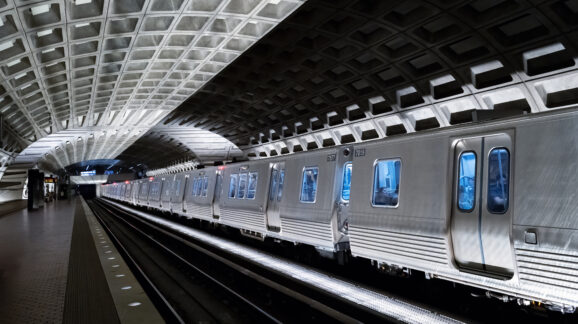
Photo Credit: Getty
I recently vacationed in Mexico. While in Mexico City, I tried to take the metro to attend a concert. At five pesos, or about 30¢, the bargain was hard to beat. Just one problem – it was so crowded that I couldn’t get on. I ended up taking an Uber.
This inconvenience prompted a larger question about transportation economics: What happens when policymakers make transportation extraordinarily cheap while capacity remains limited?
Mexico City’s crowded Metro has many potential causes, including its density, heavy reliance on public transportation, and the capacity and design of its network. An important factor, however, is the price riders pay. Research on Mexico City’s Metro found that when fares rose from three to five pesos in 2014, ridership fell 12 percent. That research also estimates that a 10 percent fare increase was associated with about a 2.5 percent decline in ridership.
These findings illustrate how transit fares can affect demand. Although there are differences between Mexican and American transit, the same economic principle applies in both because American transit agencies also rely heavily on taxpayer subsidies to keep fares low.
Washington, DC’s metro system, WMATA, provides a striking example. WMATA’s average fare is about $3 per passenger, whereas it provides a subsidy of $10.65 per passenger. WMATA also reports that fares recover just 28.2 percent of operating costs. The result is a transit system whose finances depend heavily on public support beyond the farebox.
BART, the San Francisco Bay Area’s regional transit system, faces similar circumstances. Its operating revenues are projected to cover only 32 percent of operating costs in FY2026, while the agency faces a $375 million structural deficit for FY2027. BART’s contingency plan includes both higher fares and substantial service reductions.
Supporters of cheap transit argue that lower fares help people who depend on transit to get to work, school, and other necessities. But those benefits require resources, and the fiscal pressures facing transit agencies like WMATA and BART show that those resources ultimately come from somewhere.
A universally subsidized ride provides the same price reduction to riders regardless of their circumstances, while the cost of the subsidy is borne elsewhere in the public budget. That makes the results of this spending especially important. Lower fares may encourage people to use transit, but subsidies do not necessarily translate into more effective or productive transit systems.
The same concern applies to who receives the subsidy as well. Lower-income households make up a larger share of transit users than of the overall population, but that does not mean they receive all the benefits of subsidized fares.
Recent research finds that some US transit investments and fare policies disproportionately benefit more advantaged populations, while the distribution of the subsidies themselves remains understudied. That raises doubts about whether making every ride cheaper is the most effective way to direct limited public resources toward those who need transportation assistance most.
The distributional concerns are only part of the problem. There is also little reason to assume that more subsidies automatically produce better transit. In his congressional testimony, Reason Foundation’s Marc Scribner cited research showing that increased operating subsidies were largely absorbed by higher costs and were associated with declining transit productivity. In other words, it has cost more to provide a given amount of transit service.
Similarly, the Congressional Research Service found that government operating support has helped sustain lower fares and higher service levels but has also increased operating cost per vehicle-mile.
One reason is that subsidies can weaken the pressure to control costs. When agencies can rely on public funding to cover operating shortfalls, subsidies can allow agencies to absorb rising wages and benefits without corresponding gains in productivity. Scribner’s testimony points to this dynamic by noting that transit labor productivity declined substantially as operating subsidies expanded.
Because additional subsidies tend to accommodate higher costs instead of generating more productive service, taxpayers are paying more without necessarily getting better quality in return.
Transportation policy cannot escape the economic reality of scarcity. Lowering the price paid by users can change how they travel, but it does not eliminate the costs of providing transportation. Nor does spending more guarantee that subsidies reach those who need them most or produce a more productive system.
Those costs are harder to see when they are spread across multiple public budgets than when the benefit is visible at the farebox. That does not change the fact that transit agencies across the nation and the world face recurring financial dilemmas that show the costs eventually catch up with the subsidy. Cheap transit may be popular, but hiding its cost from riders does not make the bill disappear.