There are two main areas in which Congress can enact meaningful reform. The first is to rein in regulatory guidance documents, which we refer to as “regulatory dark matter,” whereby agencies regulate through Federal Register notices, guidance documents, and other means outside standard rulemaking procedure. The second is to enact a series of reforms to increase agency transparency and accountability of all regulation and guidance. These include annual regulatory report cards for rulemaking agencies and regulatory cost estimates from the Office of Management and Budget for more than just a small subset of rules.
In 2019, President Trump signed two executive orders aimed at stopping the practice of agencies using guidance documents to effectively implement policy without going through the legally required notice and comment process.
Featured Posts
Blog
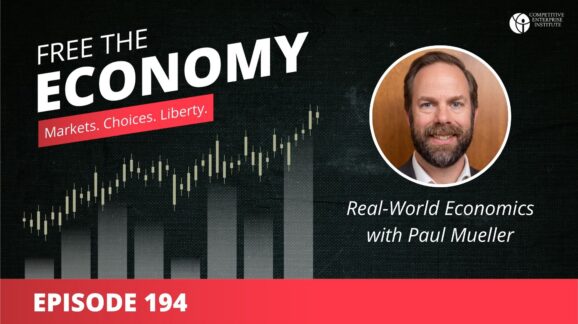
Free the Economy podcast: Real-world economics with Paul Mueller
In this week’s episode we cover spiraling health care costs, reforming state-level regulations, and how to keep asset managers accountable…

Blog
The week in regulations: Safe explosives and baker’s yeast
President Trump proposed an export ban on diesel fuel. Mortgage rates topped 7 percent. Agencies issued new regulations ranging from bank mergers to window…
Blog
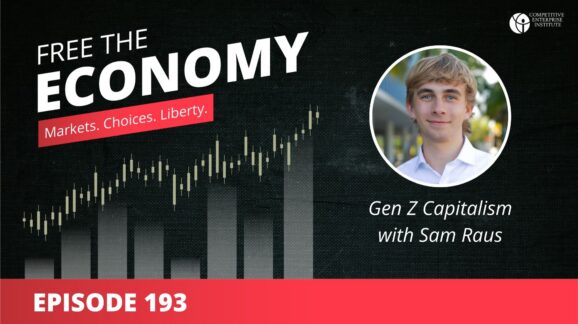
Free the Economy podcast: Gen Z capitalism with Sam Raus
In this week’s episode we cover how data centers power our lives, how modern technology is fueling family togetherness, and the…
Search Posts
Blog
This Week in Ridiculous Regulations
President Trump has declared passing the new NAFTA/USMCA as his top legislative priority, but congressional ratification will not be automatic. Mexico and Canada are also…
Blog
Regulatory Costs of Delegating Lawmaking Power to Executive and Unelected Administrators
The administrative state, blessed by Congress, has dispensed with the Founders’ system of legislation fashioned solely by an elected body. Regulatory reforms call for holding…
Blog
This Week in Ridiculous Regulations
Last week was low-drama by recent standards, but still had some important developments. The U.S. trade deficit set a record for the second year in…
Forbes
Warning Signs: How Trump’s Ascendant Regulatory Impulses Could Swamp His Deregulatory Program
President Donald Trump has pruned rules and costs and held down regulatory output with more enthusiasm than other presidents. But on the flipside of Trump’s controversial regulatory savings, Trump sports regulatory…
Blog
The Regulatory Costs of Abandoned Federalism
The deterioration of the principle of separation of powers is a signature feature of the powerful federal Administrative State. This corrosion is accompanied by a…
The Hill
Congressional Review Act Rises Again!
The Hill cited Vice President for Policy and a Senior Fellow Wayne Crews on regulatory dark matter. This problem increases considerably when you…
Staff & Scholars

Clyde Wayne Crews
Fred L. Smith Fellow in Regulatory Studies
- Business and Government
- Consumer Freedom
- Deregulation

Ryan Young
Senior Economist and Director of Publications
- Antitrust
- Business and Government
- Regulatory Reform

Fred L. Smith, Jr.
Founder; Chairman Emeritus
- Automobiles and Roads
- Aviation
- Business and Government

Sam Kazman
Counsel Emeritus
- Antitrust
- Automobiles and Roads
- Banking and Finance

Marlo Lewis, Jr.
Senior Fellow
- Climate
- Energy
- Energy and Environment