There are two main areas in which Congress can enact meaningful reform. The first is to rein in regulatory guidance documents, which we refer to as “regulatory dark matter,” whereby agencies regulate through Federal Register notices, guidance documents, and other means outside standard rulemaking procedure. The second is to enact a series of reforms to increase agency transparency and accountability of all regulation and guidance. These include annual regulatory report cards for rulemaking agencies and regulatory cost estimates from the Office of Management and Budget for more than just a small subset of rules.
In 2019, President Trump signed two executive orders aimed at stopping the practice of agencies using guidance documents to effectively implement policy without going through the legally required notice and comment process.
Featured Posts
Blog
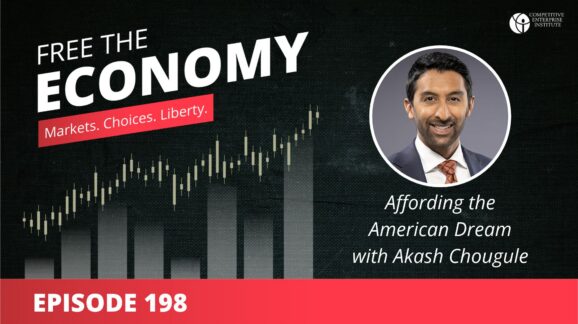
Free the Economy podcast: Affording the American Dream with Akash Chougule
In this week’s episode we cover what’s making housing so expensive, the common good of the Constitution, and more jawboning…

Blog
The week in regulations: Mailing live animals and crash test dummy comments
A Trump administration envoy to Russia called Vladimir Putin a humanitarian. The Justice Department announced it will sue if the Republican Senate candidate in…
Blog
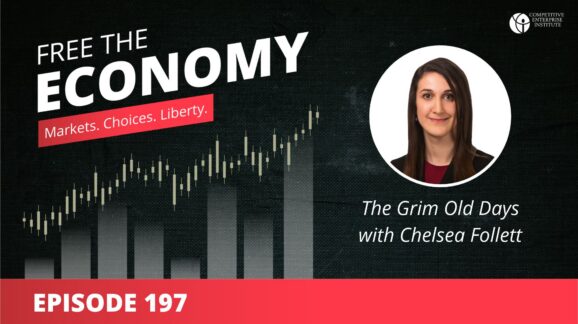
Free the Economy podcast: The Grim Old Days with Chelsea Follett
In this week’s episode we cover global energy security, a new lawsuit against Section 338 tariffs, and fresh talent in…
Search Posts
Blog
The missing guardrail in crisis politics: Discipline
Modern American governance has developed a troubling pattern. Economic shocks like the 21st century’s financial panics and pandemic are often met with vast expansions…
Blog
The week in regulations: Music royalties and avocado maturity
The Iran war continued to raise oil prices. The Trump administration took steps to raise tariffs under Section 301 of the 1974 Trade Act,…
Blog
Free the Economy podcast: Regulating finance with James Copland
In this week’s episode we cover the 250th anniversary of Adam Smith’s Wealth of Nations, fighting fraud in broadband deployment, and…
Blog
The week in regulations: Shellfish inclusion and paper manifest sunsets
The labor force shrank by 92,000 jobs in January. Oil prices spiked. Twenty-two state attorneys general filed a lawsuit against President Trump’s Section 122…
Blog
Free the Economy podcast: Mississippi renaissance with Douglas Carswell
In this week’s episode we cover housing abundance, capitalism’s approval rating, audits of state finances, and the consumer nostalgia…
Blog
The most powerful monopoly isn’t a corporation: Introducing the Capitol Control Quotient
Policymakers often argue over whether capitalism works and how aggressively it should be restrained. But they rarely ask the more pertinent question: where, exactly,…
Staff & Scholars

Clyde Wayne Crews
Fred L. Smith Fellow in Regulatory Studies
- Business and Government
- Consumer Freedom
- Deregulation

Ryan Young
Senior Economist and Director of Publications
- Antitrust
- Business and Government
- Regulatory Reform

Fred L. Smith, Jr.
Founder; Chairman Emeritus
- Automobiles and Roads
- Aviation
- Business and Government

Sam Kazman
Counsel Emeritus
- Antitrust
- Automobiles and Roads
- Banking and Finance

Marlo Lewis, Jr.
Senior Fellow
- Climate
- Energy
- Energy and Environment