There are two main areas in which Congress can enact meaningful reform. The first is to rein in regulatory guidance documents, which we refer to as “regulatory dark matter,” whereby agencies regulate through Federal Register notices, guidance documents, and other means outside standard rulemaking procedure. The second is to enact a series of reforms to increase agency transparency and accountability of all regulation and guidance. These include annual regulatory report cards for rulemaking agencies and regulatory cost estimates from the Office of Management and Budget for more than just a small subset of rules.
In 2019, President Trump signed two executive orders aimed at stopping the practice of agencies using guidance documents to effectively implement policy without going through the legally required notice and comment process.
Featured Posts

Blog
The week in regulations: Professional fireworks and farmer training
The 2026 Federal Register topped 50,000 pages and is on track to exceed 85,000 pages for the year. The economy lost 23,000 jobs, yet…
Blog
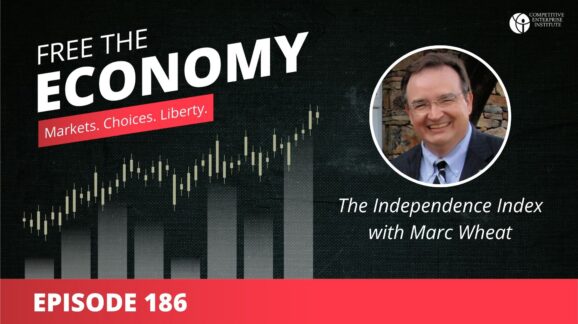
Free the Economy podcast: The Independence Index with Marc Wheat
In this week’s episode we cover the effect of tariffs on car prices, trends in electricity supply and demand, and the…

Blog
The week in regulations: Peach diversion programs and nuclear packages
The Federal Reserve kept interest rates the same, and an increase may be on the way. Economic growth remained below average, and inflation remained…
Search Posts
Reuters
Beyond the Daily Drama and Twitter Battles, Trump Begins to Alter American Life
Reuters discusses President Trump’s regulatory rollback with Wayne Crews. Even without delivering on his biggest campaign promises, President Donald Trump has begun to…
Blog
No Reason for Denying Puerto Rico a Jones Act Waiver
The Trump administration should immediately grant a Jones Act waiver to Puerto Rico and Congress should fully repeal the maritime cabotage prohibition.
Blog
Shining a Light on Bureaucratic ‘Dark Matter’
Federal agencies produce guidance documents, proclamations, memoranda, bulletins, circulars, letters—all with the force of the law but with no oversight from Congress.
Reason
How Congress Can Use an Obscure Law From the 1880s to Limit Wasteful Government Contracts
Reason covers the release of Bureaucratic Dark Matter by Robert J. Hanrahan Jr. When the U.S. Army got caught spending $76 million on video games, recruitment…
News Release
Video: Regulatory Dark Matter: A hidden tax on consumers and businesses
Learn more about this hidden tax on consumers and businesses, with no Congressional oversight.
The Daily Caller
Report: Fed Bureaucracies Commit Thousands Of Felonies Every Day
The Daily Caller covers the release of Bureacratic Dark Energy by Robert J. Hanrahan, Jr. Bureaucracies have successfully evaded congressional budget oversight for…
Staff & Scholars

Clyde Wayne Crews
Fred L. Smith Fellow in Regulatory Studies
- Business and Government
- Consumer Freedom
- Deregulation

Ryan Young
Senior Economist and Director of Publications
- Antitrust
- Business and Government
- Regulatory Reform

Fred L. Smith, Jr.
Founder; Chairman Emeritus
- Automobiles and Roads
- Aviation
- Business and Government

Sam Kazman
Counsel Emeritus
- Antitrust
- Automobiles and Roads
- Banking and Finance

Marlo Lewis, Jr.
Senior Fellow
- Climate
- Energy
- Energy and Environment