There are two main areas in which Congress can enact meaningful reform. The first is to rein in regulatory guidance documents, which we refer to as “regulatory dark matter,” whereby agencies regulate through Federal Register notices, guidance documents, and other means outside standard rulemaking procedure. The second is to enact a series of reforms to increase agency transparency and accountability of all regulation and guidance. These include annual regulatory report cards for rulemaking agencies and regulatory cost estimates from the Office of Management and Budget for more than just a small subset of rules.
In 2019, President Trump signed two executive orders aimed at stopping the practice of agencies using guidance documents to effectively implement policy without going through the legally required notice and comment process.
Featured Posts
Blog
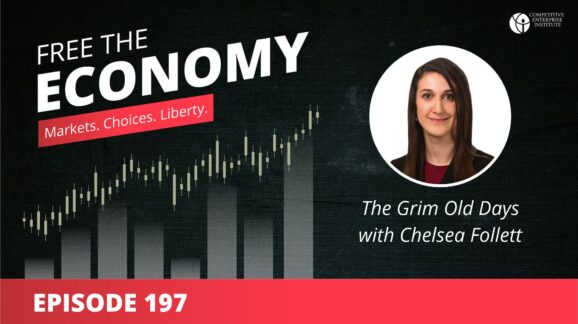
Free the Economy podcast: The Grim Old Days with Chelsea Follett
In this week’s episode we cover global energy security, a new lawsuit against Section 338 tariffs, and fresh talent in…

News Release
CEI challenges Wisconsin’s treatment of election prediction-market contracts
The Competitive Enterprise Institute has filed a federal lawsuit on behalf of Wisconsin voter and Green Bay radio host Joseph Giganti, Sr., challenging the…

Blog
The week in regulations: Salt substitutes and spiny lobster management
The new White House Press Secretary lasted five days before resigning. Sen. Elizabeth Warren is upset that one company makes two brands of hot…
Search Posts
Newsletter
The Competitive Enterprise Institute Daily Update
Issues in the News 1. ANTITRUST Microsoft submits its final proposal for complying with the latest order by the…
Newsletter
The Competitive Enterprise Institute Daily Update
Issues in the News 1. CIVIL LIBERTIES The Senate Select Committee on Intelligence begins debate over whether to renew…
Newsletter
The Competitive Enterprise Institute Daily Update
Issues in the News 1. ECONOMIC LIBERTY The union campaign against Wal-Mart expands in the Washington,…
Op-Eds
The Problem with the Voice over IP 911 Mandate
“Today the FCC adopted a rule requiring VoIP providers to provide emergency 911 calling services and they will have only 120…
Op-Eds
If Wishes Were Horses, This Would Be the Kentucky Derby
GENEVA, Switzerland—The 58th World Health Assembly (the World Health Organization's policy-making body) under way here brings to mind the cliché about the contestants…
Op-Eds
Air Sickness: Who’s to Blame? (Part 1)
Full document available in pdf format Business travelers, family visitors, tourists—all are affected by the airline industry’s woes. But who knows what…
Staff & Scholars

Clyde Wayne Crews
Fred L. Smith Fellow in Regulatory Studies
- Business and Government
- Consumer Freedom
- Deregulation

Ryan Young
Senior Economist and Director of Publications
- Antitrust
- Business and Government
- Regulatory Reform
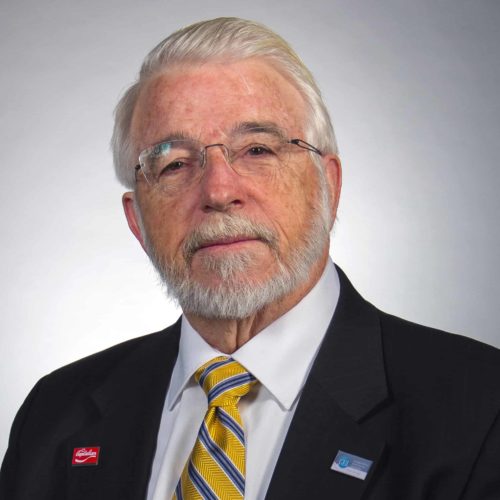
Fred L. Smith, Jr.
Founder; Chairman Emeritus
- Automobiles and Roads
- Aviation
- Business and Government

Sam Kazman
Counsel Emeritus
- Antitrust
- Automobiles and Roads
- Banking and Finance

Marlo Lewis, Jr.
Senior Fellow
- Climate
- Energy
- Energy and Environment