There are two main areas in which Congress can enact meaningful reform. The first is to rein in regulatory guidance documents, which we refer to as “regulatory dark matter,” whereby agencies regulate through Federal Register notices, guidance documents, and other means outside standard rulemaking procedure. The second is to enact a series of reforms to increase agency transparency and accountability of all regulation and guidance. These include annual regulatory report cards for rulemaking agencies and regulatory cost estimates from the Office of Management and Budget for more than just a small subset of rules.
In 2019, President Trump signed two executive orders aimed at stopping the practice of agencies using guidance documents to effectively implement policy without going through the legally required notice and comment process.
Featured Posts
Blog
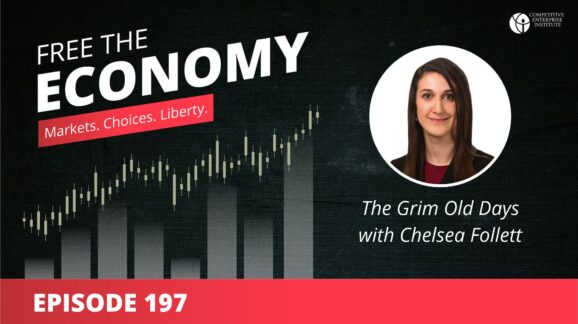
Free the Economy podcast: The Grim Old Days with Chelsea Follett
In this week’s episode we cover global energy security, a new lawsuit against Section 338 tariffs, and fresh talent in…

News Release
CEI challenges Wisconsin’s treatment of election prediction-market contracts
The Competitive Enterprise Institute has filed a federal lawsuit on behalf of Wisconsin voter and Green Bay radio host Joseph Giganti, Sr., challenging the…

Blog
The week in regulations: Salt substitutes and spiny lobster management
The new White House Press Secretary lasted five days before resigning. Sen. Elizabeth Warren is upset that one company makes two brands of hot…
Search Posts
Blog
The week in regulations: Date taxes and microreactors
It was nearly a 3,000-page week in the Federal Register, roughly double the usual pace. Year-over-year inflation jumped to 3.8 percent, the worst reading…
Blog
Free the Economy podcast: Pension politics with Jarrett Skorup
In this week’s episode we cover more legal headaches for the Trump tariffs, keeping kids safe in an AI world, and…
Blog
The week in regulations: Fluid milk options and battleship safety zones
The Court of International Trade struck down President Trump’s Section 122 tariffs. The labor force shrank by 92,000 people over the last year. Agencies…
Blog
Free the Economy podcast: Highway robbery with David Ditch
In this week’s episode we cover how to make the moral case for capitalism, affordable housing via regulatory reform, and tracking…
Town Hall
Data Center Freak-Out
Town Hall cites Research Fellow Paige Lambermont on data cen “If our economy was allowed to develop at the speed of Bernie Sanders, we…
Blog
Deregulation by the numbers: One-third into 2026 — a rulebook rewrite?
At the close of the first third of the year, a spring 2026 Unified Agenda formally outlining agency priorities has yet to appear. In…
Staff & Scholars

Clyde Wayne Crews
Fred L. Smith Fellow in Regulatory Studies
- Business and Government
- Consumer Freedom
- Deregulation

Ryan Young
Senior Economist and Director of Publications
- Antitrust
- Business and Government
- Regulatory Reform
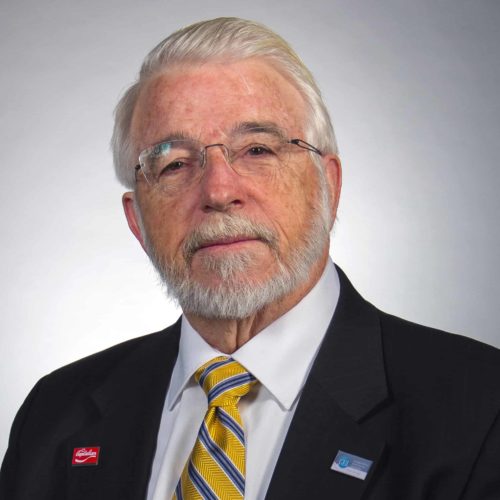
Fred L. Smith, Jr.
Founder; Chairman Emeritus
- Automobiles and Roads
- Aviation
- Business and Government

Sam Kazman
Counsel Emeritus
- Antitrust
- Automobiles and Roads
- Banking and Finance

Marlo Lewis, Jr.
Senior Fellow
- Climate
- Energy
- Energy and Environment