There are two main areas in which Congress can enact meaningful reform. The first is to rein in regulatory guidance documents, which we refer to as “regulatory dark matter,” whereby agencies regulate through Federal Register notices, guidance documents, and other means outside standard rulemaking procedure. The second is to enact a series of reforms to increase agency transparency and accountability of all regulation and guidance. These include annual regulatory report cards for rulemaking agencies and regulatory cost estimates from the Office of Management and Budget for more than just a small subset of rules.
In 2019, President Trump signed two executive orders aimed at stopping the practice of agencies using guidance documents to effectively implement policy without going through the legally required notice and comment process.
Featured Posts

Blog
The regulatory costs we still aren’t counting
Several years ago, I assembled a “Costberg” working paper surveying the largely impenetrable and undisclosed costs of regulation. The project grew out of…

Blog
The week in regulations: Voting by mail and $100,000 visas
The number of new final regulations in 2026 topped the 2,000 mark. President Trump escalated his trade war against Canada and issued an executive…
Blog
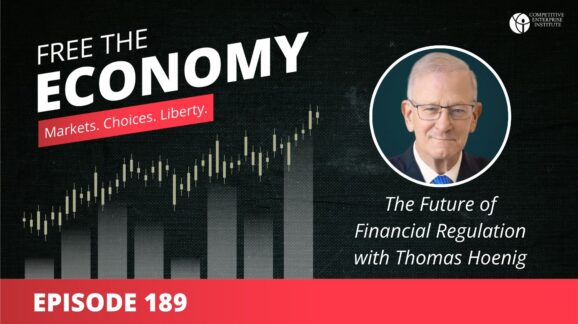
Free the Economy podcast: The future of financial regulation with Thomas Hoenig
In this week’s episode we cover the status of occupational licensing in the 50 states, the coming crack-up over entitlement spending,…
Search Posts
News Release
Trump’s pick for Bureau of Labor Statistics should update data collection methods, not play politics
CEI labor and economy experts say President Trump’s nominee to head the Labor Department’s Bureau of Labor Statistics should improve data collection for jobs…
Blog
Half of 2025’s public laws are Biden rule killers
In a notable twist, Congress has spent half of 2025’s lawmaking undoing Biden regulations. So far in the 119th Congress, 31 public laws…
Blog
The week in regulations: Blue food coloring and pipeline recordkeeping
The Liberation Day tariffs took effect on August 7. The president continues to announce new tariffs on pharmaceuticals, semiconductors, and more. Republicans are proposing…
Blog
Free the Economy podcast: Girlbossing the discourse with Emma Camp
In this week’s episode we cover the controversy at the Bureau of Labor Statistics, myths of the auto industry, and a…
Blog
The CAT’s nine lives could be up
The 11th Circuit Court of Appeals recently vacated a funding proposal for the Securities and Exchange Commission’s (SEC) largest regulatory program to date.
Blog
The week in regulations: Nuclear coolant and medical food
President Trump’s Liberation Day tariffs are set to take effect on August 7 for countries he did not strike deals with. He is also…
Staff & Scholars

Clyde Wayne Crews
Fred L. Smith Fellow in Regulatory Studies
- Business and Government
- Consumer Freedom
- Deregulation

Ryan Young
Senior Economist and Director of Publications
- Antitrust
- Business and Government
- Regulatory Reform

Fred L. Smith, Jr.
Founder; Chairman Emeritus
- Automobiles and Roads
- Aviation
- Business and Government

Sam Kazman
Counsel Emeritus
- Antitrust
- Automobiles and Roads
- Banking and Finance

Marlo Lewis, Jr.
Senior Fellow
- Climate
- Energy
- Energy and Environment