There are two main areas in which Congress can enact meaningful reform. The first is to rein in regulatory guidance documents, which we refer to as “regulatory dark matter,” whereby agencies regulate through Federal Register notices, guidance documents, and other means outside standard rulemaking procedure. The second is to enact a series of reforms to increase agency transparency and accountability of all regulation and guidance. These include annual regulatory report cards for rulemaking agencies and regulatory cost estimates from the Office of Management and Budget for more than just a small subset of rules.
In 2019, President Trump signed two executive orders aimed at stopping the practice of agencies using guidance documents to effectively implement policy without going through the legally required notice and comment process.
Featured Posts
Blog
An America250 funeral for the 80-year-old Administrative Procedure Act
Clyde Wayne Crews Jr. As America approaches its 250th anniversary, another institution reaches a milestone of its own. The Administrative Procedure Act of…

Blog
The week in regulations: Cyber sanctions and tinnitus relief devices
Inflation is now more than double the Federal Reserve’s target. The Iran war heated up again. Agencies issued new regulations ranging from vending stands…
Blog
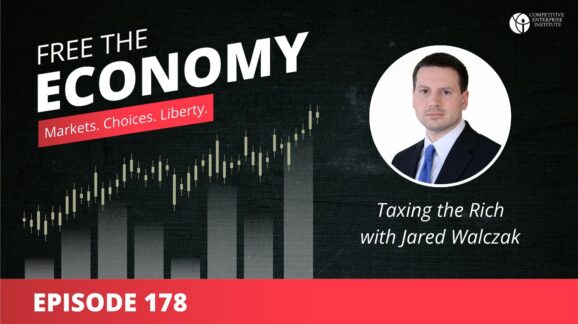
Free the Economy podcast: Taxing the rich with Jared Walczak
In this week’s episode we cover America’s low-income churn, reforms to civil asset forfeiture, changes to vehicle emissions testing, a…
Search Posts
Blog
Obamacare Stifles Job Creation, Causes Layoffs
At Bloomberg News, Andrew Puzder, CEO of CKE Restaurants, Inc., explains how the 2010 healthcare law is preventing jobs from being created and resulting…
Blog
Record Red Tape
Over at Big Government today I noted the Federal Register of 2011 has almost reached the level of last year’s record. Given that 2011’s…
Op-Eds
Another Record-Breaking Federal Register? Federal Regulations Surge in 2011
The Federal Register is the daily depository of all proposed and final rules and regulations, as well as presidential documents, executive orders, agency internal…
Blog
Regulation of the Day 202: Farting Pigs
It isn’t often that one sees Nobel-winning economist Ronald Coase’s name and pig farts in the same sentence. Thanks to a recent court decision in…
Blog
Businessmen: Obamacare Stops Them from Hiring
Journalist John Stossel describes how "three successful businessmen came on" his TV show last week "to explain how Obamacare is a reason that unemployment stays…
Blog
Holiday Travel Travails
Just in time for the holiday travel season, Vanity Fair’s Charles C. Mann took a trip through airport security with security expert Bruce Schneier.
Staff & Scholars

Clyde Wayne Crews
Fred L. Smith Fellow in Regulatory Studies
- Business and Government
- Consumer Freedom
- Deregulation

Ryan Young
Senior Economist and Director of Publications
- Antitrust
- Business and Government
- Regulatory Reform
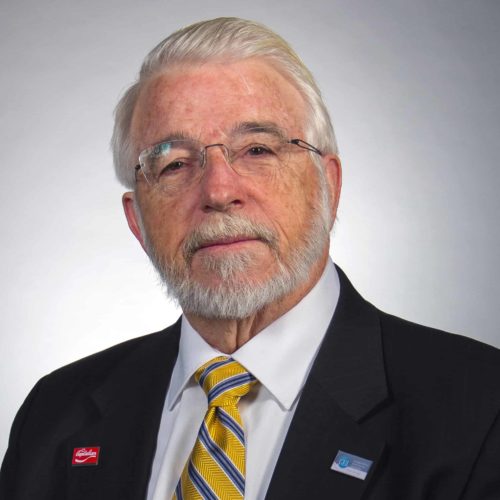
Fred L. Smith, Jr.
Founder; Chairman Emeritus
- Automobiles and Roads
- Aviation
- Business and Government

Sam Kazman
Counsel Emeritus
- Antitrust
- Automobiles and Roads
- Banking and Finance

Marlo Lewis, Jr.
Senior Fellow
- Climate
- Energy
- Energy and Environment