There are two main areas in which Congress can enact meaningful reform. The first is to rein in regulatory guidance documents, which we refer to as “regulatory dark matter,” whereby agencies regulate through Federal Register notices, guidance documents, and other means outside standard rulemaking procedure. The second is to enact a series of reforms to increase agency transparency and accountability of all regulation and guidance. These include annual regulatory report cards for rulemaking agencies and regulatory cost estimates from the Office of Management and Budget for more than just a small subset of rules.
In 2019, President Trump signed two executive orders aimed at stopping the practice of agencies using guidance documents to effectively implement policy without going through the legally required notice and comment process.
Featured Posts

Blog
The week in regulations: Cyber sanctions and tinnitus relief devices
Inflation is now more than double the Federal Reserve’s target. The Iran war heated up again. Agencies issued new regulations ranging from vending stands to…
Blog
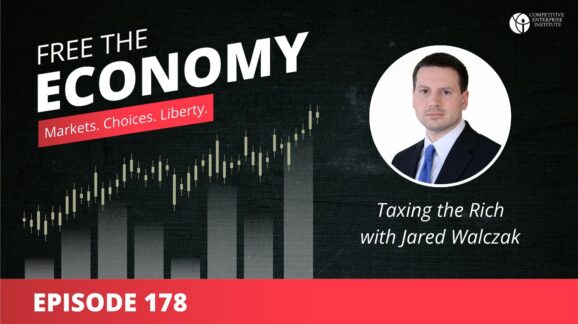
Free the Economy podcast: Taxing the rich with Jared Walczak
In this week’s episode we cover America’s low-income churn, reforms to civil asset forfeiture, changes to vehicle emissions testing, a shout…

Blog
The week in regulations: Bone void filler and halibut action
May’s job numbers were strong for the third month in a row, though job growth since Liberation Day remains under 100,000, for a labor force…
Search Posts
News Release
CEI’s Dinner Photos
Click here to view photos.
News Release
PhRMA President Billy Tauzin To Keynote CEI Annual Dinner
Washington, D.C., May 9, 2005—In his first address to a non-healthcare industry audience since taking the top drug industry post in January, Pharmaceutical Research and…
Op-Eds
Time to End the Breast Implant Circus
Two weeks ago, the U.S. Food and Drug Administration convened an expert advisory panel to review and make recommendations on two silicone breast implants…
Op-Eds
American Dream or American Politics?
To the Editor: Roland J. Hwang has a curious approach to the issue of the auto industry's future (“Hybrids can propel Big 3…
Op-Eds
One Bundle, Many Antitrust Laws: The Dilemma for Digital Products
Alongstanding question in the software debate is whether operating systems and components such as browsers and media players are really separate products bundled as one or…
Products
Mandated Recycling of Electronics: Creating a Mountain out of a Landfill
This article is based on the report, Mandating Recycling of Electronics: A Lose-Lose-Lose Proposition , published by CEI, February 2005. Haste maketh waste in the…
Staff & Scholars

Clyde Wayne Crews
Fred L. Smith Fellow in Regulatory Studies
- Business and Government
- Consumer Freedom
- Deregulation

Ryan Young
Senior Economist and Director of Publications
- Antitrust
- Business and Government
- Regulatory Reform

Fred L. Smith, Jr.
Founder; Chairman Emeritus
- Automobiles and Roads
- Aviation
- Business and Government

Sam Kazman
Counsel Emeritus
- Antitrust
- Automobiles and Roads
- Banking and Finance

Marlo Lewis, Jr.
Senior Fellow
- Climate
- Energy
- Energy and Environment