Trump, Vance help rail unions put the brakes on automation
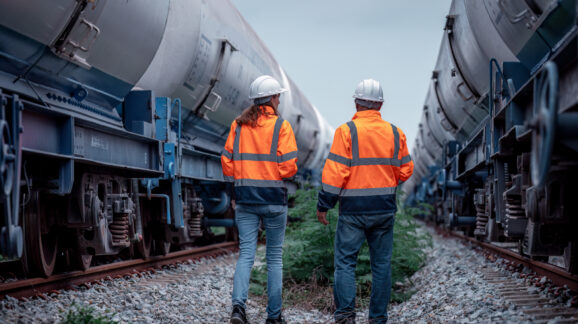
The White House successfully pressured House Republicans into adding the Railway Safety Act — legislation once co-sponsored by Vice President JD Vance as a senator — to the surface transportation bill. It would mandate two-person train crews, a goal long sought by rail unions.
The White House’s nominally pro-union stance is in part the result of a below-the-radar effort by unions and their allies to build support within the GOP. President Trump and Vance have complicated relationships with organized labor that have made this possible.
While neither is the kind of die-hard labor advocate that presidents Joe Biden or Barack Obama were, the current administration’s Make America Great Again rhetoric can overlap with the type of speeches traditionally given in union halls. That has created gray areas in the administration’s otherwise free-market policy that unions and their allies have exploited.
Unions such as the International Association of Sheet Metal, Air, Rail and Transportation Workers-Transportation Division (SMART-TD) and the International Association of Machinists (IAM) used it to rack up a win.
The two-person mandate has long been a priority for SMART-TD in particular, which has 205,000 members but saw membership dip as low as 193,000 in 2022. A mandate would help keep those numbers stable and stymie the industry’s move toward full automation.
The stated rationale for the two-person crew mandate is safety, with fans claiming it would prevent accidents such as the 2023 train derailment in East Palestine, Ohio. As the Competitive Enterprise Institute pointed out repeatedly, crew size was not a factor in that crash, and there’s no reason to believe that mandating two-person crews would prevent future accidents. What it would do is prevent railways from automating further, making future supply chain crises more likely.
Vance, who grew up in Rust Belt Ohio, has argued that Republican opposition to the Railway Safety Act is just knee-jerk anti-unionism. “I did run into a problem of old-guard Republicans who really hate the unions and really think of themselves fundamentally as advocates of the business community and not advocates of the voters that we represent,” he told Politico in 2024.
That’s not far from the kind of sentiment Trump has expressed toward unions in the past. Trump and Vance have a nostalgic fondness for the type of unionism that held sway in the mid-20th century. Unions were then concentrated in manufacturing and the skilled trades, sectors that employed many blue-collar, culturally conservative men. TV’s Archie Bunker was, for example, a proud union man. Trump’s trade policy is driven in part by his belief that it can revive manufacturing to its 20th-century glory days.
The railway push is another way Trump and Vance think they can reach out to that blue-collar base. They frame it as pure populism, but it still overlaps with the unions’ rhetoric on the issue. “President Trump is keeping his promise to the people of East Palestine. The Trump administration will never forget you,” Vance posted.
Trump has a long history of working with unions in his hotel and casino ventures and has learned how to appeal directly to the workers. In his 2000 book “The America We Deserve,” he wrote, “Is Trump a union man? Let me tell you this: Unions still have a place in American society. In fact, with the globalization craze in full heat, unions are about the only force reminding us to remember the American family.”
Read the full article at DC Journal.