There are two main areas in which Congress can enact meaningful reform. The first is to rein in regulatory guidance documents, which we refer to as “regulatory dark matter,” whereby agencies regulate through Federal Register notices, guidance documents, and other means outside standard rulemaking procedure. The second is to enact a series of reforms to increase agency transparency and accountability of all regulation and guidance. These include annual regulatory report cards for rulemaking agencies and regulatory cost estimates from the Office of Management and Budget for more than just a small subset of rules.
In 2019, President Trump signed two executive orders aimed at stopping the practice of agencies using guidance documents to effectively implement policy without going through the legally required notice and comment process.
Featured Posts
Blog
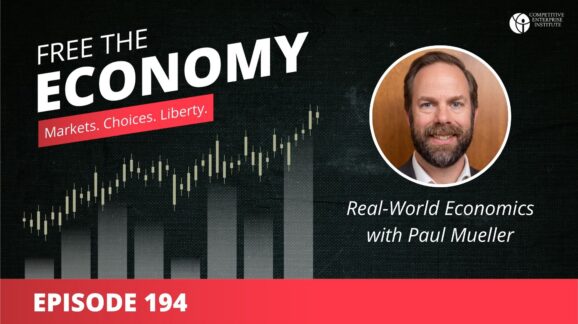
Free the Economy podcast: Real-world economics with Paul Mueller
In this week’s episode we cover spiraling health care costs, reforming state-level regulations, and how to keep asset managers accountable…

Blog
The week in regulations: Safe explosives and baker’s yeast
President Trump proposed an export ban on diesel fuel. Mortgage rates topped 7 percent. Agencies issued new regulations ranging from bank mergers to window…
Blog
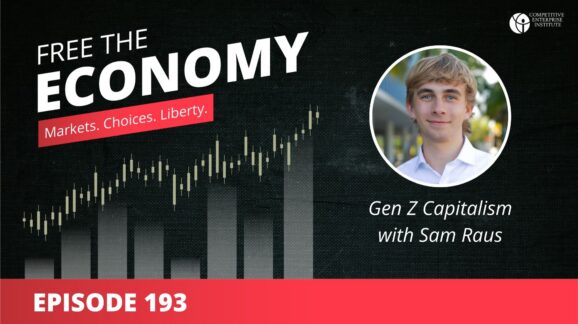
Free the Economy podcast: Gen Z capitalism with Sam Raus
In this week’s episode we cover how data centers power our lives, how modern technology is fueling family togetherness, and the…
Search Posts
Blog
A Brief Outline of Undisclosed Costs of Regulation
In my recent Forbes column “Rule of Flaw and the Costs of Coercion: Charting Undisclosed Burdens of the Administrative State,” I discussed checks on the…
Forbes
Rule of Flaw and the Costs of Coercion: Charting Undisclosed Burdens of the Administrative State
Bloated by Congress’s delegation of most lawmaking, the Administrative State sits in America’s middle seat with its elbows out.
Blog
Administrative Procedure Act Limitations: Cost Measurement and Disclosure
U.S. Circuit Judge J. Harvie Wilkinson III noted in a 2017 journal article that regulation sometimes contains “too much detail,” changes too “frequently and capriciously,” creates backlogs and…
Blog
The Shutdown Is Over: How Does that Affect Regulation?
During the partial shutdown, the Federal Register slowed to a crawl. Published every weekday, an average day’s edition consists of about 270 pages and contains…
Blog
This Week in Ridiculous Regulations
The partial shutdown ended on Friday, though only on a three-week deal. This likely will not show up in the Federal Register’s page and rule…
Reason
Georgia’s ‘Mimosa Mandate’ Is a Victory for Alcohol Freedom
Reason cited Senior Fellow Michelle Minton on alcohol regulations: Why stifle alcohol sales when they’re clearly the miracle elixir society needs? Michelle Minton…
Staff & Scholars

Clyde Wayne Crews
Fred L. Smith Fellow in Regulatory Studies
- Business and Government
- Consumer Freedom
- Deregulation

Ryan Young
Senior Economist and Director of Publications
- Antitrust
- Business and Government
- Regulatory Reform

Fred L. Smith, Jr.
Founder; Chairman Emeritus
- Automobiles and Roads
- Aviation
- Business and Government

Sam Kazman
Counsel Emeritus
- Antitrust
- Automobiles and Roads
- Banking and Finance

Marlo Lewis, Jr.
Senior Fellow
- Climate
- Energy
- Energy and Environment