There are two main areas in which Congress can enact meaningful reform. The first is to rein in regulatory guidance documents, which we refer to as “regulatory dark matter,” whereby agencies regulate through Federal Register notices, guidance documents, and other means outside standard rulemaking procedure. The second is to enact a series of reforms to increase agency transparency and accountability of all regulation and guidance. These include annual regulatory report cards for rulemaking agencies and regulatory cost estimates from the Office of Management and Budget for more than just a small subset of rules.
In 2019, President Trump signed two executive orders aimed at stopping the practice of agencies using guidance documents to effectively implement policy without going through the legally required notice and comment process.
Featured Posts
Blog
Here’s how one-in, ten-out is successfully cutting rules — but not draining the swamp
It’s October already, and while there’s no real fiscal year for federal regulation, the September 30 closing of the 2026 budgetary fiscal year marks…

Blog
The week in regulations: Drug prices and inedible almonds
Sen. Eric Schmitt (R-MO) learned the difference between the Atlanta Hawks and the Iowa Hawkeyes. President Trump rolled back some China tariffs and published…
Blog
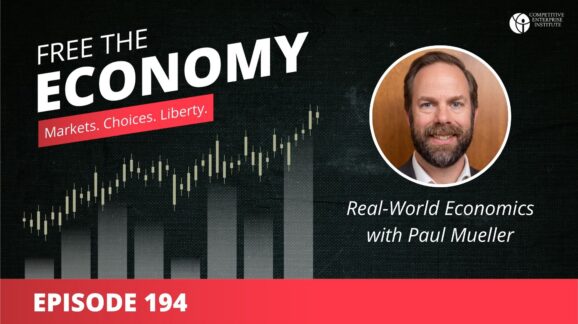
Free the Economy podcast: Real-world economics with Paul Mueller
In this week’s episode we cover spiraling health care costs, reforming state-level regulations, and how to keep asset managers accountable…
Search Posts
Watchdog.org
Candidates’ perennial promises to cut regulations rarely pan out
Watchdog.org discusses ways that the next administration can push for regulatory reform with Wayne Crews. Competitive Enterprise Institute Vice President for Policy Clyde…
Blog
This Week in Ridiculous Regulations
The number of new federal regulations passed the 3,000 mark last week, and the Federal Register continues its record pace.
Blog
Three Ways the Next President Can Help America Out
At this moment, it’s likely the presidential candidates are busy preparing for the third and final debate tonight.
Blog
How a New President Can Roll Back Bureaucracy, Part 13: Establish ‘Office of No’
Implement a “Do Not Regulate” Office to Clarify Economic Liberalization Alternatives to, and Explicit Exit Strategies from, Command and Control Rules.
The Hill
White House Admits it’s Late Again in Releasing Regulatory Report
The Hill reports on how Wayne Crews called out the White House Office of Management and Budget about it's late report on regulations. …
Blog
This Week in Ridiculous Regulations
Federal regulators enjoyed a short work week due to Columbus Day, but still published more than 1,300 Federal Register pages with new regulations ranging from…
Staff & Scholars

Clyde Wayne Crews
Fred L. Smith Fellow in Regulatory Studies
- Business and Government
- Consumer Freedom
- Deregulation

Ryan Young
Senior Economist and Director of Publications
- Antitrust
- Business and Government
- Regulatory Reform

Fred L. Smith, Jr.
Founder; Chairman Emeritus
- Automobiles and Roads
- Aviation
- Business and Government

Sam Kazman
Counsel Emeritus
- Antitrust
- Automobiles and Roads
- Banking and Finance

Marlo Lewis, Jr.
Senior Fellow
- Climate
- Energy
- Energy and Environment