There are two main areas in which Congress can enact meaningful reform. The first is to rein in regulatory guidance documents, which we refer to as “regulatory dark matter,” whereby agencies regulate through Federal Register notices, guidance documents, and other means outside standard rulemaking procedure. The second is to enact a series of reforms to increase agency transparency and accountability of all regulation and guidance. These include annual regulatory report cards for rulemaking agencies and regulatory cost estimates from the Office of Management and Budget for more than just a small subset of rules.
In 2019, President Trump signed two executive orders aimed at stopping the practice of agencies using guidance documents to effectively implement policy without going through the legally required notice and comment process.
Featured Posts

Blog
Free the Economy podcast: The Overton Window with James Hohman
In this week’s episode we cover Treasury yields, oil prices, US-China-Taiwan security policy, and Trump’s $5,000 dividend checks. Our…

Blog
How The No Surprises Act worsened the problem of surprise bills
Next week, Sen. Bill Cassidy (R-LA) will convene a roundtable to discuss adjustments to the 2020 No Surprises Act, which has come under…
Blog
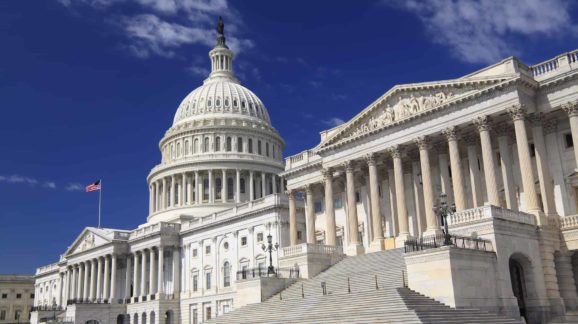
The rules Congress never gets to see
The 1996 Congressional Review Act (CRA) has been used to overturn only a few dozen federal regulatory directives since its enactment, most during the…
Search Posts
Blog
A More Unequal America
Inequality grows hand-in-hand with the growth of the regulatory state. The proliferation of regulations increases economic inequality, since powerful people and politically connected companies know how to shape and manipulate…
Blog
CEI’s Battered Business Bureau: The Week in Regulation
66 new regulations, from corporate mergers to dried bacteria.
Blog
We Didn’t Regulate Credit Cards, We Regulated People
That was the upshot of a panel I spoke at yesterday in New York at the Atlas Liberty Forum. It looked at the impact of…
Blog
Is the FTC Already Capable of Regulating Patent Demand Letters?
The answer is no, except under special circumstances. The question itself arises from comments by Julie P. Samuels of the Electronic…
Blog
The Federal Register Is about to Top 70,000 Pages — And it’s Not Even December
This morning, the Federal Register stood at 68,980 pages. It’s the daily depository of all federal regulations proposed and final. It is our unfortunate Principia Regulatica.
Blog
Illegal Change to Obamacare Is Designed to Scapegoat Insurers, Not Restore Canceled Insurance Policies
If aliens from outer space read today's newspapers, they would assume that America is a dictatorship, not a republic, and that President Obama has the authority…
Staff & Scholars

Clyde Wayne Crews
Fred L. Smith Fellow in Regulatory Studies
- Business and Government
- Consumer Freedom
- Deregulation

Ryan Young
Senior Economist and Director of Publications
- Antitrust
- Business and Government
- Regulatory Reform

Fred L. Smith, Jr.
Founder; Chairman Emeritus
- Automobiles and Roads
- Aviation
- Business and Government

Sam Kazman
Counsel Emeritus
- Antitrust
- Automobiles and Roads
- Banking and Finance

Marlo Lewis, Jr.
Senior Fellow
- Climate
- Energy
- Energy and Environment