There are two main areas in which Congress can enact meaningful reform. The first is to rein in regulatory guidance documents, which we refer to as “regulatory dark matter,” whereby agencies regulate through Federal Register notices, guidance documents, and other means outside standard rulemaking procedure. The second is to enact a series of reforms to increase agency transparency and accountability of all regulation and guidance. These include annual regulatory report cards for rulemaking agencies and regulatory cost estimates from the Office of Management and Budget for more than just a small subset of rules.
In 2019, President Trump signed two executive orders aimed at stopping the practice of agencies using guidance documents to effectively implement policy without going through the legally required notice and comment process.
Featured Posts

Blog
Free the Economy podcast: The Overton Window with James Hohman
In this week’s episode we cover Treasury yields, oil prices, US-China-Taiwan security policy, and Trump’s $5,000 dividend checks. Our…

Blog
How The No Surprises Act worsened the problem of surprise bills
Next week, Sen. Bill Cassidy (R-LA) will convene a roundtable to discuss adjustments to the 2020 No Surprises Act, which has come under…
Blog
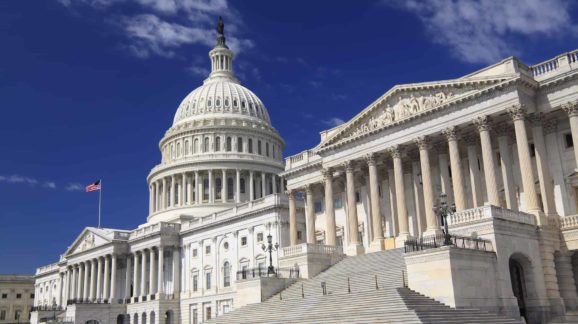
The rules Congress never gets to see
The 1996 Congressional Review Act (CRA) has been used to overturn only a few dozen federal regulatory directives since its enactment, most during the…
Search Posts
Blog
CEI Study Supports Tax Cuts for Beer
If you’ve read Lauren French’s Politico article on the two beer tax reduction bills currently under consideration in Congress, you might think that the Competitive…
Blog
Mel Watt Fails Taxpayer, Privacy, and Transparency Tests
Former Rep. Mel Watt, D-N.C., failed his procedural confirmation vote today to head the Federal Housing Finance Agency, which oversees the government housing entities Fannie…
Blog
Towards a More Transparent Fed
Iain Murray and I have a piece in today's American Spectator breaking down the new paper we co-wrote with John Berlau.
Blog
Happy Halloween! FAA to Allow Portable Electronic Devices During All Flight Phases
A month ago, a Federal Aviation Administration (FAA) Aviation Rulemaking Committee (ARC) recommended that the agency drop its ban on portable electronic device (PED)…
Blog
CEI Podcast for October 30, 2013: Bringing Transparency to the Consumer Financial Protection Bureau
George Mason University law professor and Mercatus Center senior scholar Todd Zywicki discusses his paper, "The Consumer Financial Protection Bureau: Savior or Menace?"…
Blog
Don’t Let FTC Shut Down Legit Credit Repair Services
Next to the infamous Healthcare.gov, the website that featured the most bugs of the last month was FTC.gov, the site of the Federal Trade Commission. During…
Staff & Scholars

Clyde Wayne Crews
Fred L. Smith Fellow in Regulatory Studies
- Business and Government
- Consumer Freedom
- Deregulation

Ryan Young
Senior Economist and Director of Publications
- Antitrust
- Business and Government
- Regulatory Reform

Fred L. Smith, Jr.
Founder; Chairman Emeritus
- Automobiles and Roads
- Aviation
- Business and Government

Sam Kazman
Counsel Emeritus
- Antitrust
- Automobiles and Roads
- Banking and Finance

Marlo Lewis, Jr.
Senior Fellow
- Climate
- Energy
- Energy and Environment