There are two main areas in which Congress can enact meaningful reform. The first is to rein in regulatory guidance documents, which we refer to as “regulatory dark matter,” whereby agencies regulate through Federal Register notices, guidance documents, and other means outside standard rulemaking procedure. The second is to enact a series of reforms to increase agency transparency and accountability of all regulation and guidance. These include annual regulatory report cards for rulemaking agencies and regulatory cost estimates from the Office of Management and Budget for more than just a small subset of rules.
In 2019, President Trump signed two executive orders aimed at stopping the practice of agencies using guidance documents to effectively implement policy without going through the legally required notice and comment process.
Featured Posts

Blog
The week in regulations: Drug prices and inedible almonds
Sen. Eric Schmitt (R-MO) learned the difference between the Atlanta Hawks and the Iowa Hawkeyes. President Trump rolled back some China tariffs and published…
Blog
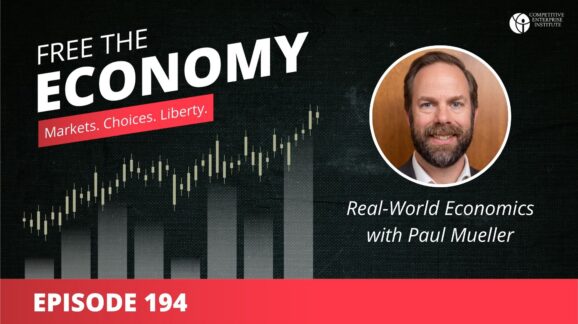
Free the Economy podcast: Real-world economics with Paul Mueller
In this week’s episode we cover spiraling health care costs, reforming state-level regulations, and how to keep asset managers accountable…

Blog
The week in regulations: Safe explosives and baker’s yeast
President Trump proposed an export ban on diesel fuel. Mortgage rates topped 7 percent. Agencies issued new regulations ranging from bank mergers to window…
Search Posts
Blog
This week in ridiculous regulations: cloudy guidance documents and potato ledprona
The number of new final regulations this year topped 1,000 last week. It was the rare 3,000-page for the Federal Register, which will likely…
Blog
Regulatory reform in the 118th Congress: Regulatory Accountability Act
In 2003, the Office of Management and Budget (OMB) published Circular A-4. A-4 is little-known but crucial oversight measure for new regulations. It…
Blog
The week in ridiculous regulations: otter casualties and moving the goalpost
Fox News settled its defamation case over its false reporting on the 2020 election with voting machine maker Dominion. The Consumer Financial Protection…
Forbes
Congress Must Mobilize To Halt Biden’s Radical Administrative State Transformation
[T]he genius of the Progressives in the late 19th century was to preempt or push large sectors of the emerging future (the…
Blog
Congress shouldn’t party like it’s 2019 on national debt
Now comes the GOP’s turn to do its own version of a “lockdown.” Republicans should heed the advice of a member of the other party,…
News Release
House Republicans Helpfully Tie Government Reforms to Debit Limit Deal
House Republican leadership yesterday released the text of their debt limit deal which trades a suspension or increase in the debt limit for a…
Staff & Scholars

Clyde Wayne Crews
Fred L. Smith Fellow in Regulatory Studies
- Business and Government
- Consumer Freedom
- Deregulation

Ryan Young
Senior Economist and Director of Publications
- Antitrust
- Business and Government
- Regulatory Reform

Fred L. Smith, Jr.
Founder; Chairman Emeritus
- Automobiles and Roads
- Aviation
- Business and Government

Sam Kazman
Counsel Emeritus
- Antitrust
- Automobiles and Roads
- Banking and Finance

Marlo Lewis, Jr.
Senior Fellow
- Climate
- Energy
- Energy and Environment