There are two main areas in which Congress can enact meaningful reform. The first is to rein in regulatory guidance documents, which we refer to as “regulatory dark matter,” whereby agencies regulate through Federal Register notices, guidance documents, and other means outside standard rulemaking procedure. The second is to enact a series of reforms to increase agency transparency and accountability of all regulation and guidance. These include annual regulatory report cards for rulemaking agencies and regulatory cost estimates from the Office of Management and Budget for more than just a small subset of rules.
In 2019, President Trump signed two executive orders aimed at stopping the practice of agencies using guidance documents to effectively implement policy without going through the legally required notice and comment process.
Featured Posts
Blog
Abolish, shuffle, repeat: The SOTU’s ill omen for federal retrenchment
Shrinking the federal government and abolishing agencies sounds simple — decisive, even. In practice, however, it appears neither can be done under modern administrative-…
Blog
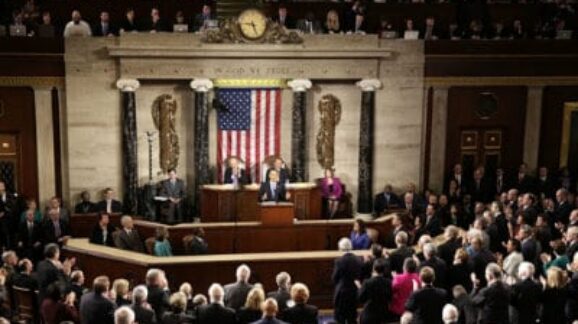
Trump’s SOTU conundrum: Deregulation today, swamp tomorrow?
Donald Trump’s 2026 State of the Union (SOTU) address presents an opportunity to confront the federal spending, entitlement, and regulatory behemoth in a new way…

Blog
The week in regulations: Grandfathered driver vision and socializing dogs
The Supreme Court declared President Trump’s IEEPA tariffs unconstitutional. The White House responded by enacting a 15 percent global tariff under a different statute. The…
Search Posts
Blog
Project Labor Agreements’ Dire Effects on Minority Contractors
Today, DC Progress, a public policy organization that focuses on the District of Columbia, hosted a panel on the issue of underemployment. DC Progress…
Blog
Regulation of the Day 48: Barbers in Nevada
Want to be a barber in Nevada? You’ll need to get a license first. One of the requirements is a chest X-ray, of all things.
Blog
Regulation of the Day 47: Irish Potatoes
It is bad policy to keep perfectly good food off the market because of its shape, especially during times of recession and high food prices.
Blog
Meryl trash talks Julia on pesticides and fat
In the new movie “Julie & Julia,” Meryl Streep does well portraying the late Julia Child, but one can say Streep also benefits from her subject. …
Blog
Happy Labor Day!
In a new poll, Gallup finds public support for organized labor at its lowest level since it began taking the survey. Gallup finds organized…
Blog
CEI Weekly: CEI’s 9/12 Intellectual Ammunition Workshop
CEI Weekly is a compilation of articles and blogs from CEI's staff. This week features CEI's workshop for the 9/12 March on D.C., and a…
Staff & Scholars

Clyde Wayne Crews
Fred L. Smith Fellow in Regulatory Studies
- Business and Government
- Consumer Freedom
- Deregulation

Ryan Young
Senior Economist and Director of Publications
- Antitrust
- Business and Government
- Regulatory Reform

Fred L. Smith, Jr.
Founder; Chairman Emeritus
- Automobiles and Roads
- Aviation
- Business and Government

Sam Kazman
Counsel Emeritus
- Antitrust
- Automobiles and Roads
- Banking and Finance

Marlo Lewis, Jr.
Senior Fellow
- Climate
- Energy
- Energy and Environment