Whether it is lifting net neutrality regulations, allowing AI to reach its full potential to benefit mankind, educating policy makers about content moderation, clearing legacy regulations at the Federal Communications Commission, advocating for greater spectrum efficiency, or defending business practices that benefit consumers but are disliked by antitrust enforcers, CEI punches above its weight. Coalition activity, relationships with tech and telecom journalists, media appearances, policy events, Capitol Hill outreach, op-eds, and in-depth studies combine to make CEI influential in the tech and telecom policy area.
Tech and Telecom Issue Areas
Featured Posts
News Release
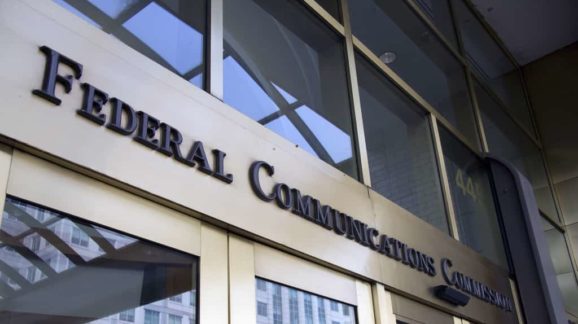
FCC’s license-renewal reviews of ABC stations chill disfavored speech
On Tuesday, the U.S. District Court heard arguments in a First Amendment lawsuit by ABC television stations against the Federal Communications Commission (FCC), seeking…

Blog
Protestations aside, Washington wants to regulate AI. It also wants to run it
Washington’s latest AI summit between Trump and tech executives was billed largely as a meeting about safety. Ultimately, it was a meeting about something…
Blog
Stop rogue government AI
Performative Washington, responsible for funding AI weaponry and R&D for years, purports to have suddenly discovered the dangers of artificial intelligence. Recent incidents…
Search Posts
Op-Eds
Protecting Digital Property Without New Legislation
Contrast digital property with real property or other more tangible goods. In the case of the latter, there is no continuing relationship between seller and…
Products
A Case of Wine for the Supreme Court
Full Document Available in PDF On December 7, the United…
Study
Expanding the Market’s Role in Advancing Intellectual Property
Full Document Available in PDF The debate over…
News Release
A Solution to the Grokster Copyright Debate?
Contact for Interviews: <?xml:namespace prefix = st1 ns = “urn:schemas-microsoft-com:office:smarttags” />Richard Morrison, 202.331.2273 <?xml:namespace prefix = o ns…
News Release
Reviving Real Regulatory Reform
Full Document Available in PDF Washington, D.C., March 24, 2005—Congress and the President, now more than…
Study
The Price is Right—Or Better Be!
Full Document Available in PDF On the popular television game show “The…
Staff & Scholars

Jessica Melugin
Director of the Center for Technology & Innovation
- Antitrust
- Innovation
- Media, Speech and Internet Freedoms

Clyde Wayne Crews
Fred L. Smith Fellow in Regulatory Studies
- Business and Government
- Consumer Freedom
- Deregulation

Fred L. Smith, Jr.
Founder; Chairman Emeritus
- Automobiles and Roads
- Aviation
- Business and Government