There are two main areas in which Congress can enact meaningful reform. The first is to rein in regulatory guidance documents, which we refer to as “regulatory dark matter,” whereby agencies regulate through Federal Register notices, guidance documents, and other means outside standard rulemaking procedure. The second is to enact a series of reforms to increase agency transparency and accountability of all regulation and guidance. These include annual regulatory report cards for rulemaking agencies and regulatory cost estimates from the Office of Management and Budget for more than just a small subset of rules.
In 2019, President Trump signed two executive orders aimed at stopping the practice of agencies using guidance documents to effectively implement policy without going through the legally required notice and comment process.
Featured Posts

Blog
The week in regulations: Spinach proteins and seat belt reminders
The Artemis II mission landed safely after orbiting the moon. Inflation took a huge jump in March from the Iran war’s effects on energy prices.

Blog
Ten Thousand Commandments 2026 is out now
Today is release day for this year’s edition of Wayne Crews’ Ten Thousand Commandments. This year also marks the 30th anniversary of CEI’s first…
Blog
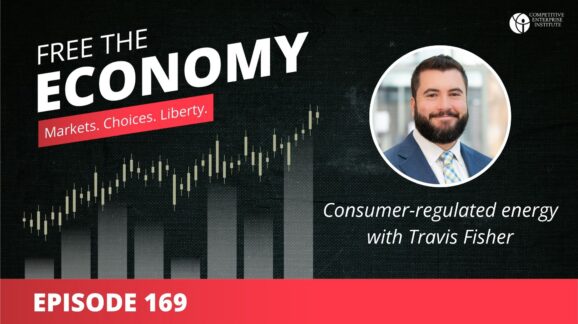
Free the Economy podcast: Consumer-regulated energy with Travis Fisher
In this week’s episode we cover economic growth in China, the political legacy of Viktor Orban in Hungary, and the one-year…
Search Posts
RealClear Policy
Congress Should Create a Repeal Committee
When Congress passes a highly unpopular bill that forces people to buy products from private businesses, and then the Supreme Court upholds it, something needs…
Blog
CEI’s Battered Business Bureau: The Week In Regulation
76 new rules and1,687 Federal Register pages, from offshore drilling to odometers.
Blog
Regulation Roundup
A creative way to get around liquor permits, plus more.
Blog
Clinton Vs. Clinton (And Obama) On Deregulation
With little success on the economic front, President Barack Obama in 2012 is embracing much of his message on the economy from 2008. And from that playbook,…
Blog
CEI Podcast for August 23, 2012: Bailouts as Corruption
Senior Fellow Matt Patterson argues that when government is big and powerful enough to dispense favors like bailouts, special interests will flock to Washington to…
Blog
Regulation And The Green Bay Packers
The NFL has a 53-man roster limit, but it doesn't prescribe how many linemen or quarterbacks the team must carry. That's up to the GMs.
Staff & Scholars

Clyde Wayne Crews
Fred L. Smith Fellow in Regulatory Studies
- Business and Government
- Consumer Freedom
- Deregulation

Ryan Young
Senior Economist and Director of Publications
- Antitrust
- Business and Government
- Regulatory Reform

Fred L. Smith, Jr.
Founder; Chairman Emeritus
- Automobiles and Roads
- Aviation
- Business and Government

Sam Kazman
Counsel Emeritus
- Antitrust
- Automobiles and Roads
- Banking and Finance

Marlo Lewis, Jr.
Senior Fellow
- Climate
- Energy
- Energy and Environment