There are two main areas in which Congress can enact meaningful reform. The first is to rein in regulatory guidance documents, which we refer to as “regulatory dark matter,” whereby agencies regulate through Federal Register notices, guidance documents, and other means outside standard rulemaking procedure. The second is to enact a series of reforms to increase agency transparency and accountability of all regulation and guidance. These include annual regulatory report cards for rulemaking agencies and regulatory cost estimates from the Office of Management and Budget for more than just a small subset of rules.
In 2019, President Trump signed two executive orders aimed at stopping the practice of agencies using guidance documents to effectively implement policy without going through the legally required notice and comment process.
Featured Posts

Blog
Deregulation by the numbers: One-third into 2026 — a rulebook rewrite?
At the close of the first third of the year, a spring 2026 Unified Agenda formally outlining agency priorities has yet to appear. In fact,…

Blog
The week in regulations: Marine terminal fires and marijuana rescheduling
The Federal Reserve held interest rates steady, and outgoing Chairman Jerome Powell will remain on the Fed’s Board of Governors when Kevin Warsh takes over.
Blog
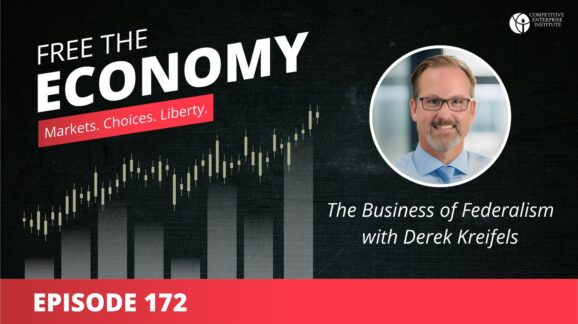
Free the Economy podcast: The business of Federalism with Derek Kreifels
In this week’s episode we cover childcare in the 50 states, how to fix rising healthcare costs, the new Institute for…
Search Posts
National Review
Obama Mandates a Market for His Green Cars
Blog
Rail Carriers, Shippers Battle Over Regulation Before the Surface Transportation Board
On behalf of the Competitive Enterprise Institute, I've been involved in an ongoing proceeding before the Surface Transportation Board, the independent Department of Transportation agency…
Blog
A Definition of Unsustainable: The Long-Term Budget Outlook
The Congressional Budget Office has released its latest edition of the Long-Term Budget Outlook, and it makes for grim reading. Federal debt is currently…
Blog
What Unions Could Learn from AARP
Last week the American Association of Retired Persons (AARP) announced a major policy shift regarding Social Security. Formerly seen as the largest opponent to…
Blog
Stealing You Blind: Plans for Future Theft
One of the themes of Stealing You Blind is how public sector unions have worked with politicians to organize an industrial-scale transfer of wealth…
National Review
Catching Air Without NASA: How Will We Regulate Commercial Space Flight?
What if having a vibrant space program requires bypassing NASA? There exist great pressures for change despite NASA’s signature successes. The private experimental launches…
Staff & Scholars

Clyde Wayne Crews
Fred L. Smith Fellow in Regulatory Studies
- Business and Government
- Consumer Freedom
- Deregulation

Ryan Young
Senior Economist and Director of Publications
- Antitrust
- Business and Government
- Regulatory Reform

Fred L. Smith, Jr.
Founder; Chairman Emeritus
- Automobiles and Roads
- Aviation
- Business and Government

Sam Kazman
Counsel Emeritus
- Antitrust
- Automobiles and Roads
- Banking and Finance

Marlo Lewis, Jr.
Senior Fellow
- Climate
- Energy
- Energy and Environment