There are two main areas in which Congress can enact meaningful reform. The first is to rein in regulatory guidance documents, which we refer to as “regulatory dark matter,” whereby agencies regulate through Federal Register notices, guidance documents, and other means outside standard rulemaking procedure. The second is to enact a series of reforms to increase agency transparency and accountability of all regulation and guidance. These include annual regulatory report cards for rulemaking agencies and regulatory cost estimates from the Office of Management and Budget for more than just a small subset of rules.
In 2019, President Trump signed two executive orders aimed at stopping the practice of agencies using guidance documents to effectively implement policy without going through the legally required notice and comment process.
Featured Posts

Blog
The week in regulations: Cyber sanctions and tinnitus relief devices
Inflation is now more than double the Federal Reserve’s target. The Iran war heated up again. Agencies issued new regulations ranging from vending stands to…
Blog
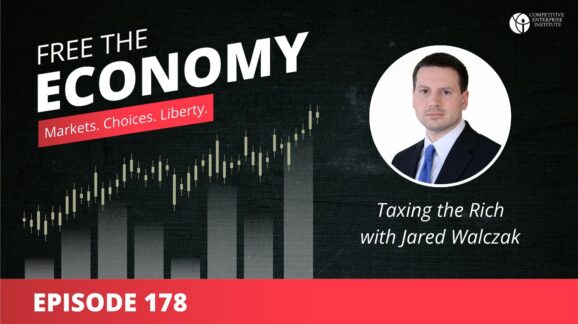
Free the Economy podcast: Taxing the rich with Jared Walczak
In this week’s episode we cover America’s low-income churn, reforms to civil asset forfeiture, changes to vehicle emissions testing, a shout…

Blog
The week in regulations: Bone void filler and halibut action
May’s job numbers were strong for the third month in a row, though job growth since Liberation Day remains under 100,000, for a labor force…
Search Posts
Forbes
Regulation Without Representation: A Quick Revisit Of The “Unconstitutionality Index”
Administrative agencies rather than the elected Congress do the bulk of U.S. lawmaking despite the strictures of Article I of the Constitution —…
Blog
Regulatory Reform Bills in the 118th Congress: The GOOD Act
Regulatory dark matter is a serious problem. Agencies are supposed to run new regulations through a formal process which includes publishing a draft version of…
Blog
Regulatory Reform Bills in the 118th Congress: The REINS Act
Every new session of Congress is a new chance to enact substantive regulatory reform. This post inaugurates an occasional series highlighting reform bills that have…
Washington Examiner
Democrats and Republicans: Unite around abundance
Inflation may finally be starting to wane, but there is no clear end in sight to the economic turmoil that Americans have experienced for nearly…
Americans for Tax Reform
Q&A on Credit Card Regulation
Americans for Tax Reform has been consistently opposed to government regulation of debit and credit card transactions. Last year, ATR opposed the Credit Card Competition…
News Release
CEI Launches “Eye on FTC” Campaign to Raise Awareness of Agency Overreach and Lack of Transparency
WASHINGTON—The Competitive Enterprise Institute (CEI) launched a new “Eye on FTC” educational campaign today to raise awareness about overreach and a lack of…
Staff & Scholars

Clyde Wayne Crews
Fred L. Smith Fellow in Regulatory Studies
- Business and Government
- Consumer Freedom
- Deregulation

Ryan Young
Senior Economist and Director of Publications
- Antitrust
- Business and Government
- Regulatory Reform

Fred L. Smith, Jr.
Founder; Chairman Emeritus
- Automobiles and Roads
- Aviation
- Business and Government

Sam Kazman
Counsel Emeritus
- Antitrust
- Automobiles and Roads
- Banking and Finance

Marlo Lewis, Jr.
Senior Fellow
- Climate
- Energy
- Energy and Environment