There are two main areas in which Congress can enact meaningful reform. The first is to rein in regulatory guidance documents, which we refer to as “regulatory dark matter,” whereby agencies regulate through Federal Register notices, guidance documents, and other means outside standard rulemaking procedure. The second is to enact a series of reforms to increase agency transparency and accountability of all regulation and guidance. These include annual regulatory report cards for rulemaking agencies and regulatory cost estimates from the Office of Management and Budget for more than just a small subset of rules.
In 2019, President Trump signed two executive orders aimed at stopping the practice of agencies using guidance documents to effectively implement policy without going through the legally required notice and comment process.
Featured Posts

National Review
From Munitions Shortage to Ebola, Dodd–Frank Minerals Measure Makes Things Worse
A scan of news headlines warns readers of two seemingly unrelated dangers around the globe. One is a potential shortage of missiles, interceptors, and…

Blog
The week in regulations: School libraries and sport pilots
The Federal Reserve raised interest rates. Congress passed a Russia sanctions bill that gives President Trump more tariff authority. Agencies issued new regulations ranging…
Blog
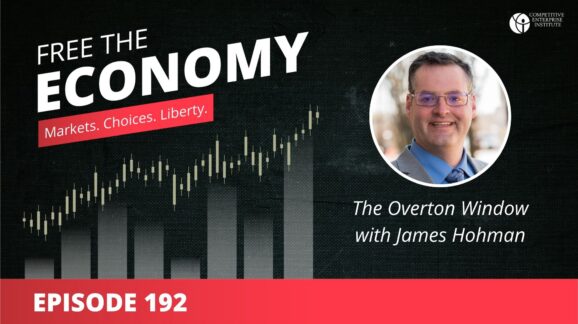
Free the Economy podcast: The Overton Window with James Hohman
In this week’s episode we cover Treasury yields, oil prices, US-China-Taiwan security policy, and Trump’s $5,000 dividend checks. Our…
Search Posts
News Release
SEC Set To Over-Regulate Mutual Fund Industry With Vote on June 23
***MEDIA ADVISORY***<?xml:namespace prefix = o ns = “urn:schemas-microsoft-com:office:office” /> SEC Set To Over-Regulate Mutual Fund…
News Release
Ad Schemes Bring Retailers Bad Publicity
News Release
Keeping Busy: Federal Regulators Issued Over 4,000 Rules in 2003
<?xml:namespace prefix = st1 ns = “urn:schemas-microsoft-com:office:smarttags” />Washington, DC, June 16, 2004—While Washington rule makers made 19 fewer regulations in 2003 than they…
Business Journal
Feds Added 4,148 Rules in ’03
News Release
Bush Administration Makes Right Decision on Phone Competition
<?xml:namespace prefix = st1 ns = “urn:schemas-microsoft-com:office:smarttags” />Washington, DC, June 9, 2004 – Today the U.S. Solicitor General's office announced it will not…
Op-Eds
If You Really Want to Reduce Gas Prices, Here’s How
Despite claims to the contrary, there is not much the federal government can do about high oil and gasoline prices in the short-term. Indeed, given…
Op-Eds
EU Is out of Step over Regulation of Modified Products
Sir, The premise of Steven Druker’s rant that the US criticises Europe’s application of the precautionary principle yet uses it itself (“America’s hypocrisy over modified…
Op-Eds
We eat only what we choose to
To answer John Gapper’s question (Who would be in Neville Isdell’s shoes?”) in his article “How to get fat on a healthy diet”…
Business Journal
Market Distortion (Letter to the Editor)
Michelle Singletary’s premise that subsidies are market-distorting is indeed correct (“The Color of Money,” MoneyWise, May 2). The Higher Education Act prescribing these guarantees is…
Op-Eds
Does the European Union Believe in Ghosts?: An Unwarranted Fear of Tax Competition
A spectre is haunting Europe: the spectre of tax competition. The cause for this fear is the upcoming entry of 10 new members into the…
Op-Eds
“I Love Humanity; It’s People I Can’t Stand”
This is part 2 of a two-part series. To read part 1, please click here.<?xml:namespace prefix = o ns = “urn:schemas-microsoft-com:office:office” />…
Op-Eds
The Broadcast Indecency Playground
Sticks and stones may break my bones but words will never hurt me—we’ve all heard that phrase before. It’s often said by children who are…
News Release
Broadcast Update on Issues in the News
Contact for Interviews: <?xml:namespace prefix = o ns = “urn:schemas-microsoft-com:office:office” /> Richard Morrison, 202.331.2273 …
Op-Eds
Refining the Battle Against High Gas Prices
Everyone knows that <?xml:namespace prefix = st1 ns = “urn:schemas-microsoft-com:office:smarttags” />America imports more than half of the oil it uses, but few are…
Op-Eds
The Rocky Road to Biotech’s Success
The first Earth Day celebration, conceived by then-US Senator Gaylord Nelson, was held in 1970 as a “symbol of environmental responsibility and stewardship.” In the spirit…
Op-Eds
Down in the Dumps
When most people hear the words “illegal dumping,” they probably think of someone using somebody else's trash dumpster without permission. However, in the…
Op-Eds
Time to Get Tough on Telecom Regulatory Reform
The FCC is not subject to any sort of mandatory “three strikes” law as are some criminals. But maybe there is justification for an equivalent…
Op-Eds
Many Talents Needed for FDA Post
The departure of FDA Commissioner Mark McClellan leaves a high-level opening in the Bush administration for the right candidate. It's a hard job, but…
News Release
DAILY DIARY – DEBUNK THE JUNK, APRIL 5, 2004
<?xml:namespace prefix = o ns = “urn:schemas-microsoft-com:office:office” /> Receipts available as a pdf. “A gentleman never…
News Release
DAILY DIARY: DEBUNK THE JUNK – APRIL 3, 2004
My academic journey has not been easy. Fortunately, I have always been very inquisitive and love reading so that combination has led me…
News Release
DAILY DIARY – Debunk the Junk Report – APRIL 2, 2004
Receipts available as a pdf. “Even when all the experts agree, they may well be mistaken.” – Bertrand…
CEI Planet
April/May Issue of CEI’s Monthly Planet
Full Document Available in PDF “The Day After Never,”…
Letters
Stop FCC Unbundling Laws
Full Letter Available in PDF Mr. President, in your recent speech in Albuquerque, you championed “the…
Op-Eds
From the Pumps to the Polls
Does the high price of gasoline hurt Bush or Kerry? It hurts both of them.<?xml:namespace prefix = u1 /> <?xml:namespace prefix = o…
News Release
Economists Urge President to Support Investment in Telecommunications
Contact for Interviews: <?xml:namespace prefix = o ns = “urn:schemas-microsoft-com:office:office” /> Richard Morrison, 202.331.2273 …
Op-Eds
Federal Regulations Pump up Gasoline Prices
The stage is set for sky-high gasoline prices this summer. We probably won't threaten the inflation-adjusted record of $2.90 per gallon set in 1981,…
Op-Eds
An Open Letter to Randy A. Daniels, Secretary of State
<?xml:namespace prefix = st1 ns = “urn:schemas-microsoft-com:office:smarttags” />March 22, 2004<?xml:namespace prefix = o ns = “urn:schemas-microsoft-com:office:office” /> …
Op-Eds
The New Reason For Pain at the Pump
Everyone knows that the recent rise in the price of oil has had an effect at the pump, but something less well known…
Op-Eds
Culture Wars
<?xml:namespace prefix = o ns = “urn:schemas-microsoft-com:office:office” /> When Americans hear the word “outsourcing,” they typically imagine the movement of <?xml:namespace prefix =…
CEI Planet
January-February Edition of CEI Monthly Planet
Full Document Available in PDF “The European Constitution Falls Apart,”…
Op-Eds
Supreme Court Rules EPA Can Override States on Environment
In an ongoing fight between states and the federal government over control of environmental policy, the federal government has notched an important victory…
Op-Eds
Creating Cow Concerns Should Make Mad Consumers
<?xml:namespace prefix = st1 ns = “urn:schemas-microsoft-com:office:smarttags” />U.S. consumers are known for their affection for food, so it's a wonder most Americans…
Op-Eds
Clinton’s Midnight Madness vs. the Bush Administration
Remember all those “<?xml:namespace prefix = st1 ns = “urn:schemas-microsoft-com:office:smarttags” />midnight regulations” finalized by outgoing Clinton administration officials during their final two months…
Op-Eds
No, Not the NHS!
Whenever I hear the words “universal health care” — as I did during Sunday night's Democratic debate in <?xml:namespace prefix = st1 ns =…
Op-Eds
End Subsidies for Nanotechnology
Op-Eds
UN-Dermining the Net
There's mounting evidence that the Internet's good old days as a globalcyberzone of freedom—where governments generally take a “hands off” approach—may be numbered. [Last year] delegates from 192 countries met in <?xml:namespace prefix = st1 ns = “urn:schemas-microsoft-com:office:smarttags” />Geneva to discuss how the Internet should be governed and what steps should be taken to solve the global “digital divide” and “harness the potential of information” onbehalf of the world's poor. Also on the table at the session—the UnitedNations World Summit on the Information Society—was the question of domainname management and how much protection free speech and expression shouldreceive on the Net. The real issue, however, is whether a “United Nations forthe Internet” is on the way. The great advantage of the Net is precisely the ability to reach as many peopleas possible and overcome artificial restrictions on trade or communications attraditional geographic boundaries. The Web, whatever problems it has raised,has provided far more opportunity and freedom to mankind. The United Nationsappears eager to assume greater control over the Net, not because of itsfailures, but because it undermines members' authority. That sounds like thebest reason ever to make sure a United Nations for the Internet never becomes areality. …
Op-Eds
Everybody Wants to Rule the Web
There’s mounting evidence that the Internet’s good old days as a global cyberzone of freedom—where governments generally take a “hands off” approach—may be numbered.
Op-Eds
Taxing Fat, Killing Jobs
Dark clouds of uncertainty now hover over the future of some 26,000 European companies and their 2.6 million employees. These firms represent Europe’s food…
Op-Eds
France Launches Global Culture War
Cultural creativity is big business in <?xml:namespace prefix = st1 ns = “urn:schemas-microsoft-com:office:smarttags” />America. According to the most recent data from Economists Incorporated, U.S.
Op-Eds
Corporate PR Must Reach People as Consumers and Citizens
PR pros have long sought to link their efforts to clients’ return on investment. The planned campaign for the Aluminum Association, detailed in this magazine…
Op-Eds
The Green Machine
Click on pdf link above to obtain full version of article Twenty EU member and accession states labour under a cadre…
Op-Eds
Russian Revolution
On <?xml:namespace prefix = st1 ns = “urn:schemas-microsoft-com:office:smarttags” />December 2, 2003, Andrei Illarionov, Russian President Vladimir Putin's chief economic adviser, stunned green activists…
Op-Eds
Resentment, fear drive U.N. quest for control
There’s mounting evidence that the Internet’s good old days as a global cyberzone of freedom—where governments generally take a "hands off" approach—may be numbered.
Op-Eds
Wishful Anti-spam Thinking
Tomorrow, the House is expected to pass new anti-spam legislation. The effort is understandable: The increasingly apparent downside of an Internet on which you…
Op-Eds
Rescuing Free Trade From the Bureaucrats & Special Interests
Full article available in pdf format.<?xml:namespace prefix = o ns = “urn:schemas-microsoft-com:office:office” /> In the aftermath of the…
Study
The Power of Positive Drinking: Are Alcoholic Beverage Health Claims Constitutionally Protected
Full Document Available in PDF Food and…
Products
October Edition of the Monthly Planet
Full Document Available in PDF Articles in this edition: “On…
Op-Eds
United Nations Day of Shame
UN Secretary-General Kofi Annan recently declared that the global pursuit of scientific endeavors is marked by inequality. Noting that developing countries invest much…
News Release
General Accounting Office Reports on Cable TV Rates
Contacts: <?xml:namespace prefix = o ns = “urn:schemas-microsoft-com:office:office” /> Ms. Solveig Singleton, 202.331.2274, [email protected]…
Study
Federal Pesticide Law Needs an Overhaul: Anti-Competitive Effects Hit Consumers, A Case Study
Full Document Available in PDF Most Americans believe that the federal regulatory process is simply designed to protect them from fraud and…
Staff & Scholars

Clyde Wayne Crews
Fred L. Smith Fellow in Regulatory Studies
- Business and Government
- Consumer Freedom
- Deregulation

Ryan Young
Senior Economist and Director of Publications
- Antitrust
- Business and Government
- Regulatory Reform
Fred L. Smith, Jr.
Founder; Chairman Emeritus
- Automobiles and Roads
- Aviation
- Business and Government

Sam Kazman
Counsel Emeritus
- Antitrust
- Automobiles and Roads
- Banking and Finance

Marlo Lewis, Jr.
Senior Fellow
- Climate
- Energy
- Energy and Environment