There are two main areas in which Congress can enact meaningful reform. The first is to rein in regulatory guidance documents, which we refer to as “regulatory dark matter,” whereby agencies regulate through Federal Register notices, guidance documents, and other means outside standard rulemaking procedure. The second is to enact a series of reforms to increase agency transparency and accountability of all regulation and guidance. These include annual regulatory report cards for rulemaking agencies and regulatory cost estimates from the Office of Management and Budget for more than just a small subset of rules.
In 2019, President Trump signed two executive orders aimed at stopping the practice of agencies using guidance documents to effectively implement policy without going through the legally required notice and comment process.
Featured Posts
Blog
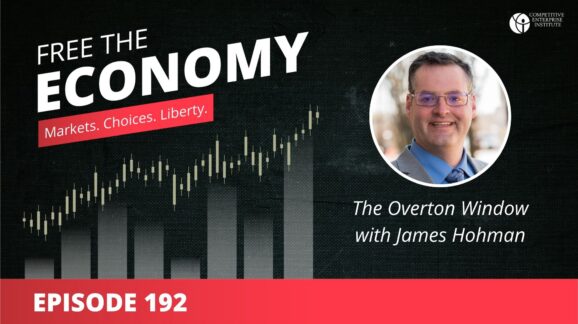
Free the Economy podcast: The Overton Window with James Hohman
In this week’s episode we cover Treasury yields, oil prices, US-China-Taiwan security policy, and Trump’s $5,000 dividend checks. Our…

Blog
How The No Surprises Act worsened the problem of surprise bills
Next week, Sen. Bill Cassidy (R-LA) will convene a roundtable to discuss adjustments to the 2020 No Surprises Act, which has come under…
Blog
The rules Congress never gets to see
The 1996 Congressional Review Act (CRA) has been used to overturn only a few dozen federal regulatory directives since its enactment, most during the…
Search Posts
News Release
Study: Consumers Could be Hurt by Federal Regulation of Insurance Industry
Contact for interviews: <?xml:namespace prefix = o ns = “urn:schemas-microsoft-com:office:office” /> Richard Morrison, 202.331.2273 <?xml:namespace prefix = st1…
Op-Eds
Stunting Corporate Growth
<?xml:namespace prefix = o ns = “urn:schemas-microsoft-com:office:office” /> Robert J. Samuelson [op-ed, Dec. 22] dismissed legitimate concerns about the effects of the Sarbanes-Oxley Act…
Op-Eds
The Danger of Too Much Caution
Congress has a long and ignoble history of exaggerated legislative responses to perceived health crises. They seem to be at it again.<?xml:namespace prefix…
Op-Eds
Reid May Lead on Stock Options
In the discussion of winners and losers from Election 2004, one organization that may have suffered a big blow has been overlooked. This…
News Release
FCC to Reconsider Telephone Competition
Contact for Interviews: Richard Morrison, 202.331.2273 <?xml:namespace prefix = o ns = “urn:schemas-microsoft-com:office:office” /> <?xml:namespace prefix…
Op-Eds
It’s the Infrastructure, Stupid: Amtrak, derailed
The news that the Department of Transportation’s Inspector General is deeply concerned about the dangerous state of Amtrak’s railroad infrastructure should come as…
News Release
The Battle over Interstate Wine Shipments
Full complaint available as a pdf. The Supreme Court is hearing oral arguments today in the case of…
News Release
Bracing for e-prohibition on wine?
<?xml:namespace prefix = o ns = “urn:schemas-microsoft-com:office:office” /> Contact for interviews: <?xml:namespace prefix = st1 ns = “urn:schemas-microsoft-com:office:smarttags” />Richard Morrison,…
Op-Eds
Will Reid Lead On Stock Option?
In the discussion of winner sand losers from Election 2004, one organization that may have suffered a big blow has been…
Study
Threats to Competitiveness in a Political Environment
Full Document Available in PDF This essay may seem depressing, but…
Op-Eds
The Fight For Telecom Reform
Full document available in pdf format<?xml:namespace prefix = o ns = “urn:schemas-microsoft-com:office:office” /> There’s good news and bad news in the wonky…
Op-Eds
Margaret Thatcher: A Free Market Environmentalist
Full document available in pdf format <?xml:namespace prefix = o ns = “urn:schemas-microsoft-com:office:office” /> Tracy Mehan’s account of Margaret…
News Release
New Book Challenges Activist Attack on Business, Personal Prosperity
Contact for Interviews: Richard Morrison, 202.331.2273 Washington, D.C., November 19, 2004—The Competitive Enterprise Institute is proud to announce the publication…
Study
The Role of Business in the Modern World: Progress, Pressures and Prospects for the Market Economy
Foreward, acknowledgments, and…
Op-Eds
Making the Desert Bloom
There is big news from the <?xml:namespace prefix = st1 ns = “urn:schemas-microsoft-com:office:smarttags” />Middle East that is unusual in several ways: It's positive,…
Products
Nick Gillespie Q&A in the October Issue of CEI’s Monthly Planet
Full Document Available in PDF …
Study
1984-2004: CEI’s 20 Year Report
Full Document Available in PDF A Message from the President CEI is…
Op-Eds
Stock Option Expense Jousting
After hearing constant tirades about <?xml:namespace prefix = st1 ns = “urn:schemas-microsoft-com:office:smarttags” />U.S. foreign policy offending “the world,” a majority of American voters…
Op-Eds
Health, Wealth and Happiness
How do we know when we’re happy? Strange as it may seem, this philosophical question could come back to haunt you one April 15. Psychologists…
Op-Eds
Vaccine Development Needs a Booster Shot
Every year in this country influenza kills tens of thousands and hospitalizes about a quarter-million. <?xml:namespace prefix = o ns = “urn:schemas-microsoft-com:office:office” />…
Op-Eds
Medicine Could Reach For Stars, FDA Willing
When Bill Gates and Paul Allen founded Microsoft in 1975, they shot for the stars and succeeded. More recently, Allen shot for the stars again.
News Release
FDA-Tobacco Regulation No Public Service
Contact: Richard Morrison, 202.331.2273 Washington, DC, October 6, 2004—A Senate-passed plan for increasing the federal government’s regulation of…
CEI Planet
CEI Planet: September 2004
Full Document Available in PDF Tech Regulation Done Right, by Braden Cox…
News Release
Threat to Tech Innovation in Senate
Contact for Interviews: <?xml:namespace prefix = o ns = “urn:schemas-microsoft-com:office:office” /> Richard Morrison, 202.331.2273 <?xml:namespace prefix…
Op-Eds
Back to School for Pests
As students return to school this fall, parents will again worry about new illnesses as kids come in contact with more cold and…
Op-Eds
Taking the Scare Out of Biotech Crops
In the late 1990s, political scientist Gregory Conko had been studying food and pharmaceutical regulation as a fellow of the Competitive Enterprise Institute,…
Op-Eds
Eco-Fascism Going Global
Full text available as pdf<?xml:namespace prefix = o ns = “urn:schemas-microsoft-com:office:office” /> We can say this for environmental…
Op-Eds
Antitrust: Sherman’s March Across the Globe
President Bush’s bipartisan Antitrust Modernization Commission held its first meeting in July. But after 114 years, America’s antitrust regulatory regime is overdue for burial, not…
Op-Eds
Lessons from the Gas Price Spike
<?xml:namespace prefix = o ns = “urn:schemas-microsoft-com:office:office” /> Labor Day weekend marked the end of summer and its high seasonal demand…
Products
CEI Planet: September 2004
Full document available as a pdf. Tort Law “to Make Law,” by Ivan Osorio and Elizabeth Jones …
Products
Nanotech’s Choice: Pork or Innovation?
Products
Conflicting with Reality: Or, Scientists are Human, Too
Full Document Available in PDF Former New England Journal of…
Products
Tort Law “to Make Law”
Full Document Available in PDF A recent little-noticed New York Times story says…
Op-Eds
Conflicting with Reality
Former New England Journal of Medicine editor Jerome Kassirer, in an August 1 Washington Post op-ed, argues that conflicts of interest in medical…
Op-Eds
Fear Factor
Environmental activists seeking to halt the worldwide spread of the advanced technologies they fear see <?xml:namespace prefix = st1 ns = “urn:schemas-microsoft-com:office:smarttags” />China…
Op-Eds
Obesity: a Sign We’re Doing Things Right
Health and Human Services Secretary Tommy Thompson recently designated obesity a disease, with all the negative implications that entails. Our society, crippled, it seems,…
Op-Eds
Bookshelf: Fighting Disease Is Only Half the Battle
As a fresh-faced medical intern, a colleague of mine once greeted a new patient with a breezy, “So what’s your problem?” “Oh, just a touch…
Op-Eds
California Wine vs. Two-Legged Pests
<?xml:namespace prefix = st1 ns = “urn:schemas-microsoft-com:office:smarttags” />California is under attack by parasites, of both the six-legged and two-legged variety. The former are…
Op-Eds
Tort Law ‘to Make Law’
A recent little-noticed New York Times story says a great deal about <?xml:namespace prefix = st1 ns = “urn:schemas-microsoft-com:office:smarttags” />America's current legal climate:…
Op-Eds
RFID Tags and Privacy
Radio frequency identification (RFID) technology promises many consumer benefits. With RFID, goods on trucks, in trains, and in warehouses can be inventoried without unloading…
Op-Eds
Wave of Regulations Will Follow Tsunami of Federal Spending
On top of the $2 trillion in tax revenues the government now collects, agencies issue more than 4,000 yearly regulations. Costing some $800 billion annually, regulations…
Study
Send Me No Files: Senate INDUCEs a Threat to the Future of Information Technology
Please copy and share this article, download some music files, and photocopy your favorite chapters from Bill Clinton’s new book. It’s fun: Just do it!…
Op-Eds
Reformers are too Willing to Turn a Blind Eye to Liberal Fixes for our Economic Problems
Sirs, Your edition of July 6 features two distinct columns that demonstrate a persistent neglect of economic liberalisation as a way of resolving societal…
Study
Spitzer Strains out Grasso While Swallowing Camels
Full Document Available in PDF Recently, New York Attorney General Eliot Spitzer…
Products
A More Creative and Productive World
Full Document Available in PDF I’m grateful to all of you for…
Products
Ronald Reagan, Freedom’s Champion
Full Document Available in PDF Former President Ronald Reagan’s passing has prompted innumerable words about…
Products
June Edition of CEI’s Monthly Planet
Full Document Available in PDF “A More Creative and Productive…
Op-Eds
Split Decision at the SEC
Nobel Prize economist Ronald Coase long ago warned of a political risk—that of wishing to be an “economic statesman,” which he defined as a person…
News Release
SEC Set To Over-Regulate Mutual Fund Industry With Vote on June 23
***MEDIA ADVISORY***<?xml:namespace prefix = o ns = “urn:schemas-microsoft-com:office:office” /> SEC Set To Over-Regulate Mutual Fund…
News Release
Ad Schemes Bring Retailers Bad Publicity
Staff & Scholars

Clyde Wayne Crews
Fred L. Smith Fellow in Regulatory Studies
- Business and Government
- Consumer Freedom
- Deregulation

Ryan Young
Senior Economist and Director of Publications
- Antitrust
- Business and Government
- Regulatory Reform

Fred L. Smith, Jr.
Founder; Chairman Emeritus
- Automobiles and Roads
- Aviation
- Business and Government

Sam Kazman
Counsel Emeritus
- Antitrust
- Automobiles and Roads
- Banking and Finance

Marlo Lewis, Jr.
Senior Fellow
- Climate
- Energy
- Energy and Environment