There are two main areas in which Congress can enact meaningful reform. The first is to rein in regulatory guidance documents, which we refer to as “regulatory dark matter,” whereby agencies regulate through Federal Register notices, guidance documents, and other means outside standard rulemaking procedure. The second is to enact a series of reforms to increase agency transparency and accountability of all regulation and guidance. These include annual regulatory report cards for rulemaking agencies and regulatory cost estimates from the Office of Management and Budget for more than just a small subset of rules.
In 2019, President Trump signed two executive orders aimed at stopping the practice of agencies using guidance documents to effectively implement policy without going through the legally required notice and comment process.
Featured Posts
Blog
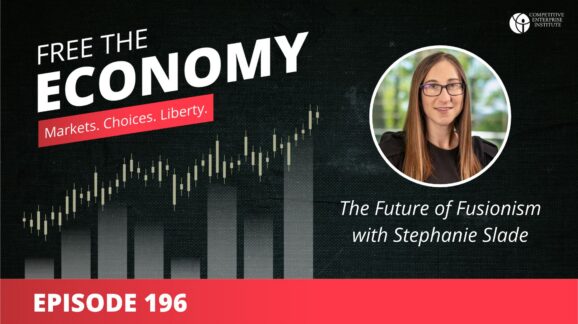
Free the Economy podcast: The future of Fusionism with Stephanie Slade
In this week’s episode we cover federal vs. state rules for prediction markets, the difference between Detroit and Pittsburgh, and a…

Blog
The week in regulations: Mariner training and Maryland trash
The federal government’s annual budget deficit hit $2 trillion. Defense Secretary Pete Hegseth pledged to livestream an execution. Thirty-year Treasury bond interest rates continued…
Blog
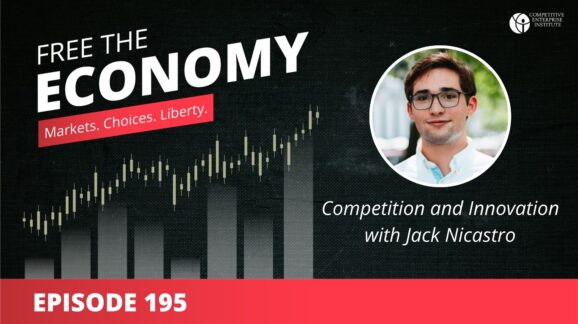
Free the Economy podcast: Competition and innovation with Jack Nicastro
In this week’s episode we cover the case of Suncor v. Boulder County at the Supreme Court, the problems with the Los…
Search Posts
Op-Eds
The Fight For Telecom Reform
Full document available in pdf format<?xml:namespace prefix = o ns = “urn:schemas-microsoft-com:office:office” /> There’s good news and bad news in the wonky…
Op-Eds
Margaret Thatcher: A Free Market Environmentalist
Full document available in pdf format <?xml:namespace prefix = o ns = “urn:schemas-microsoft-com:office:office” /> Tracy Mehan’s account of Margaret…
News Release
New Book Challenges Activist Attack on Business, Personal Prosperity
Contact for Interviews: Richard Morrison, 202.331.2273 Washington, D.C., November 19, 2004—The Competitive Enterprise Institute is proud to announce the publication…
Study
The Role of Business in the Modern World: Progress, Pressures and Prospects for the Market Economy
Foreward, acknowledgments, and…
Op-Eds
Making the Desert Bloom
There is big news from the <?xml:namespace prefix = st1 ns = “urn:schemas-microsoft-com:office:smarttags” />Middle East that is unusual in several ways: It's positive,…
Products
Nick Gillespie Q&A in the October Issue of CEI’s Monthly Planet
Full Document Available in PDF …
Staff & Scholars

Clyde Wayne Crews
Fred L. Smith Fellow in Regulatory Studies
- Business and Government
- Consumer Freedom
- Deregulation

Ryan Young
Senior Economist and Director of Publications
- Antitrust
- Business and Government
- Regulatory Reform

Fred L. Smith, Jr.
Founder; Chairman Emeritus
- Automobiles and Roads
- Aviation
- Business and Government

Sam Kazman
Counsel Emeritus
- Antitrust
- Automobiles and Roads
- Banking and Finance

Marlo Lewis, Jr.
Senior Fellow
- Climate
- Energy
- Energy and Environment