There are two main areas in which Congress can enact meaningful reform. The first is to rein in regulatory guidance documents, which we refer to as “regulatory dark matter,” whereby agencies regulate through Federal Register notices, guidance documents, and other means outside standard rulemaking procedure. The second is to enact a series of reforms to increase agency transparency and accountability of all regulation and guidance. These include annual regulatory report cards for rulemaking agencies and regulatory cost estimates from the Office of Management and Budget for more than just a small subset of rules.
In 2019, President Trump signed two executive orders aimed at stopping the practice of agencies using guidance documents to effectively implement policy without going through the legally required notice and comment process.
Featured Posts
Blog
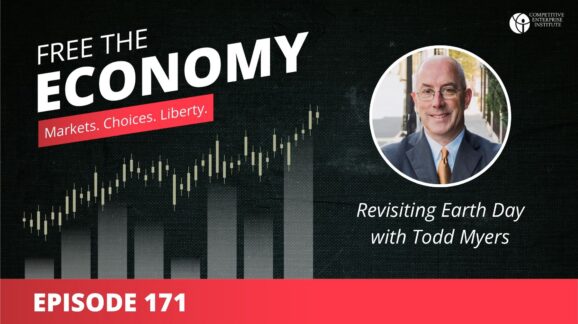
Free the Economy podcast: Revisiting Earth Day with Todd Myers
In this week’s episode we cover the dwindling number of US public companies (via Todd Zywicki of George Mason University), a pro-consumer…

Blog
The week in regulations: Drone settlements and gambling losses
The 2026 Federal Register topped 20,000 pages. President Trump got into a feud with the Pope. Agencies issued new regulations ranging from mail standards to…

Blog
Free the Economy podcast: How to Get What You Want with Josh Bandoch
In this week’s episode we cover AI development in China, how large investors recycle homes, and why permitting reform needs to…
Search Posts
Blog
Regulation of the Day 182: The Definition of a Hot Dog
Having solved the state’s fiscal crisis, California’s state legislature has moved on to more important issues, such as the legal definition of “hot dog.”…
Blog
Strangely Specific Regulations
The next someone tells you the economy is dangerously unregulated, refer them to this list:…
Blog
CEI Podcast for July 7, 2011: How Much Does Regulation Cost?
One federal study says federal regulations cost $1.75 trillion. Another says it's $62 billion. The difference is almost a factor of 30. Vice President for…
Blog
Big Government Continues to Hurt Small Businesses Most
The Small Business Administration’s Office of Advocacy released a study showing that the burden of government regulation disproportionately falls onto small businesses. Specifically, those with…
Blog
New Video on the D.C. Taxicab Medallion Bill
Reason.tv has a new video up today, “D.C. Taxi Heist: How a new law would screw drivers and riders,” that explains why Washington’s proposed…
Daily Iowan
The Growth of the Administrative State
The Daily Iowan reports on Wayne Crews's report on the size of the federal regulatory burden. The Competitive Enterprise Institute has issued its…
Staff & Scholars

Clyde Wayne Crews
Fred L. Smith Fellow in Regulatory Studies
- Business and Government
- Consumer Freedom
- Deregulation

Ryan Young
Senior Economist and Director of Publications
- Antitrust
- Business and Government
- Regulatory Reform

Fred L. Smith, Jr.
Founder; Chairman Emeritus
- Automobiles and Roads
- Aviation
- Business and Government

Sam Kazman
Counsel Emeritus
- Antitrust
- Automobiles and Roads
- Banking and Finance

Marlo Lewis, Jr.
Senior Fellow
- Climate
- Energy
- Energy and Environment