There are two main areas in which Congress can enact meaningful reform. The first is to rein in regulatory guidance documents, which we refer to as “regulatory dark matter,” whereby agencies regulate through Federal Register notices, guidance documents, and other means outside standard rulemaking procedure. The second is to enact a series of reforms to increase agency transparency and accountability of all regulation and guidance. These include annual regulatory report cards for rulemaking agencies and regulatory cost estimates from the Office of Management and Budget for more than just a small subset of rules.
In 2019, President Trump signed two executive orders aimed at stopping the practice of agencies using guidance documents to effectively implement policy without going through the legally required notice and comment process.
Featured Posts

Blog
The week in regulations: Bone void filler and halibut action
May’s job numbers were strong for the third month in a row, though job growth since Liberation Day remains under 100,000, for a labor force…
Blog
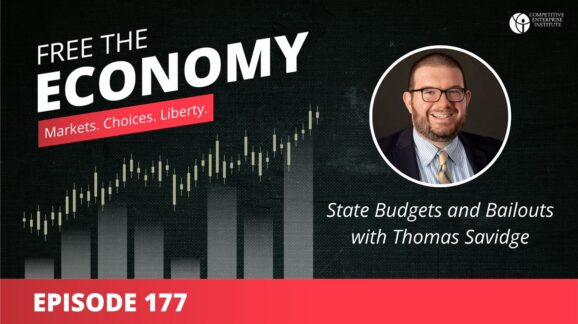
Free the Economy podcast: State budgets and bailouts with Thomas Savidge
In this week’s episode we cover promising new classroom technology, increasing productivity (and avoiding layoffs) with AI, and the repeal of the…

Blog
The week in regulations: Onion marketing and refrigerator leaks
PCE inflation, which the Federal Reserve uses for its interest rate decisions, rose to 3.8 percent, nearly double the Fed’s 2.0 percent target. President Trump…
Search Posts
Products
Chapter 2: Why we need a regulatory budget
Federal spending programs are funded either by taxes or by borrowing, with interest, from future tax collections. The public can readily inspect the costs of…
Products
Chapter 8: Economically significant rules
From 1993 until April 2023, rules with annual economic effects of at least $100 million were classified as economically significant. Biden’s EO 14094 raised the…
Products
Chapter 9: Federal regulations affecting small business
The National Association of Manufacturers report reaffirmed that average annual per-employee regulatory costs vary by firm size. The smaller the organization, the higher the per-employee…
Products
Chapter 3: Numbers of rules and page counts in the Federal Register
The Federal Register is the daily repository of all proposed and final federal rules and regulations. Although its page counts are often cited as a…
Products
Chapter 1: Trump 2.0: Year one and the regulatory state’s uneven reset
“It is the policy of my Administration to focus the executive branch’s limited enforcement resources on regulations squarely authorized by constitutional Federal statutes, and to…
Products
Chapter 11: GAO database on rules and major rules
The federal government’s regulatory reports and databases serve different but intertwined purposes. The Federal Register presents all proposed and final rules, along with numerous presidential…
Staff & Scholars

Clyde Wayne Crews
Fred L. Smith Fellow in Regulatory Studies
- Business and Government
- Consumer Freedom
- Deregulation

Ryan Young
Senior Economist and Director of Publications
- Antitrust
- Business and Government
- Regulatory Reform

Fred L. Smith, Jr.
Founder; Chairman Emeritus
- Automobiles and Roads
- Aviation
- Business and Government

Sam Kazman
Counsel Emeritus
- Antitrust
- Automobiles and Roads
- Banking and Finance

Marlo Lewis, Jr.
Senior Fellow
- Climate
- Energy
- Energy and Environment