There are two main areas in which Congress can enact meaningful reform. The first is to rein in regulatory guidance documents, which we refer to as “regulatory dark matter,” whereby agencies regulate through Federal Register notices, guidance documents, and other means outside standard rulemaking procedure. The second is to enact a series of reforms to increase agency transparency and accountability of all regulation and guidance. These include annual regulatory report cards for rulemaking agencies and regulatory cost estimates from the Office of Management and Budget for more than just a small subset of rules.
In 2019, President Trump signed two executive orders aimed at stopping the practice of agencies using guidance documents to effectively implement policy without going through the legally required notice and comment process.
Featured Posts

Blog
The week in regulations: Grandfathered driver vision and socializing dogs
The Supreme Court declared President Trump’s IEEPA tariffs unconstitutional. The White House responded by enacting a 15 percent global tariff under a different statute. The…
Blog
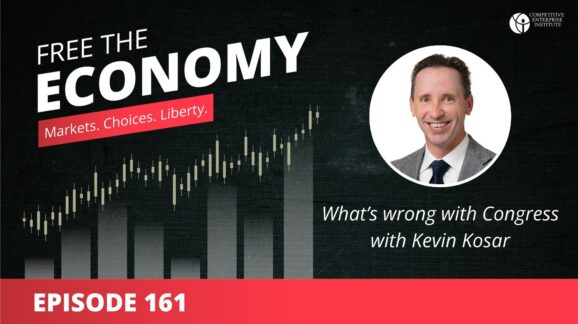
Free the Economy podcast: What’s wrong with Congress with Kevin Kosar
In this week’s episode we talk about we talk about Consumer-Regulated Electricity, the amazing falling US poverty rate, and how smart…

Blog
Trump’s deregulation meets invisible rulemaking: The real 2026 challenge
After a brief shutdown, most fiscal year 2026 appropriations have been enacted, despite continued debate over Department of Homeland Security (DHS) funding. We may soon…
Search Posts
Blog
Precisely Backwards
Few things are more taxing than our elected officials’ economic illiteracy. How sad that visiting a wonderful country like ours may soon be one of…
Blog
Regulation of the Day 57: Minimum Price Agreements
A new Maryland law makes it illegal for manufacturers to set a minimum retail price for their products in sales contracts. The law is meant…
Newsletter
Retail Prices, Utility Politics and Swine Flu
The Maryland legislature bans manufacturers from setting minimum retail prices for their products. Florida Gov. Charlie Crist plays hardball with the state’s public utilities. Doctors…
Blog
Now Crist Goes after Utilities
Not content with exposing Florida to financial catastrophe by taking on responsibility for insuring coastal properties, Florida Governor Charlie Crist (R) continues his assault…
Blog
Corporate Human Rights?
Over at the Detroit News, Hans Bader and I explain why corporations have human rights despite not being human. The reason why? Transaction costs.
Newsletter
Climate Science Destroyed, Online Drug Advertising and Opposing Net Neutrality
A government-funded research center destroys the original data behind its predictions of global warming. The Food and Drug Administrations seeks input about online advertising of…
Staff & Scholars

Clyde Wayne Crews
Fred L. Smith Fellow in Regulatory Studies
- Business and Government
- Consumer Freedom
- Deregulation

Ryan Young
Senior Economist and Director of Publications
- Antitrust
- Business and Government
- Regulatory Reform
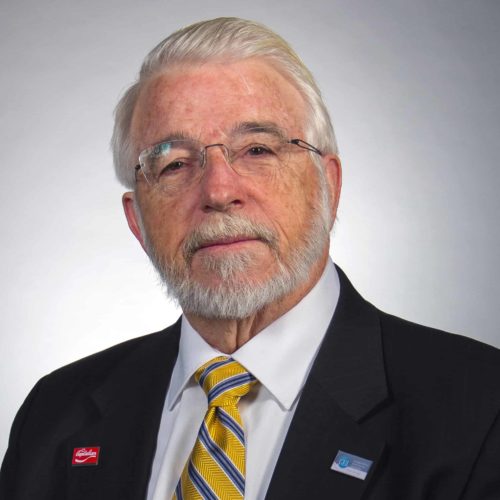
Fred L. Smith, Jr.
Founder; Chairman Emeritus
- Automobiles and Roads
- Aviation
- Business and Government

Sam Kazman
Counsel Emeritus
- Antitrust
- Automobiles and Roads
- Banking and Finance

Marlo Lewis, Jr.
Senior Fellow
- Climate
- Energy
- Energy and Environment