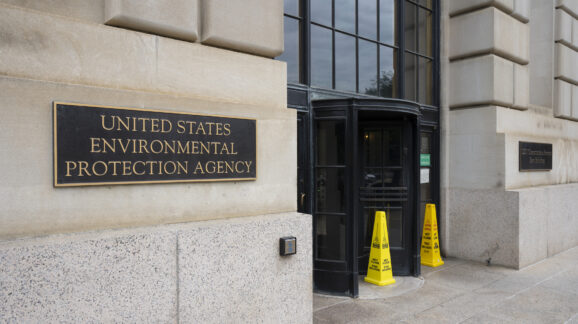
Those closer to environmental problems and impacted by them know these issues better and care about them more than DC bureaucrats pushing one-size-fits-all policies. This vision is in line with what Congress intended when it passed the Clean Air Act (CAA) and Clean Water Act (CWA). Both statutes intended for states to play the primary role on air and water quality. Over the years though, the EPA has usurped state and local power and ignored Congressional intent.
The United States has some of the best air quality in the world, something that sometimes get lost given all of the scare tactics that are disseminated in the media. CEI has been a leader in pushing back against such alarmism, as well as the junk science and regulatory games that the EPA plays to improperly justify costly air quality regulations.
CEI believes that any air quality standards should be informed by sound science and do more good than harm. This is hardly controversial, but it remains an uphill battle with an often out of control EPA.
When it comes to the CWA, there has long been regulatory uncertainty. For decades, the EPA and the U.S. Army Corps of Engineers have continued to overreach on what waters are even regulated under the Clean Water Act. In 2023, the U.S. Supreme Court finally provided some clarification on this key issue in Sackett v. EPA, but the Biden administration is not implementing the opinion properly.
CEI has extensive CWA expertise, especially when it comes to the “Waters of the United States” or WOTUS issue, and is using that expertise to ensure that the federal government follows the law, respects the principles of federalism embedded in the CWA, and provides clear and workable definitions for property owners. This is just part of our CWA work, which also covers issues such as state abuse of the Section 401 certification process and EPA retroactive vetoes of Section 404 permits.
Featured Posts

Blog
New WOTUS rule has a problem: The use of ‘wet season’
The Environmental Protection Agency (EPA) and the US Army Corps of Engineers, have proposed a new rule defining the “Waters of the United States”…

Blog
CEI’s The Surge: Clean Water Act reform, new CAFE standards, and more
If you are interested in analysis and perspective on current energy and environmental issues, then we encourage you to subscribe to this new publication and…
Blog
What’s coming in 2026 for energy and environmental policy
There are many important energy and environmental developments in the works, both in the executive branch and in Congress. The following are two different lists.
Search Posts
Op-Eds
Sensible Policy Lost in Smog
The Environmental Protection Agency recently launched its massive new plan to fight smog. Get ready for another <?xml:namespace prefix = st1 ns = “urn:schemas-microsoft-com:office:smarttags” />Washington mandate that will do more economic harm than environmental good. Ozone, the primary constituent of smog, is a lung irritant caused by motor vehicle and industrial pollution as well as natural emissions. Smog was perhaps the single biggest reason for the 1970 Clean Air Act, and has been heavily regulated since. According to EPA, it has declined more than 30 percent in the last three decades. Outside several trouble spots in California, virtually the entire nation now is in or near compliance with existing ozone air quality standards. And, due to measures already in the works (new motor vehicle emissions standards starting with the 2004 model year, new control requirements for power plants), those areas not yet in compliance are on their way toward it. Despite lack of evidence the existing ozone standard was deficient, the Clinton administration decided to tighten it. EPA's Clean Air Scientific Advisory Committee concluded this tougher standard would not be “significantly more protective of public health,” and called the change a “policy judgment.” The agency's own cost-benefit analysis found the modest marginal benefits of the new standard outweighed by its costs. Nonetheless, EPA went ahead with the rule, sparking several years of legal challenges, all the way to the Supreme Court. The Supreme Court essentially deferred to EPA's judgment, and upheld the new standard. However, the legal delays meant this Clinton administration's rule, first promulgated in 1997, would have to be implemented by its successor. And George Bush's EPA Administrator Michael Leavitt now has obliged. Mr. Leavitt estimates compliance costs of $50 billion over the next 15 years. The specific control measures for the 474 counties currently violating the new standard will depend on the extent of noncompliance in each county. The possibilities include more stringent requirements on new or substantially modified industrial facilities, restrictions on highway construction projects, measures affecting small businesses, and more onerous vehicle inspection programs. Each of the 31 states with non-attainment areas must submit a compliance plan for EPA approval by 2007. These plans will likely remain in effect many years after. The expense will affect employment, traffic congestion, and the cost of living. Even gasoline prices may be pushed up. Areas violating the new smog standard may have to use one of the costly specialized gasoline blends that have proliferated in recent years. And many refiners now will have more difficulty obtaining approval for much-needed capacity increases. Of course, EPA's announcement of the rule gave the impression the U.S. smog problem is worsening. Nothing could be more untrue. But while the benefits of this new standard may prove hard to identify, the costs almost certainly will not.
Newsletter
Vol. VIII, No. 8
Politics Candidate Kerry on Kyoto and Global Warming The campaign web site of Senator John Kerry (D—Mass.) only briefly mentions what…
Op-Eds
Driving Away Pollution
Your next new car or truck will be the cleanest-burning one you've ever owned. And it means the end to the already-diminishing problem…
Op-Eds
A Clear Mistake
The Clear Skies Initiative, President Bush's big environmental bill targeting power plant emissions, appears to be stalled in Congress. In an effort to…
Op-Eds
The Air Gets Cleaner, While Environmental Politics Gets Dirtier
The way the administration’s environmental critics tell it, you can’t see your hand in front of your face anymore because of all the pollution…
Op-Eds
Who Should Have Air Supremacy?
The Clean Air Act (CAA), perhaps the federal government's most powerful environmental tool, concedes in its very first section, “air pollution control at…
News Release
Study Reports Good News on U.S. Air Quality
<?xml:namespace prefix = st1 ns = “urn:schemas-microsoft-com:office:smarttags” />Washington, D.C., October 2, 2003—Air quality in the United States is good and will continue to…
Op-Eds
Are Small Particles Such a Big Problem?
According to the Environmental Protection Agency, small particles in the air pose the greatest threat that it or any other regulatory agency is…
Op-Eds
D.C. Air Quality Levels
Another Washington summer is over, as is another season of Washington smog. While this summer's air quality was typical of recent years, many residents…
Newsletter
Vol. VII, No. 17
Politics Blackouts Mean Uncertainty for Energy Bill The massive power outage that affected much of the northeastern…
Newsletter
Vol. VII, No. 15
Politics Senate Ready to Debate Climate Amendments to Energy Bill Senate Majority Leader Bill Frist (R-Tenn.) has scheduled all…
Newsletter
Vol. VII, No. 14
Politics Democratic Presidential Candidates Debate Environment The Democratic contenders for the White House focused on health issues at an…
News Release
New! CEI’s Politically Correct Periodic Table Mousepad
Preview of the mousepad available in pdf format. Learn the “new” chemistry from this mousepad guide to…
Newsletter
Vol. VII, No. 13
Politics NY Times Accuses White House of Censoring EPA Report In a front-page story on June 19 and an…
Newsletter
Vol. VII, No. 12
Politics Scientists Revive Debate in Canada An open letter published in Canada’s National Post on June 4 urges Paul…
News Release
Attorneys General Sue to Force Unauthorized Regulation of Carbon Dioxide
Contact for Interviews: <?xml:namespace prefix = o ns = “urn:schemas-microsoft-com:office:office” /> Richard Morrison, 202.331.2273 <?xml:namespace prefix…
News Release
Iain Murray Joins CEI Global Warming Project
<?xml:namespace prefix = o ns = “urn:schemas-microsoft-com:office:office” /> Contact for Interviews: Richard Morrison, 202.331.2273…
News Release
Clean Air Trust Refuses CEI Challenge to Debate State of Air Quality in U.S.
Contact for Interviews: <?xml:namespace prefix = o ns = “urn:schemas-microsoft-com:office:office” /> Richard Morrison, 202.331.2273 Washington, D.C.,…
News Release
“State of the Air” Report Deserves Failing Grade
<?xml:namespace prefix = o ns = “urn:schemas-microsoft-com:office:office” /> Contact for Interviews: Jody Clarke, 202.331.2252…
News Release
Attempt To Force EPA To Regulate CO2 A “Power Grab”
Washington, D.C., March 4, 2003—In a study published today, Competitive Enterprise Institute Senior Fellow Marlo Lewis challenges the arguments of several state…
News Release
Boost Your Environmental IQ Online
Washington, D.C., February 7, 2003—The Competitive Enterprise Institute is launching a new online feature, the "e-class" quiz, this week. The quiz, developed by CEI’s…
News Release
Success Of New Book Shows: Many Americans Don’t Believe Gloom And Doom Theories
Washington, D.C., January 14, 2003—The Competitive Enterprise Institute is celebrating the success of its latest book on environmental issues,…
News Release
Environmental, Other Regulations Under Scrutiny
Washington, D.C., December 20, 2002—From energy conservation standards for washing machines to labels on genetically modified food, many federal regulations are coming…
Products
November/December 2002 Edition of CEI Update
Full Document Available in PDF Articles in this edition: “FDA’s Pediatric Rule…
Study
Does the Bush Administration Have Legal Authority to Award Regulatory Credits for Greenhouse Gas Reductions?
Full Document Available in PDF This paper examines the Electric Power Industry Climate Initiative’s (EPICI’s) attempted rebuttal of the Natural Resources…
Op-Eds
Clearing the Air on President Bush’s New Clean Air Plan
Whether you support President Bush’s new air pollution reforms depends on one thing: whether you believe firms should be encouraged or discouraged from modernizing…
Op-Eds
The Anti-Power Act: A Jeffords Special
Thursday, the Senate Environment and Public Works Committee will vote on whether to approve S. 556, “the Clean Power Act,” proposed by James Jeffords,…
Op-Eds
Multi-Pollutant Madness
Today the Senate Environment and Public Works Committee will hold its fourth hearing on the “Clean Power Act” (S.556) proposed by Sen. James…
Study
“Multi-Pollutant” Regulation Of Carbon Dioxide: Shrewd Politics, Bad Policy
Full Document Available in PDF Although President Bush…
Op-Eds
“A” for Alarmism & “F” for Facts
Every year, the American Lung Association (ALA) releases its annual report card on smog, and every year it gives an “F” to over half…
Op-Eds
Regulatory Route To Your Wallet
As if home prices weren’t high enough, an upcoming rule regulating radon in drinking water might raise the cost of your next home. Oddly, a…
News Release
Senators Snowe, Collins to Ask Poland Spring Water be Registered as “Climate Change Pollutant”
Washington, D.C., April 24, 2002 — Senate staffers cite Maine Republicans Olympia Snowe and Susan Collins as supporting legislation calling…
Op-Eds
Clearing The Air On Industrial Plant Emissions
The federal permit program that governs industrial emissions is seriously broken. Within the next few weeks, the Bush administration will release its plan for revamping…
Study
Modeling Increases In CAFE Standards Proposed By Senator Kerry
Full Document Available in PDF General Motors has asked me to use the model I have developed of CAFE standards to model the…
Op-Eds
Breathe Easy, But Not for Long
America's air quality continues to get better. A recently released Environmental Protection Agency report concludes that "since 1970, aggregate emissions of six principal pollutants tracked…
Op-Eds
Let’s Clear The Air About Air Pollution Levels
America's air quality continues to get better, with particularly strong progress in the Chicago area. A recently released Environmental Protection Agency report concludes that…
Products
An A For Alarmism And An F For Facts: The American Lung Association’s Phony War on Smog
From the June 2001 CEI UpDate Every year, the American Lung Association (ALA) releases its annual report card on smog,…
Study
The Ongoing Clean Air Debate: The Science Behind EPA’s Rule on Soot
Full Document Available in PDF The Environmental Protection Agency’s 1997 standard for fine particulate matter is perhaps the most controversial environmental…
News Release
The Debate over Clean Air: Does Exposure to Soot Lead to Illnesses?
Washington, DC, May 30, 2001—As the Environmental Protection Agency (EPA) continues to review the science behind its proposed rule to regulate fine particles…
Op-Eds
Blame EPA for Oil Companies’ “Price-Gouging”: Lieberman Op-Ed
Distributed by Bridge News Service Distributed by Bridge News Service April 5, 2001 WASHINGTON–Last June, drivers in Chicago…
Products
Now, Who’s to Blame?
California Governor Gray Davis and the state’s Democratic legislature are starting to seize control of the energy industry in Next to the…
News Release
CEI Disappointed in Supreme Court Clean Air Act Decision
Washington, DC, February 27, 2001 – The Competitive Enterprise Institute today announced its disappointment with the Supreme Court’s decision concerning the Clean Air…
Products
The Great Global Gasoline Crunch of 2000
From the October/November issue of CEI UpDate High motor fuel prices are now a major issue, both in America…
Products
Supreme Decisions on Clean Air
From the October/November issue of CEI UpDate The most important case in the 30 year history of the Clean Air…
Products
From the Pumps to the Polls
WILL THIS SUMMER’S HIGH GAS PRICES HELP SHAPE THE NOVEMBER ELECTIONS will this summer’s High Gas Prices help shape the November…
Study
The Clean Air Act’s Contribution to Higher Gas Prices
Labor Day weekend will bring the 2000 summer driving season to a close, and it has been an expensive one for America’s car owners. Federal…
Op-Eds
Internet, EPA and Terrorism? Logomasini Op-Ed in Washington Times
You know things are seriously wrong when taxpayers underwrite the costs of collecting and disseminating information that will Published in the Washington…
Op-Eds
Is Your Washer Politically Incorrect
The federal government thinks your clothes washer is contributing to global warming and is going to make you do something about it. Over the past few…
Study
Ecology, Liberty & Property
Ecology, Liberty & Property: A Free Market Environmental Reader Publication Date: Spring 2000Price: $16.95ISBN #1-889865-02-8 Are free markets and environmental protection compatible? Is…
Op-Eds
Introduction to ‘Ecology, Liberty, and Property’
The book "Ecology, Liberty, and Property: A Free Market Environmental Reader," edited by Jonathan H. Adler, was published by the Competitive Enterprise Institute in 2000.
Staff & Scholars

Daren Bakst
Director of the Center for Energy and Environment and Senior Fellow
- Energy and Environment
- Lands and Wildlife
- Property Rights

Sam Kazman
Counsel Emeritus
- Antitrust
- Automobiles and Roads
- Banking and Finance

Marlo Lewis, Jr.
Senior Fellow
- Climate
- Energy
- Energy and Environment

Ben Lieberman
Senior Fellow
- Climate
- Consumer Freedom
- Energy

Angela Logomasini
Adjunct Fellow
- Chemical Risk
- Consumer Freedom
- Energy and Environment