There are two main areas in which Congress can enact meaningful reform. The first is to rein in regulatory guidance documents, which we refer to as “regulatory dark matter,” whereby agencies regulate through Federal Register notices, guidance documents, and other means outside standard rulemaking procedure. The second is to enact a series of reforms to increase agency transparency and accountability of all regulation and guidance. These include annual regulatory report cards for rulemaking agencies and regulatory cost estimates from the Office of Management and Budget for more than just a small subset of rules.
In 2019, President Trump signed two executive orders aimed at stopping the practice of agencies using guidance documents to effectively implement policy without going through the legally required notice and comment process.
Featured Posts
Blog
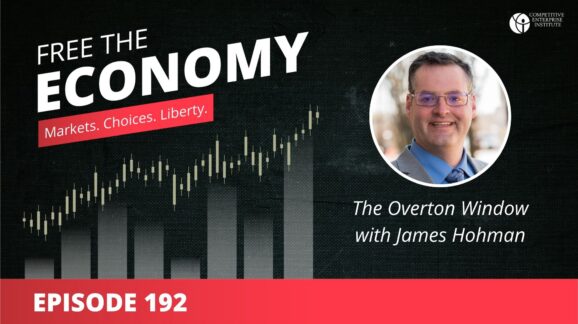
Free the Economy podcast: The Overton Window with James Hohman
In this week’s episode we cover Treasury yields, oil prices, US-China-Taiwan security policy, and Trump’s $5,000 dividend checks. Our…

Blog
How The No Surprises Act worsened the problem of surprise bills
Next week, Sen. Bill Cassidy (R-LA) will convene a roundtable to discuss adjustments to the 2020 No Surprises Act, which has come under…
Blog
The rules Congress never gets to see
The 1996 Congressional Review Act (CRA) has been used to overturn only a few dozen federal regulatory directives since its enactment, most during the…
Search Posts
Washington Times
D.C. GOP calls for end of federal income tax for city’s residents
CEI’s Richard Morrison and CEO Kent Lassman were cited in reference to a list of actions that could relieve the tax burden on D.C.
Blog
The week in regulations: Onion marketing and refrigerator leaks
PCE inflation, which the Federal Reserve uses for its interest rate decisions, rose to 3.8 percent, nearly double the Fed’s 2.0 percent target. President…
Blog
Free the Economy podcast: Fighting for freedom with Kent Lassman
In this week’s episode we cover bank privacy, SNAP benefits, a new study on tariffs, and a great new…
News Release
CEI leads coalition letter urging Senate action on regulatory reform bills
The Competitive Enterprise Institute today led a coalition letter to Senate Republican leaders urging passage of two important House-passed regulatory reform bills, the Guidance Out of Darkness…
Blog
OPFAIL: Establishing a Congressional Office of Political Failure Analysis
For decades, reformers have proposed some version of a Congressional Office of Regulatory Analysis (CORA), a congressional counterpart to the regulatory oversight apparatus housed…
Blog
The week in regulations: Black boxes and weather reports
The 2026 Federal Register topped 30,000 pages. President Trump’s Justice Department is poised to give him a $1.776 billion fund he can use to…
Blog
Free the Economy podcast: Fighting Medicaid fraud with Parker Thayer
In this week’s episode we cover higher inflation numbers, a strike on the Long Island Rail Road, and new disability…
Washington Examiner
Inflation still has room to run, experts fear
Washington Examiner cited senior economist Ryan Young on producer price index numbers. And on Wednesday, the producer price index showed wholesale inflation…
Blog
America 250 election year rightsizing: Time to get things undone
The new 2026 Ten Thousand Commandments survey of federal regulation and reform landed at an awkward moment. Election cycles tend to crowd out serious…
Blog
The week in regulations: Date taxes and microreactors
It was nearly a 3,000-page week in the Federal Register, roughly double the usual pace. Year-over-year inflation jumped to 3.8 percent, the worst reading…
Blog
Free the Economy podcast: Pension politics with Jarrett Skorup
In this week’s episode we cover more legal headaches for the Trump tariffs, keeping kids safe in an AI world, and…
Blog
The week in regulations: Fluid milk options and battleship safety zones
The Court of International Trade struck down President Trump’s Section 122 tariffs. The labor force shrank by 92,000 people over the last year. Agencies…
Blog
Free the Economy podcast: Highway robbery with David Ditch
In this week’s episode we cover how to make the moral case for capitalism, affordable housing via regulatory reform, and tracking…
Town Hall
Data Center Freak-Out
Town Hall cites Research Fellow Paige Lambermont on data cen “If our economy was allowed to develop at the speed of Bernie Sanders, we…
Blog
Deregulation by the numbers: One-third into 2026 — a rulebook rewrite?
At the close of the first third of the year, a spring 2026 Unified Agenda formally outlining agency priorities has yet to appear. In…
Blog
The week in regulations: Marine terminal fires and marijuana rescheduling
The Federal Reserve held interest rates steady, and outgoing Chairman Jerome Powell will remain on the Fed’s Board of Governors when Kevin Warsh takes…
Blog
Free the Economy podcast: The business of Federalism with Derek Kreifels
In this week’s episode we cover childcare in the 50 states, how to fix rising healthcare costs, the new Institute…
Letters
CEI Joins American Commitment’s Coalition Letter Urging Passage of the Missouri REINS Act
The clock is running out on the current legislative session, and with it, a critical opportunity to establish effective legislative control of major regulations…
Blog
The week in regulations: Pipeline safety and NFL Draft security
Federal Reserve Chair nominee Kevin Warsh had his confirmation hearing, and President Trump dropped his criminal investigation into Jerome Powell. The government is poised…
Blog
Free the Economy podcast: Revisiting Earth Day with Todd Myers
In this week’s episode we cover the dwindling number of US public companies (via Todd Zywicki of George Mason University), a…
Blog
The week in regulations: Drone settlements and gambling losses
The 2026 Federal Register topped 20,000 pages. President Trump got into a feud with the Pope. Agencies issued new regulations ranging from mail standards…
Blog
Free the Economy podcast: How to Get What You Want with Josh Bandoch
In this week’s episode we cover AI development in China, how large investors recycle homes, and why permitting reform needs…
Issues and Insights
After Iran, Trump Needs To Bomb The Administrative State Into Submission
Issues and Insights cites CEI’s Clyde Wayne Crews on the release of his new report, the 2026 edition of Ten Thousand Commandments. “The regulatory…
Reason
Report: Federal Regulatory Compliance Costs $2 Trillion Annually
Reason cites CEI’s Clyde Wayne Crews on the release of his new report, the 2026 edition of Ten Thousand Commandments. “Federal regulation’s total compliance…
Blog
The week in regulations: Spinach proteins and seat belt reminders
The Artemis II mission landed safely after orbiting the moon. Inflation took a huge jump in March from the Iran war’s effects on energy…
Blog
Ten Thousand Commandments 2026 is out now
Today is release day for this year’s edition of Wayne Crews’ Ten Thousand Commandments. This year also marks the 30th anniversary of CEI’s…
Blog
Free the Economy podcast: Consumer-regulated energy with Travis Fisher
In this week’s episode we cover economic growth in China, the political legacy of Viktor Orban in Hungary, and the…
Politico
Ethics, DeFi and memecoins, oh my
Politico cites CEI’s Clyde Wayne Crews on the release of his new report, the 2026 edition of Ten Thousand Commandments. The Competitive Enterprise Institute…
InsideEPA.com
CEI questions Trump’s deregulatory agenda
InsideEPA.com cites CEI’s Clyde Wayne Crews on the release of his new report, the 2026 edition of Ten Thousand Commandments. The Competitive Enterprise Institute…
The Washington Times
Impact of Trump’s 646 deregulatory actions diluted by tariffs, executive orders
The Washington Times cites CEI’s Clyde Wayne Crews on the release of his new report, the 2026 edition of Ten Thousand Commandments. Report author…
News Release
Report: Regulations cost $2 trillion annually, but only Congress can fix the problem
The Competitive Enterprise Institute today released its annual report documenting the vast burden that federal regulations impose on American businesses and citizens. “Government regulations continue…
Products
Chapter 13: Getting things undone: An agenda for rightsizing Washington
We close with an appeal to restore enumerated powers. This would solve the overregulation dilemma, and would have prevented it in the first place. Reforms…
Products
Chapter 7: Unified Agenda of regulatory actions
Along with the Report to Congress, the Federal Register, and the Code of Federal Regulations, another vehicle for regulatory disclosure is the spring and fall…
Products
Chapter 5: Over 19,000 agency public notices annually
Presidents issue a few dozen memoranda and other proclamations each year. Departments and agencies, however, issue thousands of public notices in the Federal Register every…
Products
Chapter 4: Regulatory dark matter
Although executive actions are typically understood to deal with the internal operations of the federal government, they increasingly can have binding effects and influence private…
Products
Chapter 10: Federal rules affecting state and local governments
State and local officials’ concerns about federal mandates overriding their priorities resulted in passage of the Unfunded Mandates Reform Act (UMRA) of 1995. The law…
Products
Chapter 2: Why we need a regulatory budget
Federal spending programs are funded either by taxes or by borrowing, with interest, from future tax collections. The public can readily inspect the costs of…
Products
Chapter 8: Economically significant rules
From 1993 until April 2023, rules with annual economic effects of at least $100 million were classified as economically significant. Biden’s EO 14094 raised the…
Products
Chapter 9: Federal regulations affecting small business
The National Association of Manufacturers report reaffirmed that average annual per-employee regulatory costs vary by firm size. The smaller the organization, the higher the per-employee…
Products
Chapter 3: Numbers of rules and page counts in the Federal Register
The Federal Register is the daily repository of all proposed and final federal rules and regulations. Although its page counts are often cited as a…
Products
Chapter 1: Trump 2.0: Year one and the regulatory state’s uneven reset
“It is the policy of my Administration to focus the executive branch’s limited enforcement resources on regulations squarely authorized by constitutional Federal statutes, and to…
Products
Chapter 11: GAO database on rules and major rules
The federal government’s regulatory reports and databases serve different but intertwined purposes. The Federal Register presents all proposed and final rules, along with numerous presidential…
Products
Chapter 6: A note on rule reviews at OMB
Rule reviews at OMB are a useful variable to examine alongside costs, page counts, rule counts, and guidance documents, among others. Figure 17 depicts 449…
Products
Chapter 12: The 2026 Unconstitutionality Index: 18 rules for every law
Article I of the Constitution vests legislative power in Congress. In practice, however, administrative agencies issue the vast majority of binding rules governing economic activity…
Study
Ten Thousand Commandments 2026
Introduction Record federal spending and record-setting regulatory burdens often march in lockstep. New spending is straightforward to track, but regulations obliging the private sector…
Blog
The week in regulations: Lead paint and mailing firearms
Gas prices topped $4.00 per gallon. The one-year anniversary of President Trump’s Liberation Day tariffs was solemnly observed. Trump fired Attorney General Pam Bondi.
Freedom Works Radio
AUDIO: CEI’s Wayne Crews Joins Freedom Works Radio to Discuss the 2026 Release of Ten Thousand Commandments
CEI’s Clyde Wayne Crews joined Freedom Works Radio to discuss the current state of regulations in America, as outlined in his new report, 2026’s…
Blog
Free the Economy podcast: Kids, social media, and the First Amendment with Jessica Melugin
In this week’s episode we cover budget reconciliation and deficit spending, the burdens of Total Boomer Luxury Communism, and how to…
Blog
Federal regulation 1st quarter 2026 report: Bureaucracy on the back foot
Here at the close of the first quarter of 2026, the March 31 Federal Register stands at 16,115 pages, containing 609 final rules and…
Blog
The week in regulations: Resettling refugees and sea otter casualties
TSA lines reached their longest-ever wait times, bolstering the case for privatizing airport security. President Trump’s signature will appear on US currency starting later…
Staff & Scholars

Clyde Wayne Crews
Fred L. Smith Fellow in Regulatory Studies
- Business and Government
- Consumer Freedom
- Deregulation

Ryan Young
Senior Economist and Director of Publications
- Antitrust
- Business and Government
- Regulatory Reform

Fred L. Smith, Jr.
Founder; Chairman Emeritus
- Automobiles and Roads
- Aviation
- Business and Government

Sam Kazman
Counsel Emeritus
- Antitrust
- Automobiles and Roads
- Banking and Finance

Marlo Lewis, Jr.
Senior Fellow
- Climate
- Energy
- Energy and Environment